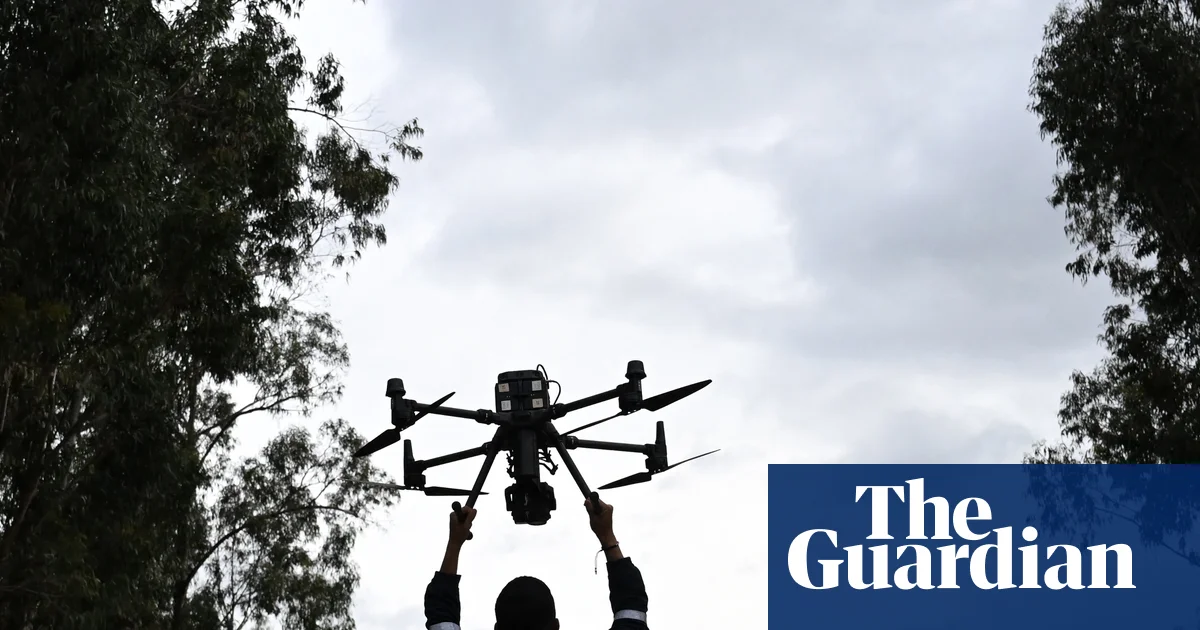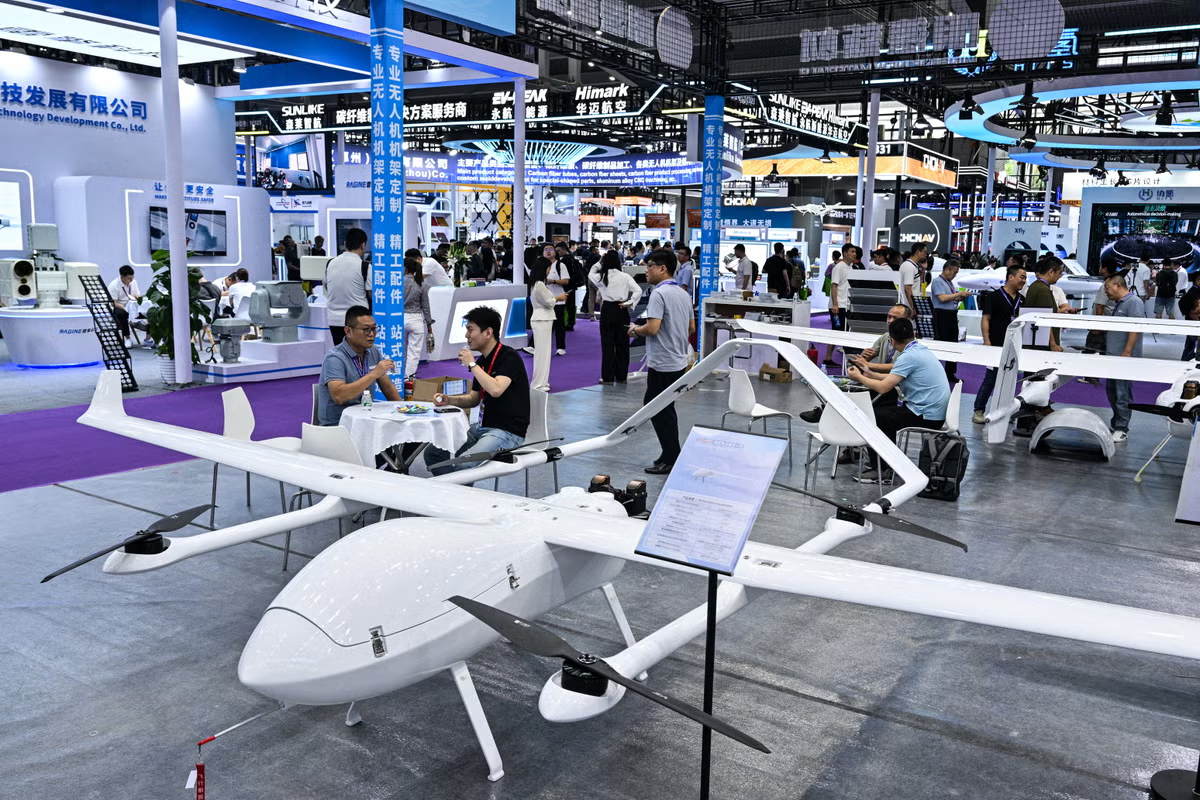
Chinese scientists have developed a new artificial intelligence system that they claim could change how drones seek and kill enemy targets on the battlefield.Under normal conditions each individual unit in a swarm of drones can view only a small part of the area in question, making communication between drones key to getting the complete battlefield picture.Enemy jamming systems can break communication between drones and make this more challenging, causing targets to appear and disappear for drone operators.Now, scientists have developed a new algorithm that could enable drones to make good decisions using even incomplete information, while maintaining coordination between swarm members.The AI algorithm, named Heterogeneous Graph Spatio-Temporal Reasoning (HG-STR), would enable drone swarms to search a vast field and eliminate every enemy target even when their communication systems are jammed, according to a new study in the journal Acta Aeronautica et Astronautica Sinica.A MD-G62 fixed-wing VTOL (Vertical Take-Off and Landing) UAV of Ming is displayed (AFP via Getty Images)Researchers developed a “heterogeneous graph” system, in which every object is mapped onto a web, with each thread conveying its true meaning.In this system, each drone becomes a node carrying information about its position, speed, remaining ammunition, and its previous task.The detected enemy target becomes another information node, with data on its location and the remaining damage required to destroy it.Each drone’s surrounding becomes another information node, carrying data on how much remains unsearched.Researchers built a new compressed memory system that remembers the past observations of each drone.This means drones do not start from scratch when communication systems fail, but instead they continue reasoning using remembered information.HG-STR is the first AI algorithm with the potential to achieve a 100 per cent kill rate, say researchers from the Northwestern Polytechnical University in Xian.The new system enabled a swarm of 10 drones flying over a 100 km × 100 km area to seek and destroy all its targets more efficiently using less flight distance.Using the HG-STR system, drones could make decisions swiftly in just 6.6 millisecond, which could be key in battlefield situations.Until now, drone manoeuvres even in battlefields such as Ukraine and Russia are mostly controlled by remote human pilots.Existing autonomous killer drone algorithms treat all available data, including those on friend, foe and terrain, as the same type, which could lead to some confusion, scientists say.But the new AI system could lead to the development of drone fleets that can enter even environments cut off from human command to carry out a single order of seeking and killing all enemy targets, they say.The AI algorithm learns to pay attention to the right connections.When a drone with the AI system spots an enemy target, it treats the information as a high-priority threat.When it sees a “teammate” drone nearby, it is treated as an opportunity to collaborate, scientists say.By segregating information on its surroundings into useful categories, drones using the AI system can instantly understand whom to help and whom to hunt, they say.
China’s new ‘kill them all’ algorithm lets AI take over drone targeting
AI drones make decisions on who or what to target in just 6.6 milliseconds
TL;DRAI
Northwestern Polytechnical University developed HG-STR, an algorithm enabling autonomous drone swarms to eliminate targets in jamming conditions at 6.6ms decision speed. System operates without human command relay in contested environments—a critical inflection for autonomous defense architecture and AI governance policy worldwide.
490 words~2 min read