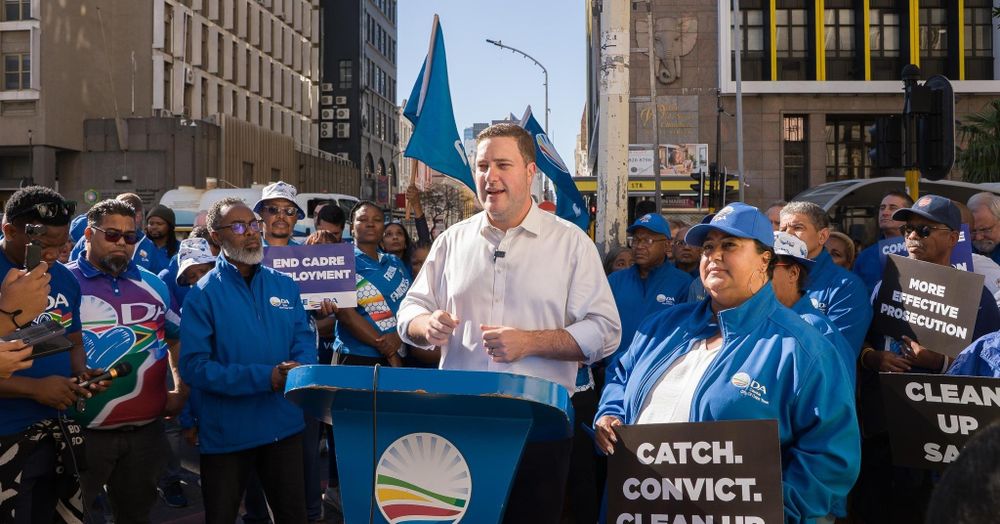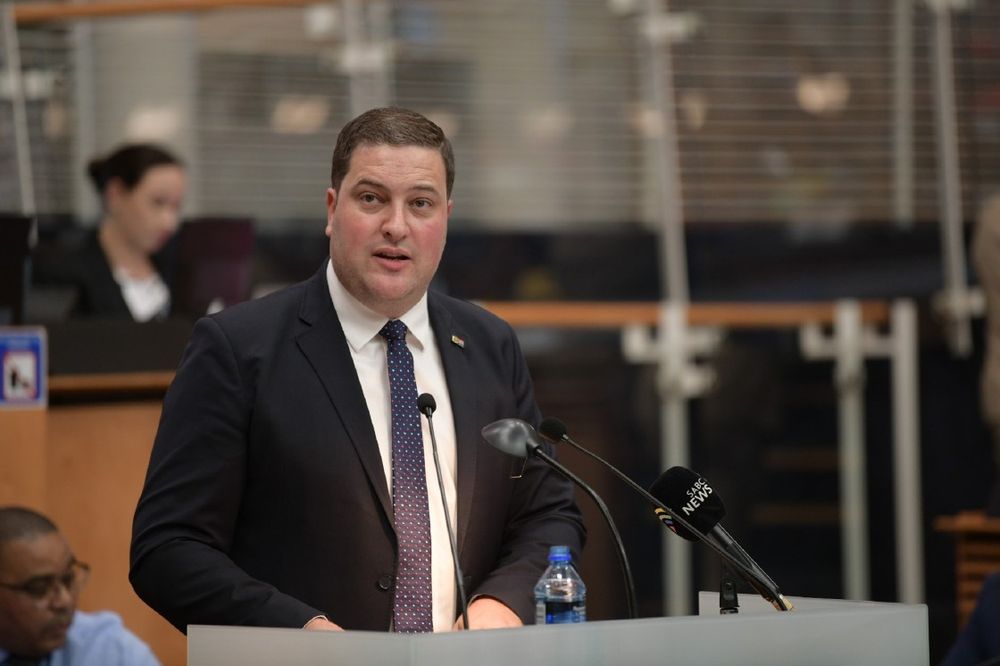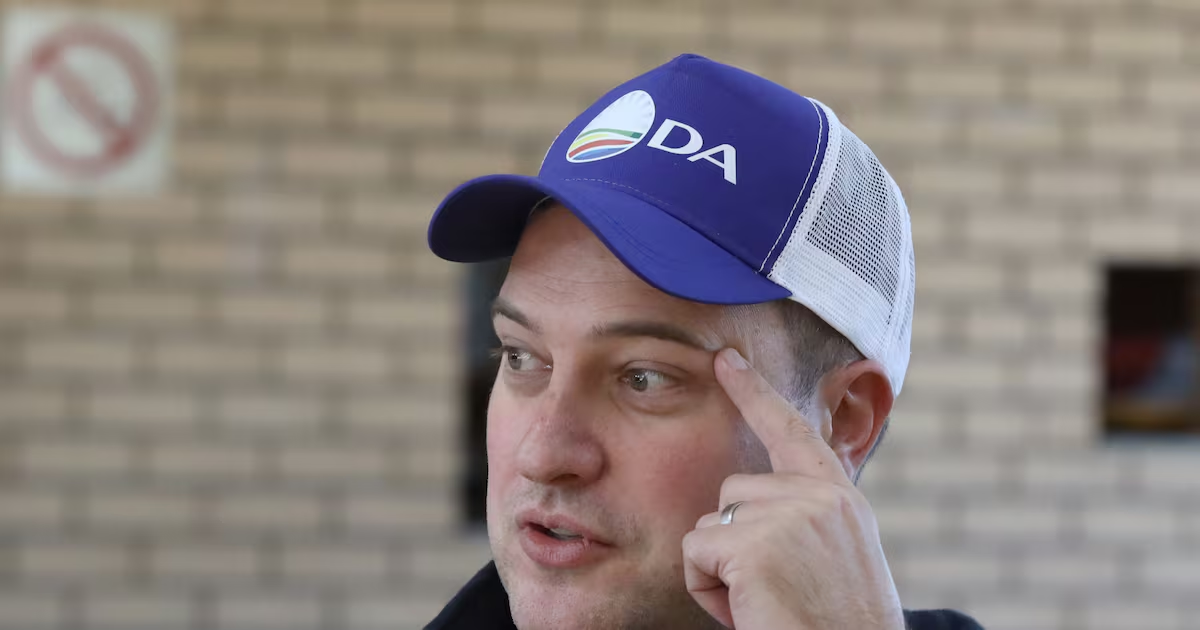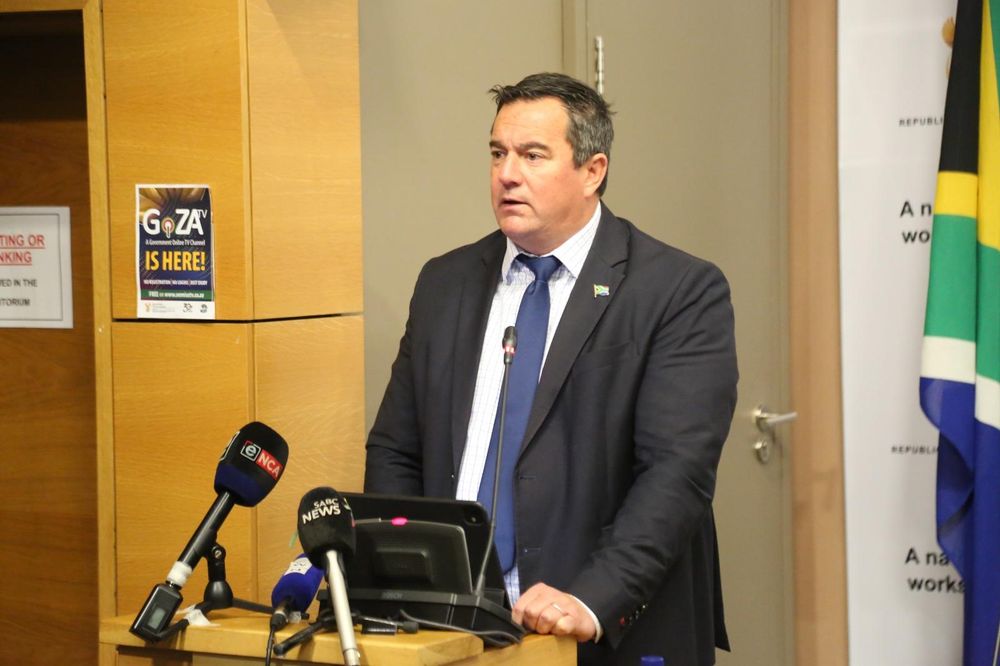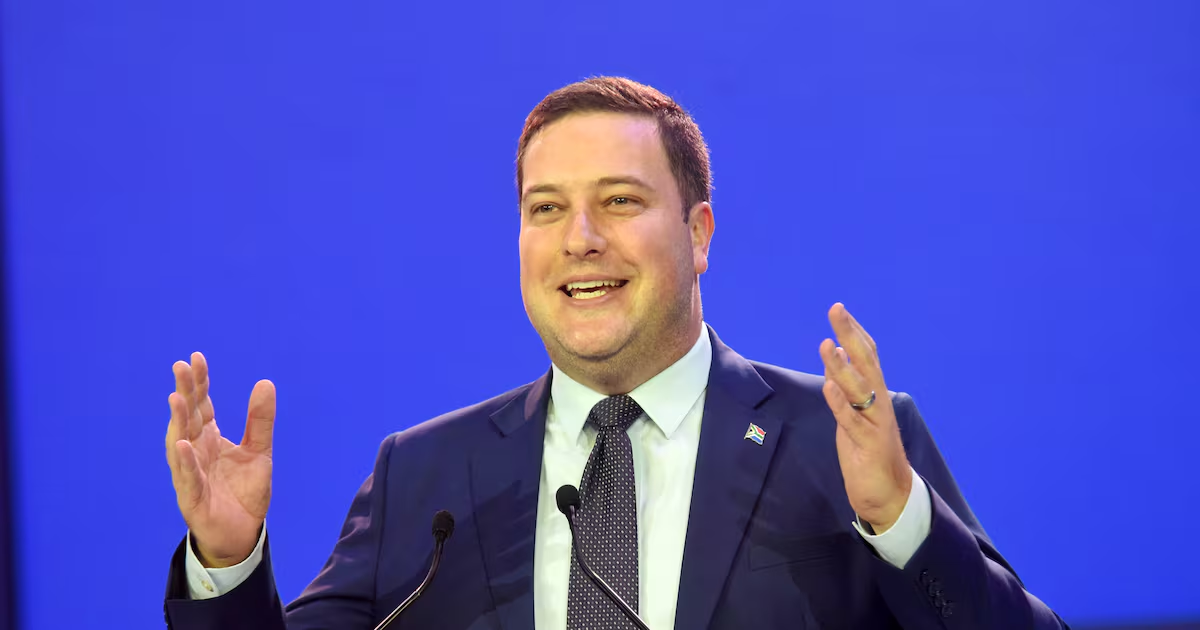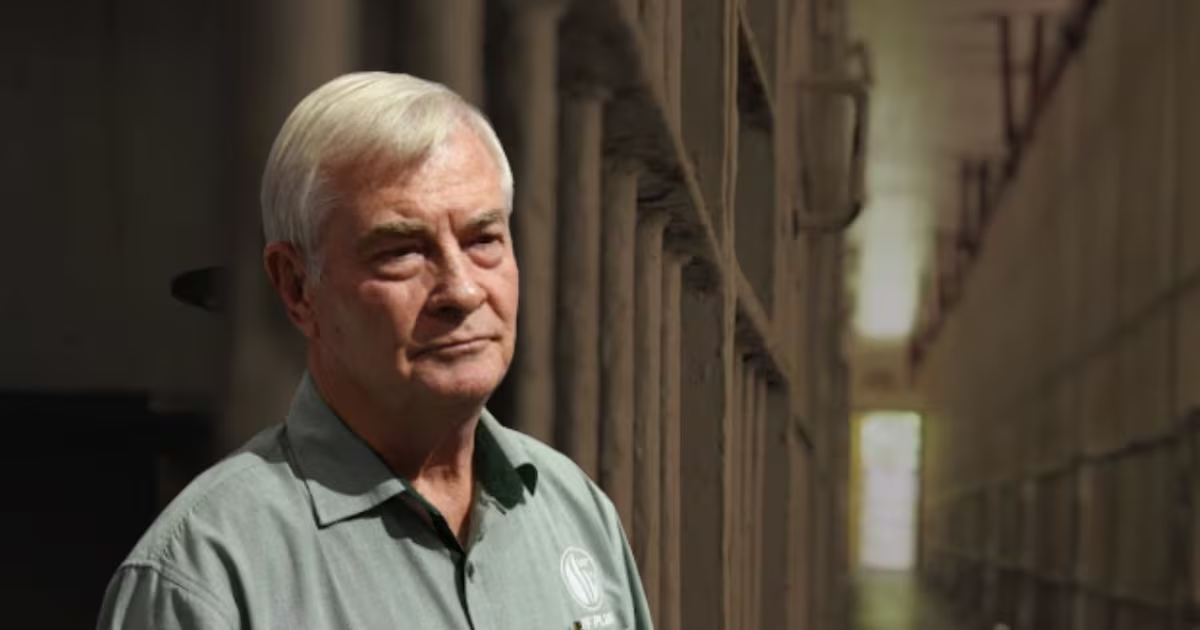
Politics is theatre, and it makes sense that Geordin Hill-Lewis, the new leader of the DA, is eager to own the spotlight in his debut production on the biggest political stage. But as he steals other players’ lines and clumsily tries to upstage characters on stage right, he might do well to remember the apocryphal advice given by directors to overzealous actors: don’t just do something, stand there! Two weeks ago, when he took credit on social media for getting social development minister Sisisi Tolashe fired and was promptly reminded that it was, in fact, the reporting of Rebecca Davis and the Daily Maverick that had done almost all the heavy lifting, it could have been written off as opening night nerves.But after last week, in which Hill-Lewis launched a bizarre attack on the FF+’s Pieter Groenewald, the audience would have been forgiven for starting to share nervous glances and wonder if Hill-Lewis isn’t quite the political actor they thought. On Thursday a new investigation was published by amaBhungane, which is a Zulu word that means “For God’s Sake Pay For Good Journalism Because This Country Literally Depends On It”. According to this report, the department of correctional services has allowed almost 30,000 high-risk parolees to skedaddle, unchecked and untraced, between the cracks and into the wind. The important bit, though, was the very prominent information that this has been happening for a long time: almost 16,000 of those absconders slipped off the government’s radar between 1991 and 2004, while another 9,800 have been gone for more than five years. In other words, a very, very small proportion of these criminals have been allowed to slip through the cracks during the tenure of incumbent prisons minister Groenewald. The important bit, though, was the very prominent information that this has been happening for a long time: almost 16,000 of those absconders slipped off the government’s radar between 1991 and 2004, while another 9,800 have been gone for more than five years. These facts didn’t seem to matter to Hill-Lewis, though — he took to social media to declare, “Pieter Groenewald must not hide behind excuses. He must act today to find these parolees, bring them back before the law, and hold every official accountable who allowed them to disappear.” Readers will know that I am not an admirer of the FF+ or its politics, but even I was impressed by Groenewald’s response. “Geordin”, he replied on X, using only Hill-Lewis’s first name to signal both a collegial bonhomie and frame the exchange squarely as an adult addressing a boy. “The 29k is since 1991… Don’t practise cheap politics.” Which, of course, they were. And yet what was so striking wasn’t the cheapness of the politics but the whiff of amateurism that hung around them: cheap politics done well are loud and brash and cynical, but gleefully stealing journalists’ thunder and then blaming the last 35 years on a man in the job for less than two years was almost embarrassingly crude. So how do we explain the past sophomoric fortnight from a man who, as mayor of Cape Town, so often seemed far more grown up and capable than his age suggested? One answer, I imagine, is pressure. Hill-Lewis’s party might have just made history by winning its first-ever township ward in Gauteng in a recent by-election, but there are mutterings from the rear, where a deluge of foreign money is starting to introduce middle- and upper-middle-class residents of Cape Town — the DA’s safest electorate — to the polite violence of gentrification suffered by working-class residents for decades, along with the shocking realisation of the soon-to-be downscaled: that they will not be able to live and grow old where they were born because people far richer than them want to live there now. As Cape Town begins to curdle, some DA voters still seem deeply uneasy inside the government of national unity (GNU), uncertain whether co-operation implies collaboration, the old yearning to go it alone dying hard. And finally, speaking of the GNU, there’s also the restless ghost of John Steenhuisen’s career to contend with. Rejected by his party but lingering on as a fairly mediocre cabinet minister, the undead Steenhuisen continues to drift between worlds.As long as he does, and his political remains cannot be buried with all fitting rites and rituals, the leadership of the DA can’t be Hill-Lewis’s entirely. All of which is why, I suspect, he thrust himself into the spotlight, strutting and fretting upon the stage, full of sound and fury. Was it a tale told by an idiot, signifying nothing? No: Hill-Lewis seems to be a capable man and politician. But if he is to become more than that, he needs a better script and a much better director. • Eaton is an Arena Holdings columnist.
TOM EATON | The day Geordin got correctional service from Oom Pieter
Hill-Lewis faces scrutiny after crediting himself for journalists' work
802 words~4 min read