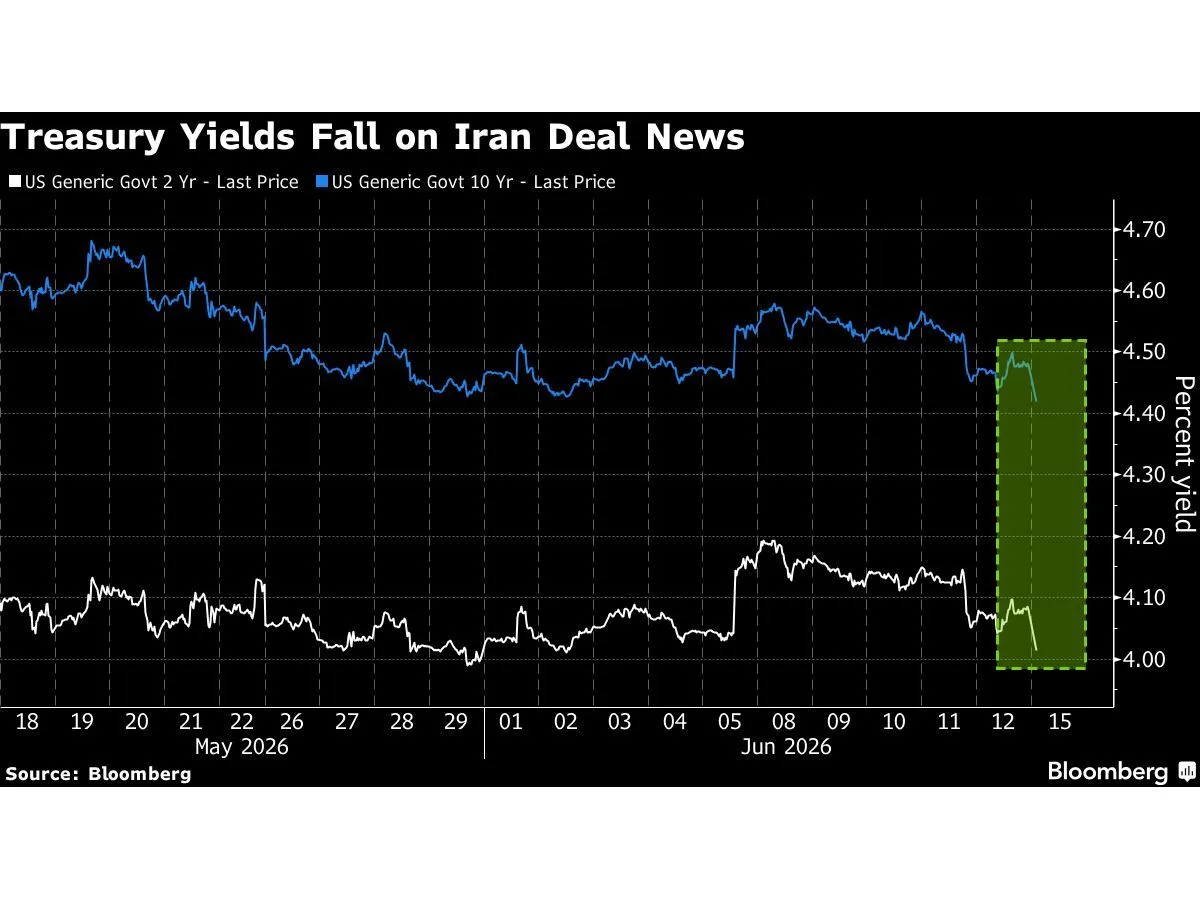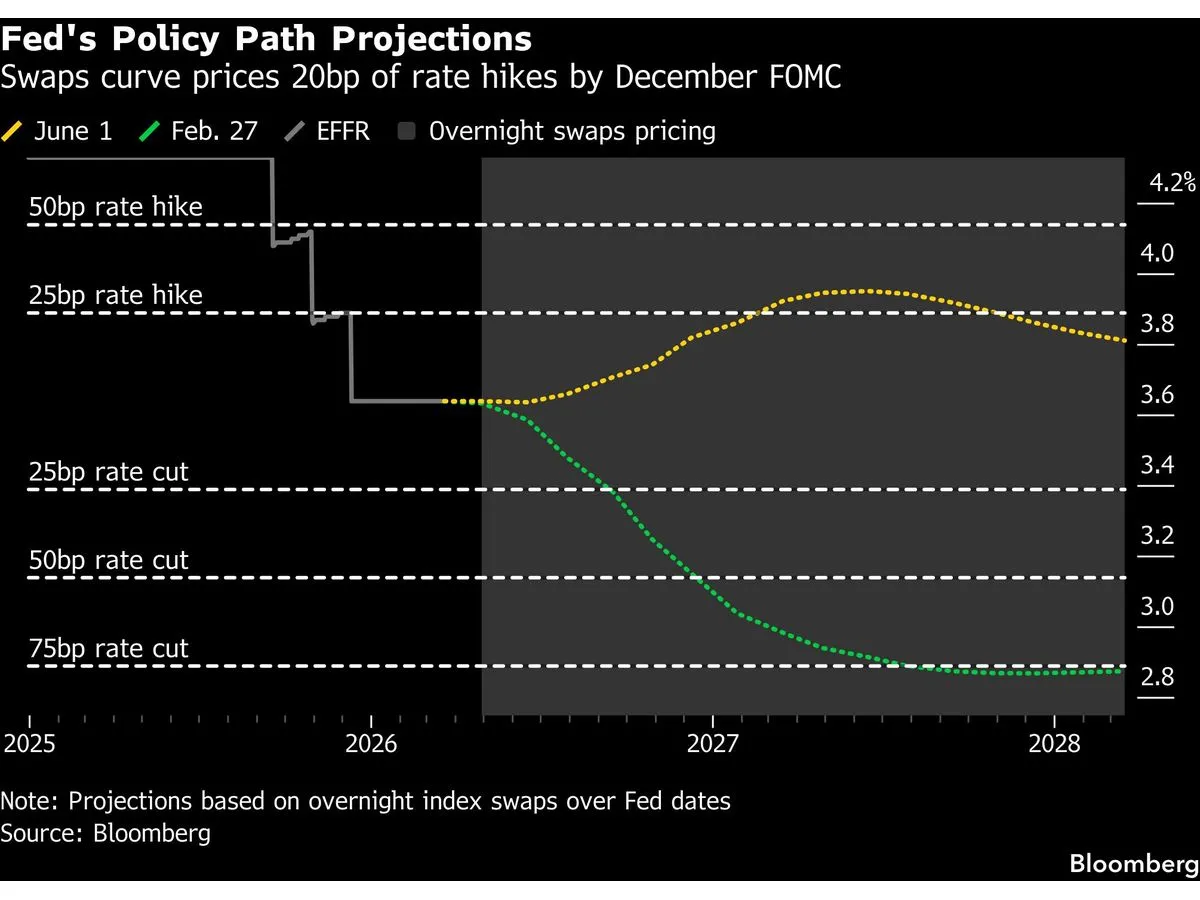
Skip to Content News Archives Economy Energy Oil & Gas Renewables Electric Vehicles Mining Commodities Agriculture Real Estate Mortgages Mortgage Rates Finance Banking Insurance Fintech Cryptocurrency Work Wealth Smart Money Wealth Management Investor Personal Finance Family Finance Retirement Taxes High Net Worth FP Comment Executive Women Puzzmo Newsletters Financial Times Business Essentials More Innovation Information Technology FP500 Podcasts Small Business Lives Told Tails Told Shopping Financial Post Store Obituaries Place a Notice Advertising Advertising With Us Advertising Solutions Postmedia Ad Manager Sponsorship Requests Classifieds Place a Classifieds ad Working Profile Settings My Subscriptions Saved Articles My Offers Newsletters Customer Service FAQ News Economy Energy Mining Real Estate Finance Work Wealth Investor FP Comment Executive Women Puzzmo Newsletters Financial Times Business Essentials HomePMN BusinessUS Bonds Drop as Doubt Over US-Iran Talks Lifts Oil PricesTreasuries fell as an impasse in negotiations between the US and Iran fueled concern that higher energy costs will stoke inflation and push the Federal Reserve to raise interest rates.Author of the article: You can save this article by registering for free here. Or sign-in if you have an account.an]dyzr]jj{f0pj)y)33b{27_media_dl_1.png Bloomberg(Bloomberg) — Treasuries fell as an impasse in negotiations between the US and Iran fueled concern that higher energy costs will stoke inflation and push the Federal Reserve to raise interest rates.Subscribe now to read the latest news in your city and across Canada.Exclusive articles from Barbara Shecter, Joe O'Connor, Gabriel Friedman, and others.Daily content from Financial Times, the world's leading global business publication.Unlimited online access to read articles from Financial Post, National Post and 15 news sites across Canada with one account.National Post ePaper, an electronic replica of the print edition to view on any device, share and comment on.Daily puzzles, including the New York Times Crossword.Subscribe now to read the latest news in your city and across Canada.Exclusive articles from Barbara Shecter, Joe O'Connor, Gabriel Friedman and others.Daily content from Financial Times, the world's leading global business publication.Unlimited online access to read articles from Financial Post, National Post and 15 news sites across Canada with one account.National Post ePaper, an electronic replica of the print edition to view on any device, share and comment on.Daily puzzles, including the New York Times Crossword.Create an account or sign in to continue with your reading experience.Access articles from across Canada with one account.Share your thoughts and join the conversation in the comments.Enjoy additional articles per month.Get email updates from your favourite authors.Create an account or sign in to continue with your reading experience.Access articles from across Canada with one accountShare your thoughts and join the conversation in the commentsEnjoy additional articles per monthGet email updates from your favourite authorsSign In or Create an AccountorUS government bond yields continue to be led by crude oil prices, which since the US attacked Iran in late February have been moving inversely with the prospects for ending the broader regional conflict.Higher by one to four basis points Monday afternoon in New York, Treasury yields earlier climbed as much as five to nine basis points across maturities as US benchmark oil surged 8.5%. It settled with a 5.5% gain. The 10-year note’s yield was near 4.47% after exceeding 4.51%.Get the latest headlines, breaking news and columns.By signing up you consent to receive the above newsletter from Postmedia Network Inc.A welcome email is on its way. If you don't see it, please check your junk folder.The next issue of Top Stories will soon be in your inbox.We encountered an issue signing you up. Please try again“The market has been very optimistic in its assessment over the past week that the US-Iran agreement is a done deal,” said Gennadiy Goldberg, head of US rates strategy at TD Securities. “This leaves markets highly sensitive to any negative news, particularly today’s headlines that Iran has stopped talking to the US.”Monday’s yield highs were reached after Iran’s semi-official Tasnim news agency reported that Tehran would suspend message exchanges with Washington in protest over actions by Israel. The market partially recovered after US said Israel and Hezbollah agreed to stop attacking each other in Lebanon and that talks with Iran were continuing.Traders boosted their expectations that the Fed’s next move on interest rates will be a hike. Interest-rate swaps showed that traders have fully priced in a hike by March 2027 and see a roughly 50% chance of a move as early as October.Treasuries have rallied in recent weeks — and last week gained the most since the war began — as optimism mounted that the US and Iran would agree to reopen of the Strait of Hormuz to Middle East oil exports. Monday’s developments cast doubt on that outlook, raising the prospect that oil prices will stay elevated.Treasuries also were pressured by survey data showing US manufacturing activity expanded in May at the fastest pace in four years. The Institute for Supply Management’s May manufacturing report underscored the resilience of the US economy, feeding doubt that the current Fed’s policy rate range — between 3.5% and 3.75% — is restrictive enough to cool inflation.As expectations for Fed rate hikes build, shorter and intermediate Treasuries underperformed. The gap between five-year and 30-year yields temporarily narrowed to less than 80 basis points, the smallest in more than a year.The US and Iran had been exchanging messages over proposed changes to a draft agreement aimed at extending a ceasefire and reopening the Strait of Hormuz. But Israel expanded its ground offensive in Lebanon, a development that Tasnim said prompted the Iranian negotiating team to suspend talks.Trump said he had spoken with Israeli Prime Minister Benjamin Netanyahu and representatives from Hezbollah, which the US considers a terrorist group, in separate phone calls.“At the moment this remains a war of words, but the longer the Strait of Hormuz remains closed, the longer the economic and inflation damage can last,” said TD’s Goldberg. “Rates remain stuck in a range until a resolution looks closer.”The Middle East turmoil presents an early challenge for Fed Chairman Kevin Warsh, President Donald Trump’s pick to lead the central bank. Trump’s repeated calls for rate cuts have been rebuffed by policymakers concerned that inflation remains too high.Data released last week showed the Fed’s preferred inflation gauge — the personal consumption expenditures price index — rose 3.8% from a year earlier in April, well above the central bank’s 2% target.Beyond developments in the Middle East, investors are also focused on a slew of labor-market reports, including Friday’s employment data, to confirm their wagers on Fed rate hikes. Economists surveyed by Bloomberg expect the US to have added about 85,000 jobs in May, with the unemployment rate holding steady at 4.3%.The job report will be the last key labor data before the Fed’s June 16-17 policy meeting. Officials are increasingly expected to abandon their statement’s easing bias at the gathering, opening the door for a more hawkish stance.What Bloomberg Strategists say…“Uncertainty over the Strait of Hormuz lifts the dollar but it also hurts Treasury investors most potently in the belly of the curve. Given that 30-year Treasuries have already seen a massive increase in real yields to over 2.7%, the belly is now most vulnerable to rising term premiums and additional losses. Monday’s initial market moves confirm that.”—Edward Harrison, Macro Strategist, Markets LiveFor the full analysis, click here.—With assistance from Edward Bolingbroke.(Updates yield levels.) Join the Conversation This website uses cookies to personalize your content (including ads), and allows us to analyze our traffic. Read more about cookies here. By continuing to use our site, you agree to our Terms of Use and Privacy Policy.
US Bonds Drop as Doubt Over US-Iran Talks Lifts Oil Prices
Treasuries fell as an impasse in negotiations between the US and Iran fueled concern that higher energy costs will stoke inflation and push the Federal Reserve to r…
1,253 words~6 min read