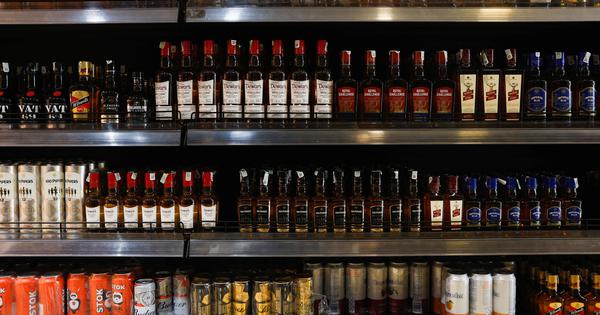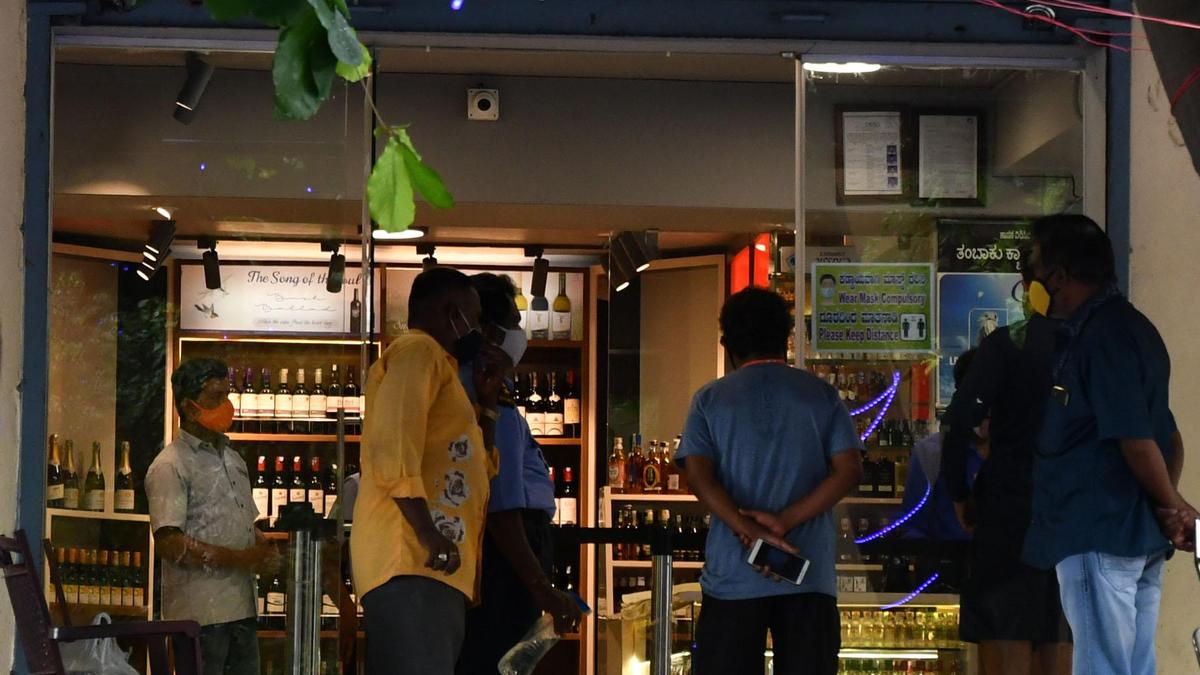
In a major policy shift, Ladakh Lieutenant Governor Vinai Kumar Saxena has approved a new excise policy aimed at dismantling the region’s long-standing liquor restrictions to combat a rising narcotics crisis. The administration is completely overhauling its supply chain from a restrictive system to an open market. The most notable expansion is a 10-fold increase in retail outlets, jumping from just two operational vends in the entire union territory to 20, distributed via e-auction.In a major policy shift, Ladakh Lieutenant Governor Vinai Kumar Saxena has approved a new excise policy aimed at dismantling the region’s long-standing liquor restrictions to combat a rising narcotics crisis. ((Shutterstock)/ Representational image)The policy ends a ban on retail hard liquor sales. Previously restricted to selling only beer, wine, and low-alcohol ready-to-drink (RTD) beverages, retail outlets are now authorised to sell foreign liquor and Indian-made foreign liquor (IMFL). The policy also extends alcohol availability beyond Leh city into four key far-flung regions: Nubra, Changthang, Sham, and Zanskar.For the first time, beer bars with microbreweries have been permitted in the region, hotels are allowed to serve liquor directly to guest rooms rather than restricting consumption to designated bars, and homestays and guest houses can obtain commercial retail licences.The deregulation highlights the extent of Ladakh’s narcotics problem, which the administration reports is escalating among youth. Official data presented during the May 27 review meeting reveals the psychiatry OPD at SNM Hospital in Leh registered 101 new opioid-related cases (with 237 follow-up cases), 25 new cannabis cases, and 15 polysubstance abuse cases since April 2025. The data showed the majority of patients fall into the critical 20-30 age demographic, with heroin dominating admissions in Kargil and cannabis in Leh. Sixty-four substance abuse patients under treatment also tested positive for Hepatitis C.Drying up black marketOfficials said the previous restrictive policy had created an “artificial scarcity,” which failed to curb consumption and instead fuelled bootlegging, the smuggling of spurious alcohol, and a rapid transition toward hard narcotics and psychotropic substances among the local youth.Following the review meeting with civil society groups, medical experts, and the Ladakh Gompa Association, representatives said the unavailability of hard liquor was prompting individuals to resort to illegal narcotics.By creating a regulated, transparent, and easily accessible supply of legal liquor—specifically emphasising low-alcohol content options—the administration aims to dry up the black market and choke out the drug trade.To streamline the process, the number of documents required to obtain an excise licence has been cut from 16 to six, and the requirement to obtain a district administration opinion prior to a licence grant has been eliminated.To optimise revenue, the annual fee for a wholesale licence has been hiked from ₹3.5 lakh to ₹5 lakh. The base auction price for retail vends has been revised, fixed at ₹60 lakh within Leh municipal wards and ₹30 lakh in all other areas. Concurrently, the financial squeeze is being passed down to the vendors: The profit margin for retailers has been cut from 12% to 10%.Concurrently, environmental protections have been added, strictly banning the sale of liquor in plastic bottles.Irony of Delhi faceoffSaxena assumed charge in Ladakh in March 2026 following a turbulent four-year tenure as the LG of Delhi. During his time in the national capital, Saxena targeted the liberalised 2021-22 excise policy introduced by then Arvind Kejriwal’s government. It was Saxena who recommended a Central Bureau of Investigation (CBI) probe into the policy, alleging systemic corruption, procedural lapses, and undue favours to liquor barons. That intervention triggered a chain reaction that derailed Delhi’s liquor reforms, led to the scrapping of the policy, and ultimately resulted in the arrest of Aam Aadmi Party (AAP) leaders, including Kejriwal.Now, at the helm in Ladakh, Saxena is deploying excise deregulation to counter the black market and growing drug problem.Former councillor of Leh hill development council and spokesperson of Ladakh Territorial Congress Committee, Smanla Dorje Nurboo, said, “A change in the policy was needed and it is good that the administration has finally done it. The earlier cap on liquor availability was never a rational policy in the first place; if liquor is already being sold, then it should be regulated properly and transparently”.“Saying that expanding liquor access will somehow curb drug abuse is not a serious justification. Drug menace must be tackled through enforcement, rehabilitation, education, and policing — not by expanding alcohol outlets. In a sensitive region like Ladakh, the administration should be honest: if the aim is revenue and regulated availability, say that clearly,” he said.The only MP from Ladakh, Haji Hanifa Jan, who comes from Shia-dominated Kargil district, strongly opposed the new excise policy.“This decision is not in favour of Ladakh. The menace of drug abuse is known to all. Our youth are frustrated over unemployment and announcing such a liberal excise policy won’t help in any way. It goes against the sensitivities of Kargil people,” he said.Jan questioned the “irrational” logic of tiding over drug abuse by promoting new liquor policy.“Nowhere public representatives and stakeholders were taken into confidence by the LG’s administration and that’s why we have been protesting since long. We will protest this decision as well,” asserted the Ladakh MP.Sajjad Hussain Kargili, co-chairman of the Kargil Democratic Alliance, said, “Alcohol in Kargil goes against our directive principles and is considered forbidden in our religion. There could have been other ways to collect revenue and promote tourism.”“Announcing this policy without taking stakeholders on board has again proved that there is no democracy in Ladakh. The LG is deciding and imposing his policies via tweets on X,” added Kargili.Renowned psychiatrist Dr Jagdish Raj Thappa, however, recalled how the Government of India had introduced opioid substitution therapy centres in the 1990s when drug abuse of heroin had peaked.“This policy was called a harm reduction technique to tide over drug abuse and the Ladakh administration has probably mulled alcohol as an alternative to reduce drug dependency and at the same time generate revenue and promote tourism,” said Dr Thappa.He said that the dependency on alcohol compared to drugs was very low.“It could also bring down the count of medico-legal cases. This could probably be the concept of the Ladakh administration,” he added.
Scarcity to surplus: Ladakh’s new excise policy counts on alcohol to fight drug abuse
The administration is completely overhauling its supply chain from a restrictive system to an open market. The most notable expansion is a 10-fold increase in retail outlets, jumping from just two operational vends in the entire union territory to 20, distributed via e-auction.
TL;DRAI
Ladakh deregulated alcohol (2→20 outlets, 16→6 docs via e-auction) to target 101 opioid cases reported April–May 2025. Administrative automation under health crisis drives regulatory modernization; enforcement and stakeholder buy-in remain bottlenecks.
1,021 words~5 min read