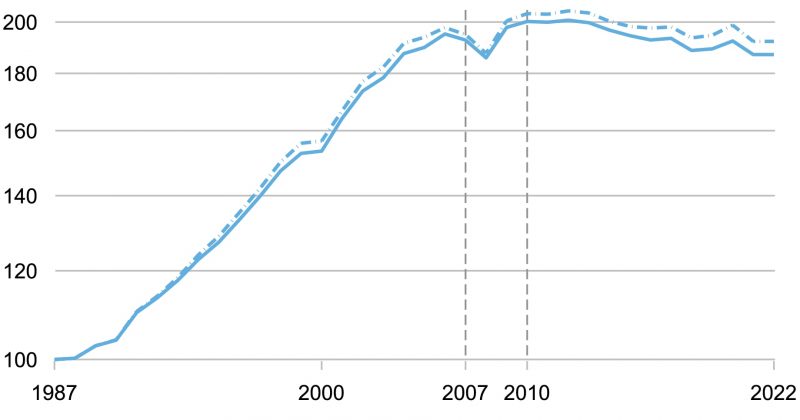
The manufacturing industry, which was in a slump last year partly due to President Trump’s on-again, off-again tariffs, is now growing.The latest Purchasing Managers Report from the Institute for Supply Management showed the expansion continued into May, in spite of the headwinds from war and higher oil prices. Production, new orders, imports, and exports were all up.But employment was not. Manufacturing payrolls are still contracting for the 32nd straight month. And over the past year, as of the Bureau of Labor Statistics’ April jobs report, the economy has shed 66,000 manufacturing jobs.The ISM data was clear that the sector has been expanding for the past five months now, and that May was stronger than April. But executives remain hesitant to go all in and hire more workers, said ISM survey chair Susan Spence. That’s because there’s still so much that’s unknown about tariffs, war, and inflation.“When things are uncertain, you don’t invest in capital equipment and you don’t hire people,” Spence said. “Because it’s very costly to hire and train and you don’t want to have to lay off people if your order book goes the wrong way.”Spence said hiring managers are telling her that they’re stressed out.“(They’re saying) we’re not being allowed to backfill people that are leaving, and it’s getting really, really hard for those remaining,” she said.The uptick in manufacturing is at least good for workers’ paychecks, but not so great for those looking to get hired, said labor economist Alí Bustamante at the University of New Orleans.“We’re seeing a jobless manufacturing rebound,” Bustamante said. “A lot of firms, they’re investing more in machines, more in overtime, expanding shifts. And we are probably going to see that in higher productivity per worker.”Remember, Trump’s tariffs were supposed to give domestic producers a competitive edge — leading to reshoring and more manufacturing jobs. Bustamante said that hasn’t happened.“The first year and a half of these tariffs during the second Trump administration, we can say pretty unequivocally there hasn’t been an employment rebound in manufacturing,” he said. Michael Gritton, who runs the regional workforce development agency KentuckianaWorks in Louisville, Kentucky, said he saw that all play out last year.“In manufacturing, we lost 2,700 jobs across the region,” he said.Local manufacturers like GE Appliances and Ford are planning to expand in the coming year.“Output for manufacturing is going to keep going up,” Gritton said.But he doesn’t expect a lot of net jobs to be added, because AI and automation are doing more and more of the work.
The manufacturing sector is growing, but isn't adding jobs
Production, new orders, imports and exports all increased, according to the latest Purchasing Managers Report from ISM. But according to the Labor Department, the economy has shed 66,000 manufacturing jobs over the past year.
416 words~2 min read