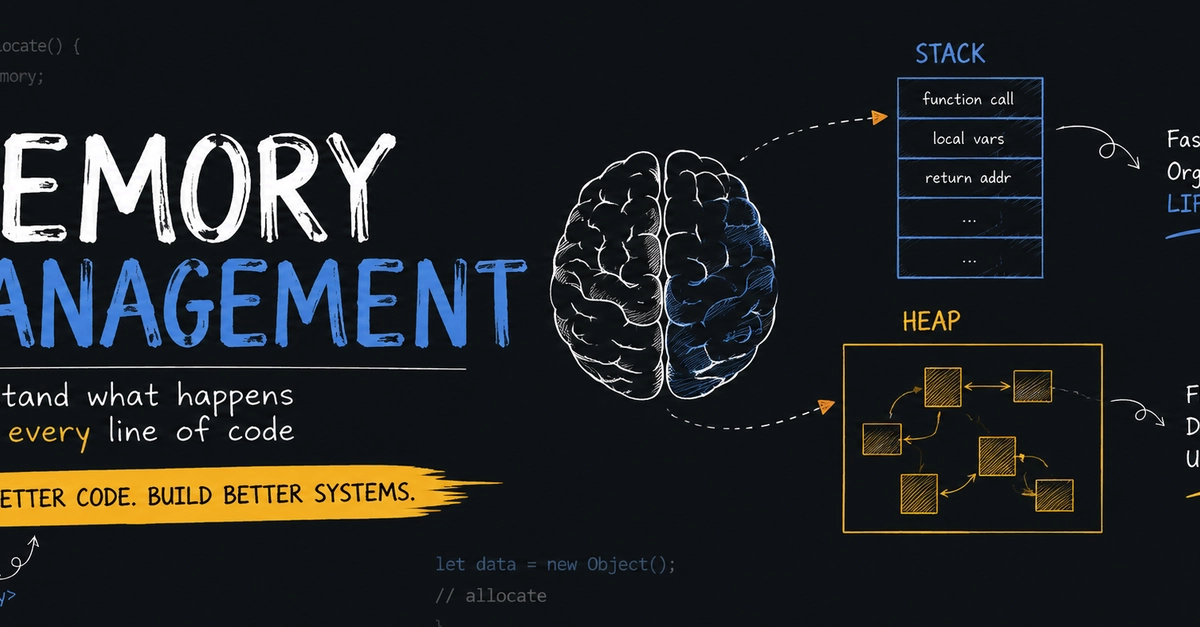
Most .NET developers go years without thinking about memory. The runtime allocates, the garbage collector cleans up, and the application works. Until it doesn't — until a service that ran fine at 100 requests per second starts pausing under load, your container gets OOM-killed at 3 a.m., or your cloud bill creeps up because every pod needs twice the memory you budgeted.
This article is about the gap between "memory just works" and "memory works well under production load." It's written for developers who already know C# and want to understand what the runtime is actually doing — and how to make it do less.
1. Introduction
Why memory management matters
Managed memory removes a whole category of bugs: no manual free(), no dangling pointers, no double-frees. But it doesn't remove cost. Every allocation has a price, and the garbage collector (GC) pays it back later, often at the least convenient moment.