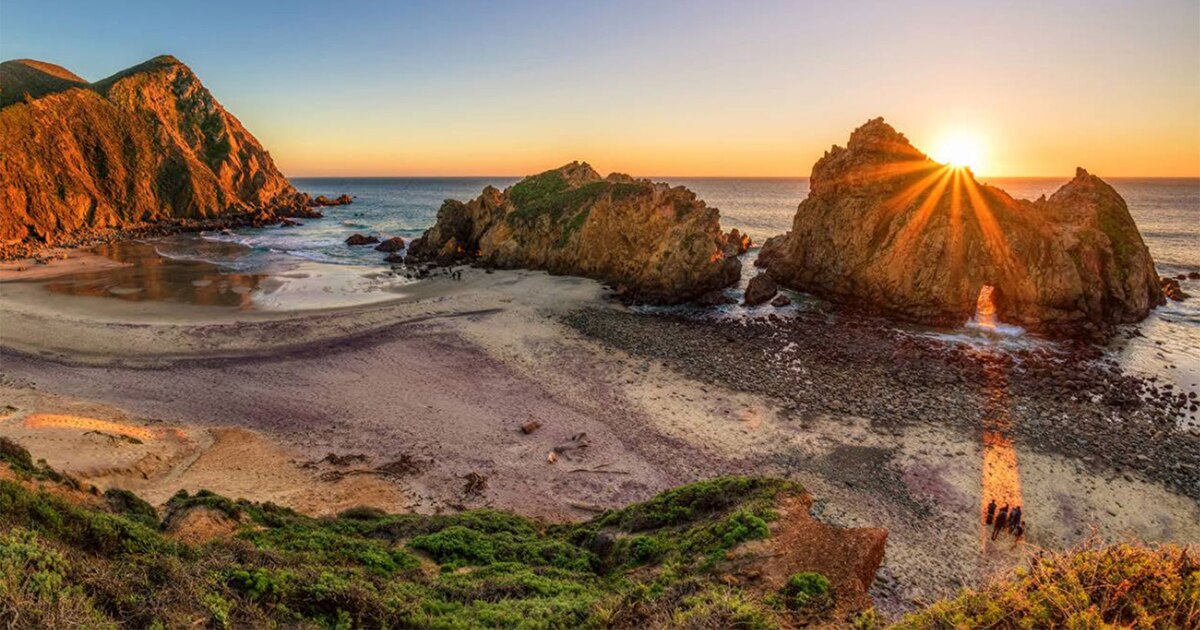
1 / 12The world's most beautiful pink-sand beaches, rankedNathan Jennings / UnsplashMost beaches earn their reputation through the quality of their water or the shape of their shoreline. Pink-sand beaches earn theirs through something rarer: a geological or biological accident that turns the sand itself into the spectacle. These coastlines do not get their color from filters or marketing copy. The pink is real, produced by forces that operated long before any traveler arrived to notice them, and the beaches that result from those forces sit among the most visually distinctive stretches of coastline on Earth.The mechanisms behind the color vary by location. Crushed coral is one source, producing soft blush tones when it accumulates in sufficient density among white sand. Fragments of red and pink shells from marine organisms are found at other sites. Some of the most famous pink beaches owe their hue to foraminifera, a species of microscopic organism with a reddish shell that washes ashore in such quantities that it shifts the color of the sand perceptibly. Other beaches draw their tint from inland geology: mineral deposits in nearby rock formations that erosion delivers to the beach over thousands of years. Each mechanism produces a slightly different result, which is why no two pink beaches look quite alike.The 11 beaches below appear in Travel + Leisure, spanning locations from the Caribbean to the Mediterranean to the South Pacific. The selection covers a range of settings, from remote island atolls accessible only by small boat to well-developed resort coastlines with direct beach access from the accommodation. What connects them is the color of the sand and the natural processes that created it.1 / 101. Elafonissi Beach holds one of Europe’s most recognized pink shoresPavel Spindler / Wikimedia Commons (CC A 3.0)Elafonissi Beach sits on the southwest coast of Crete, where colorful microorganisms and coral fragments have produced pink-tinted sand that draws visitors from across Europe and beyond. The beach ranks consistently among the most beautiful in the world, a distinction supported by its combination of color, water clarity, and natural setting. The pink tone is clearest at the water’s edge and in dry conditions, where the mineral composition of the sand registers without the visual interference of wave action or deep shade.A low tide at Elafonissi reveals a natural feature that separates it from most Mediterranean beaches: a shallow crossing that allows visitors to wade out to a small island just offshore. The island sits within a protected nature reserve, and the crossing requires nothing beyond a willingness to walk through ankle-deep water over a sandy bottom. The reserve status of the offshore area limits development pressure on the surrounding coastline and keeps the natural environment in a condition that justifies the beach’s reputation.The setting on Crete’s southwestern coast places Elafonissi within reach of the island’s interior mountain terrain and the historic sites concentrated in the central and eastern regions. Travelers $TRV who combine a beach visit with broader exploration of Crete find that the southwestern corner of the island operates in a quieter register than the resort-heavy north coast, with fewer crowds and a landscape shaped more by agriculture and gorge terrain than by tourism infrastructure.The beach draws significant visitor numbers during the summer months, and the combination of a protected reserve designation and a remote southwestern location means parking and access can require planning. Arriving early in the day gives visitors the best combination of manageable crowds and optimal light for observing the sand’s color, which the low-angle morning light renders most clearly.2 / 102. Pantai Merah offers a pink beach on an island defined by its wildlifeAlex / UnsplashKomodo Island in Indonesia has two natural distinctions: it is home to the Komodo dragon, the world’s largest lizard, and it features Pantai Merah, a stretch of pink-sand beach where the color results from a mixture of white and red sand, filled with microscopic rose-colored marine organisms. The gradient of pink across the beach shifts with the proportions of each sand type in a given section, producing a shoreline that changes character as a visitor walks its length.The foraminifera responsible for the beach’s color are the same microscopic organisms that produce pink sand at several other locations on this list, but Pantai Merah’s remote setting gives the beach a quality that more accessible pink-sand destinations lack. No hotels operate on Komodo Island itself, which keeps visitor numbers lower than the beach’s visual appeal might otherwise attract, and preserves the surrounding environment from the development pressure that follows permanent tourism infrastructure. Most travelers base themselves in Labuan Bajo on the nearby island of Flores and access Komodo Island by boat.The island’s wildlife adds a dimension unavailable at any other beach destination on this list. Komodo dragons roam the island’s terrain and occasionally approach the beach, which means visits typically occur with a licensed guide and follow protocols that maintain a safe distance from the animals. The dragons can move with unexpected speed and carry bacteria in their mouths, making bites dangerous, so the guided visit structure is a practical requirement rather than a bureaucratic formality.The marine environment around Komodo Island, part of the Komodo National Park system, supports exceptional diving and snorkeling conditions. The waters surrounding the island carry strong currents that deliver nutrient-rich water to the reef systems, producing fish and coral diversity that draws divers specifically to this part of Indonesia.3 / 103. Spiaggia Rosa sits behind a protective order that keeps visitors at a distanceHusha Bilimale / UnsplashIsola Budelli, a small island off the northern coast of Sardinia, holds one of the world’s most unusual pink-sand beaches. Spiaggia Rosa gets its color from a specific combination of fossils, crushed coral, and colored stones that gives the sand a range of tones from fuchsia to salmon depending on lighting conditions and moisture levels. The intensity of the color distinguishes this beach from softer pink shores elsewhere: at its most vivid, the sand reads as a genuine rose color rather than a pale blush.Stepping on the shore is prohibited. A history of sand theft, in which visitors removed the colored material as souvenirs, depleted the beach’s natural stock enough to warrant legal protection. The prohibition is enforced, and the beach is now experienced from offshore: travelers charter boats to approach Isola Budelli and observe Spiaggia Rosa from the water. The viewing distance does not diminish the impact of the color, which registers clearly from a boat at the legal standoff distance and, in some conditions, reads more dramatically from the water than it would from standing on the sand.The surrounding waters of the La Maddalena Archipelago, within which Isola Budelli sits, are protected as a national park. The park’s clear Mediterranean waters and the cluster of small islands in the region make the boat journey to Spiaggia Rosa part of an experience that extends beyond the destination beach. The coastline of Sardinia’s northern tip and the scattered islands between it and the French island of Corsica produce a sailing and boating environment that rewards time spent on the water.The enforced distance at Spiaggia Rosa represents an unusual situation in beach tourism: a destination best experienced without landing. The protection order, however counterintuitive for travelers expecting to walk the shore, has preserved the beach’s color intensity in a way that unrestricted access would have continued to erode.4 / 104. Pink Sands Beach on Harbour Island defines the Bahamas’ most celebrated shorelineJezael Melgoza / UnsplashHarbour Island’s east-facing shore runs for miles in a consistent blush tone produced by foraminifera shells accumulating with the white sand over time. The microscopic organisms responsible for the color wash ashore in sufficient density to shift the visual character of the entire beach, and the combination of pink sand with the island’s clear turquoise water creates a color pairing that photographs well but looks, in person, better than most photographs suggest.The water clarity at Harbour Island makes the beach both practical and beautiful. Snorkeling and diving in the surrounding waters reveal the reef systems and marine populations that the island’s position in the Bahamas supports, and the calm conditions on the east-facing shore suit swimmers of all experience levels. The foraminifera that color the sand are part of an active marine ecosystem rather than a remnant of geological history, which means the beach replenishes its pink component through ongoing biological processes.Harbour Island sits off the northeastern coast of Eleuthera and is connected to the main island by ferry. The town of Dunmore, the island’s main settlement, occupies the western shore, and the pink beach runs the length of the eastern side. The layout gives the island a quiet residential scale on one shore and an internationally recognized beach experience on the other, with the two within walking distance of each other across a narrow strip of land.The beach’s length and the relative manageability of visitor numbers compared to more heavily developed Bahamian islands give Harbour Island a quality of access that allows a full day on the sand without the crowd density that comparable natural attractions attract elsewhere. Early morning visits, before day-tripper boats arrive from Nassau, offer the best conditions for observing the sand’s color against the low light over the Atlantic.5 / 105. Pfeiffer Beach derives its color from minerals rather than marine lifeAlessandra Verre / UnsplashCalifornia’s Pfeiffer Beach sits within Los Padres National Forest along the Big Sur coast, accessible by a narrow road that branches off Highway 1 and descends to a beach unlike any other on the California coast. The pink coloring here comes from quartz and manganese eroded from nearby rock formations over thousands of years, a geological process that has deposited enough mineral material in the sand to give the beach an almost purple tone in sections where the concentration is highest.The source of Pfeiffer Beach’s color sets it apart from every other pink beach on this list. Where most pink-sand beaches owe their hue to biological processes, foraminifera shells, or organic reef material, Pfeiffer Beach gets its color from the land: mineral deposits that runoff and wave action have carried from the cliffs and rock formations surrounding the cove. The result is a color that skews toward violet in bright light rather than the warm blush tones of coral-derived pink beaches, which gives the beach a character distinct from its tropical counterparts.The surrounding Big Sur landscape amplifies the beach’s visual impact. Dramatic cliffs, covered in coastal vegetation, rise on three sides of the cove, and the Pacific enters through a rock arch at one end of the beach. The combination of colored sand, rock formations, and the grey-green Pacific in this stretch of coast produces a scene more rugged and atmospheric than the calm turquoise settings of most pink-sand beaches. Big Sur’s fog and weather add to this quality: the beach can look entirely different under overcast conditions than under direct sun.The road to Pfeiffer Beach closes during periods of severe weather, and the parking area is small enough that access requires arriving early or checking conditions before driving. The inconvenience of access keeps the beach from becoming overwhelmed during peak visitor season, preserving the experience the setting offers.6 / 106. Playa de Ses Illetes brings pink sand to Spain’s most sustainable Mediterranean islandJuan Pablo Gonzalez / PexelsFormentera, the smallest and least developed of Spain’s Balearic Islands, holds Playa de Ses Illetes on the Es Trucadors peninsula at the island’s northern tip. The beach draws visitors seeking white sand laced with pink coral fragments, laid out along a narrow spit of land with water on both sides. The double exposure to the Mediterranean gives the beach a light quality unusual for the Spanish coastline: the sun reflects off water from two directions simultaneously for much of the day.Formentera’s designation as a sustainable island shapes the experience at Ses Illetes. Development restrictions have kept the beach and its immediate surroundings in a condition that more heavily touristed Balearic destinations cannot match, and the shallow waters on both sides of the peninsula support a seagrass meadow ecosystem that the island’s environmental management actively protects. The clarity of the water over these seagrass beds gives the shallows a luminous quality, adding to the beach’s visual appeal.The island itself operates on a small, human scale that rewards slow exploration. Ses Illetes sits at the end of a peninsula accessible by foot or bicycle from the island’s main settlements, and the journey along the narrow strip of land toward the beach constitutes part of the experience. The Mediterranean light in this part of Spain, particularly in the morning and late afternoon, gives the pink coral fragments in the sand a warmth that midday sun tends to flatten.Formentera attracts a crowd that tends toward the low-key, independent-traveling end of the Balearic spectrum, which gives Ses Illetes a more relaxed atmosphere than the beaches of Ibiza, which typically offer.7 / 107. Tikehau provides a remote French Polynesian setting for pink and white sandCredit: Tahiti.comAbout an hour’s flight from Tahiti, the atoll of Tikehau holds pink-sand beaches on a scale calibrated to the roughly 500 permanent residents who call the island home. The small permanent population and the atoll’s remote position in French Polynesia’s Tuamotu Archipelago keep visitor numbers low by the standards of better-known Pacific beach destinations, producing a quiet atmosphere that the beach’s natural setting rewards. The calm lagoon waters that the atoll’s coral ring encloses carry abundant marine life at accessible depths.The coral structure of a Pacific atoll produces a different pink-sand character than the foraminifera beaches of the Caribbean or the mineral beaches of California. Tikehau’s sand mixes white and pink tones that shift in proportion across different sections of the beach, and the water color in the shallow lagoon interior creates a visual context for the pink sand, rather than against it. The lagoon’s fish population, noted for its density even within the biodiverse waters of French Polynesia, gives snorkelers access to marine life without traveling far from the beach.The remoteness of Tikehau relative to Tahiti, the region’s main hub, means that visitors tend to stay for multiple days rather than making a day trip, allowing the atoll's pace to register in a way a single beach afternoon cannot. The low-density accommodation options on the island, including shore bungalows with lagoon views, place guests within immediate reach of the pink sand and the water beyond it.Tikehau represents the quieter, less commercialized end of French Polynesian beach tourism, setting it apart from the heavily photographed overwater-bungalow imagery associated with Bora Bora. Travelers $TRV who reach Tikehau find a beach experience shaped primarily by the natural environment rather than resort infrastructure.8 / 108. Pink Beach on Bonaire pairs a colorful shore with world-class diving watersMarita Mones / UnsplashBonaire, a small Dutch island in the southern Caribbean, earns its beach’s color from foraminifera shells, the same microscopic marine organisms responsible for the pink sand at Harbour Island and several other entries on this list. The beach sits along a coastline that the island’s diving community already considers one of the finest in the Caribbean, and the combination of a pink shore with exceptional underwater visibility and coral reef systems gives Bonaire a natural offering that extends from the sand into the water.Diving around Bonaire operates under a marine park protection system that has kept the reef systems in strong condition, relative to more heavily trafficked Caribbean dive destinations. The shore diving model that Bonaire pioneered, in which divers walk directly from the beach into reef environments without needing a boat, applies at Pink Beach as well as at the island’s other established dive sites. The accessibility of the reef from the shoreline makes Bonaire’s underwater environment unusually easy to reach.The island’s small scale and relatively undeveloped character give Pink Beach a quiet quality that Caribbean beaches with comparable natural credentials do not always maintain. Bonaire attracts travelers who come specifically for the diving and the natural environment, which produces a visitor culture oriented toward the reef and the water rather than beach bars and resort amenities.The southern Caribbean location gives Bonaire consistently calm weather and water conditions compared to islands further north in the chain, and the trade winds that cross the island reduce the heat to a level that makes a full day on the beach manageable year-round. The combination of consistent conditions, a protected reef, and a genuinely pink shore makes Bonaire’s Pink Beach a strong case for any traveler who wants the underwater and above-water experience together.9 / 109. Horseshoe Bay Beach delivers Bermuda’s most photographed pink shorelineCredit: Bermuda.comHorseshoe Bay Beach sits on Bermuda’s southern coast, where the combination of pink sand and turquoise water has made it the island’s most recognized natural attraction. The pink tone of the sand derives from shell fragments and coral material that Bermuda’s reef systems contribute to the beach over time, producing a consistent blush across the full length of the bay. The horseshoe shape of the cove concentrates the most vivid sand along the interior curve, where the beach is widest and the water shallowest.Bermuda’s position in the western North Atlantic gives Horseshoe Bay a natural context different from the tropical Caribbean settings of many pink-sand beaches. The water is clear but not the flat, wind-sheltered turquoise of an atoll lagoon; wave energy enters the bay with enough force to make bodyboarding a practical activity, and the exposed headlands on either side of the cove frame a view that reads as more Atlantic than tropical. The combination of pink sand with this slightly more dynamic marine environment distinguishes Horseshoe Bay from calmer pink-sand destinations.The beach’s accessibility from Bermuda’s main roads and the presence of facilities along the shore make it a practical destination for a full-day visit without requiring logistical planning beyond transportation to the south shore. The surrounding cove system extends into smaller adjacent beaches accessible by walking along the headland paths, giving visitors who arrive early the option of finding quieter sections of coastline connected to the main bay.Bermuda’s pink sand has become embedded in the island’s identity in a way that the beach’s natural credentials justify: this is not a marketing characterization but an accurate description of a coastline that earns the description visually and scientifically.10 / 1010. Grande Santa Cruz Island limits daily visitors to protect its coral-pink shoreMo Eld / PexelsThe Philippines has beaches with sand in a range of colors, from white to volcanic black, but Grande Santa Cruz Island in the southern Zamboanga peninsula stands apart for its pink coralline sand. The color comes from the erosion of red organ pipe coral off the island’s coast, a process that delivers enough coral material to the beach to produce a consistent pink tone across the sand. The island welcomes a limited number of daily visitors, a restriction imposed by local authorities to manage environmental impact on the beach and the surrounding reef system.The access structure on Grande Santa Cruz Island differs from that of most beach destinations. Visitors travel by a 20-minute boat ride from the city of Zamboanga, and the daily visitor cap means that advance ticket purchase is advisable, particularly during peak travel periods. The limitation produces a beach experience with lower density than the natural setting’s appeal would otherwise attract, which benefits both the environment and the quality of the visit.The southern Philippine setting gives Grande Santa Cruz Island a marine environment shaped by the Coral Triangle, a biodiverse ocean zone encompassing the Philippines, Indonesia, and surrounding waters. The reef systems that produce the island’s coral sand also support marine populations of the density that this part of the Pacific is known for, and the snorkeling conditions around the island reflect the broader richness of the regional marine environment.Zamboanga, the nearest city and the practical base for visiting Grande Santa Cruz Island, sits in a part of the Philippines that draws fewer international tourists than the more heavily promoted Palawan or Visayas regions. The relative unfamiliarity of the destination among international visitors gives the island a character that more widely known Philippine beach destinations have long since moved beyond.
The world's most beautiful pink-sand beaches, ranked
From a Cretan beach tinted pink by marine organisms to a Sardinian shore so depleted by souvenir hunters that landing on it is now illegal
3,337 words~15 min read