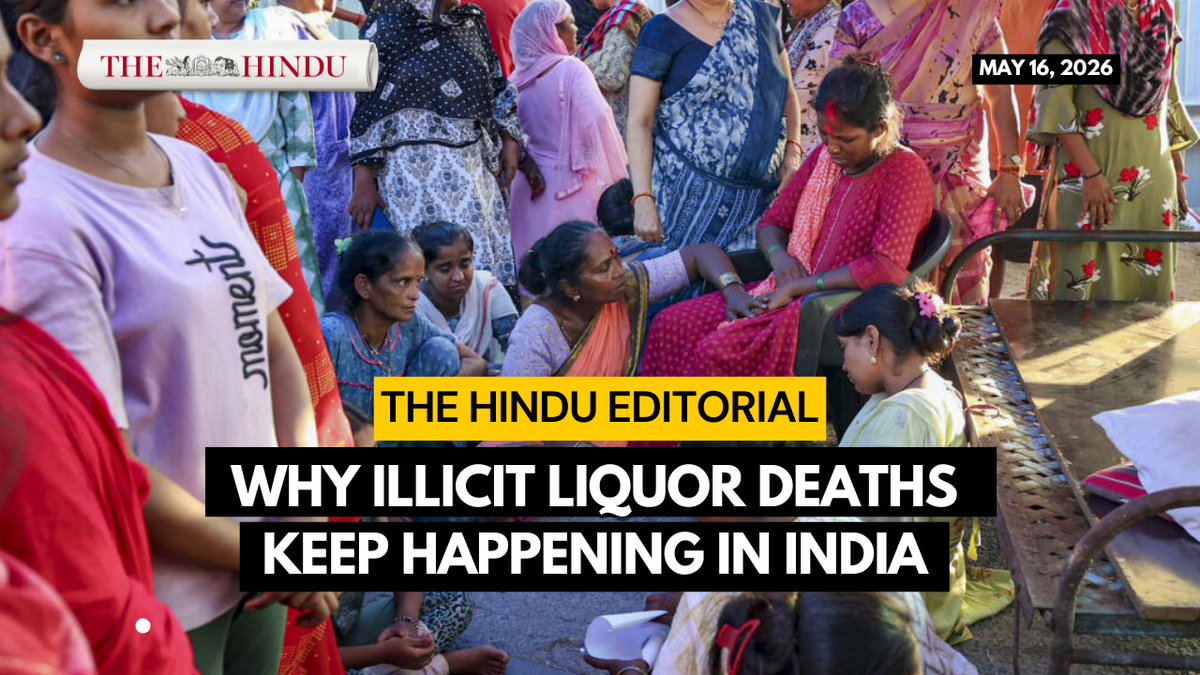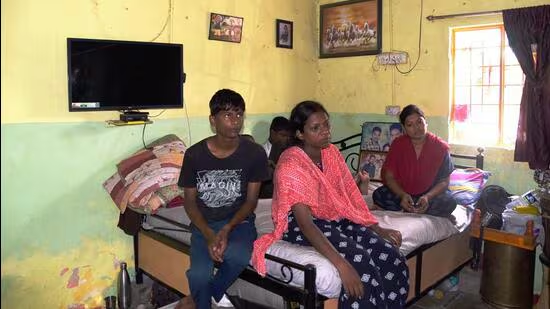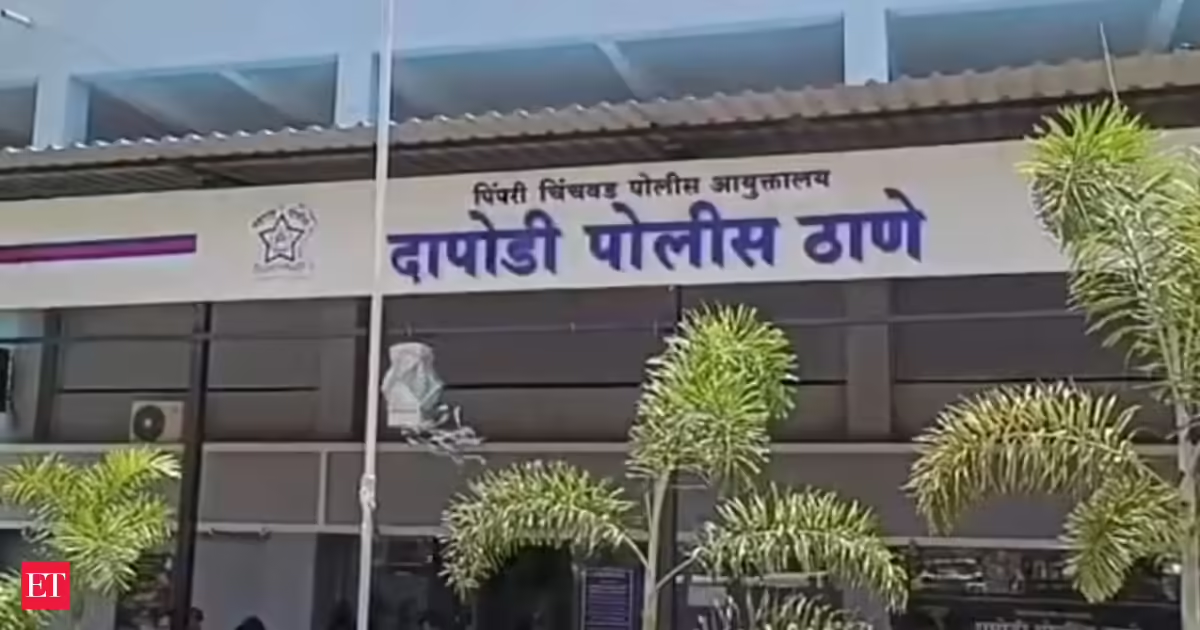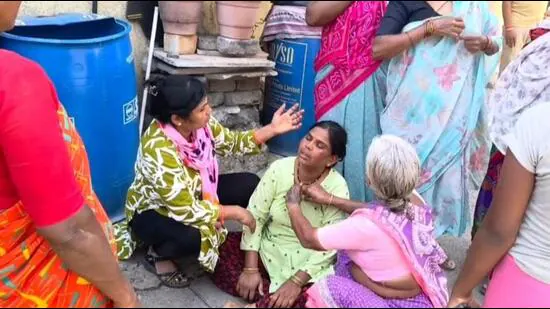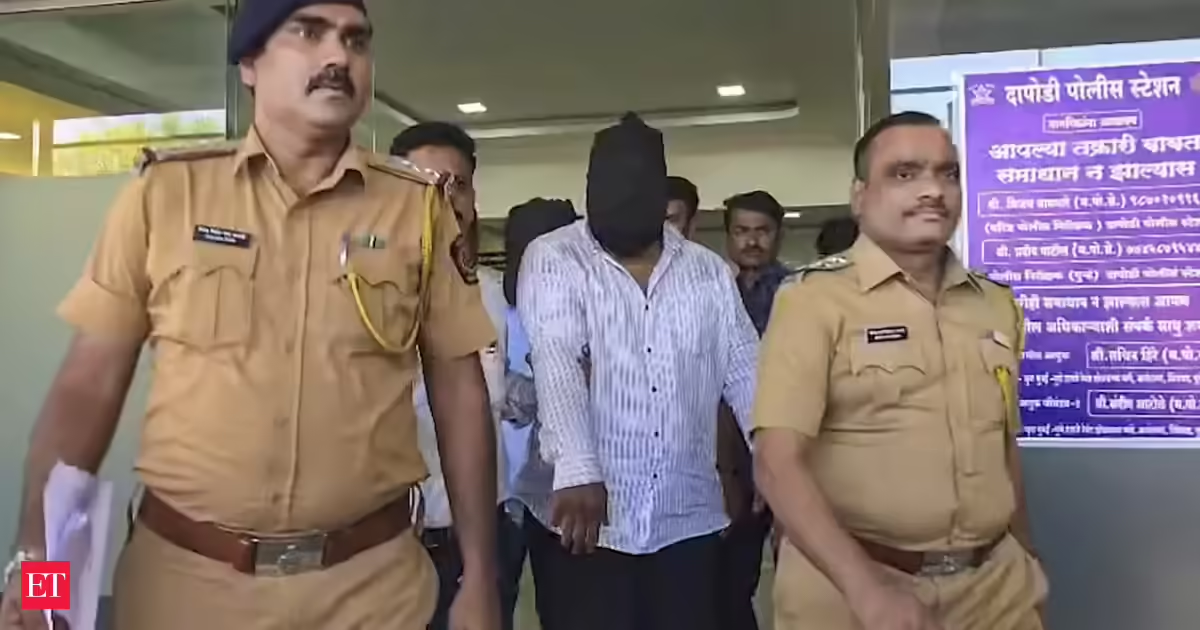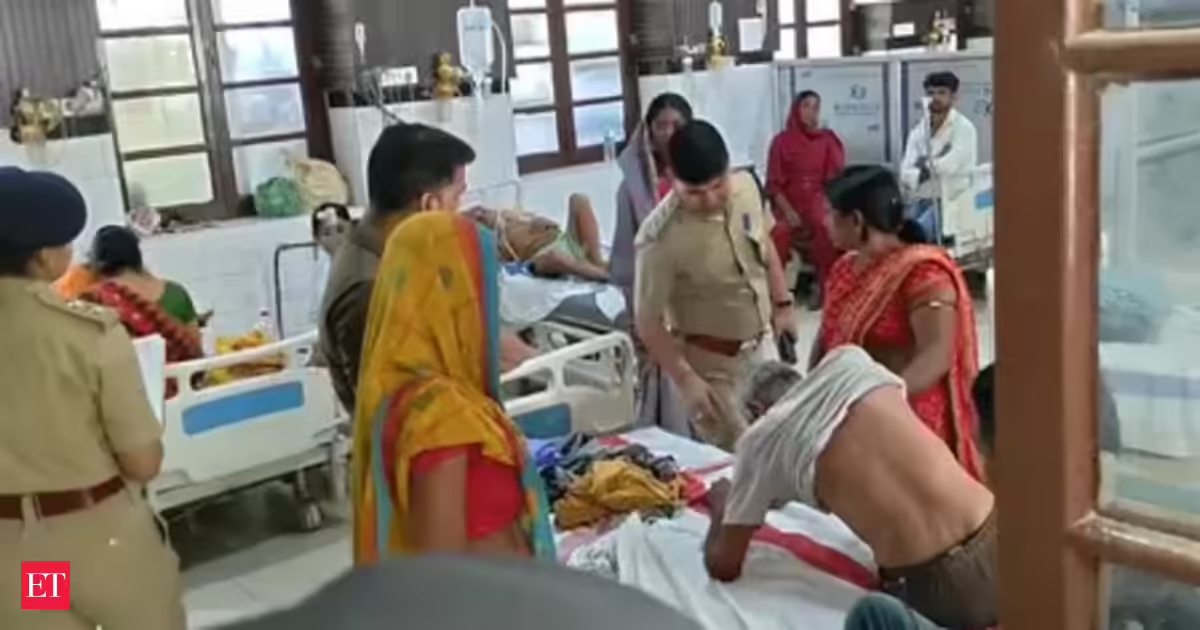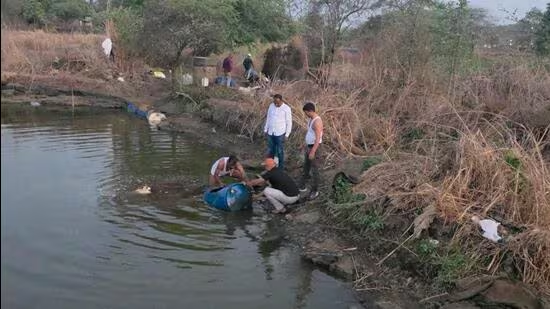
India has suffered multiple mass deaths due to consuming illicit liquor, across Tamil Nadu, Gujarat, Punjab, Uttar Pradesh, Bihar, Assam, and Maharashtra. The Malwani incident in 2015, which left over 100 people dead, prompted official promises of systemic reform that never fully materialised — neither there nor elsewhere. The Pune-Pimpri-Chinchwad tragedy unfolded last week with more than a dozen victims of working-class backgrounds in poor neighbourhoods. Preliminary investigation has revealed a better than ad hoc supply chain with industry-grade methanol — the toxin behind most hooch tragedies— brought from outside the State and mixed with ethanol to produce a highly potent country liquor. The demand for licensed alcohol faces high State taxes, encouraging low-income individuals to turn to illicit liquor. On the other hand, adding industrial methanol increases the batch volume at negligible input cost, dramatically improving margins, although some people under investigation have also said during official questioning that it is not in the interest of ‘regular’ vendors to poison their ‘customers’. Nonetheless, such operations are typically semi-visible local economies that get by on tolerance rather than secrecy, and so allegations of police and local authorities’ complicity must be investigated. Early enforcement following most deadly incidents only arrests retail vendors; investigations into upstream suppliers and alleged kingpins have frequently proved uneven or inconclusive.Indeed, these tragedies recur due to a perfect storm of factors that are able to repeatedly come together. One major regulatory gap in efforts to track methanol downstream is how easily it is pilfered and diverted for illicit liquor. Most victims are daily-wage labourers, and scholars have argued that the physical toll of manual labour creates a demand for cheap relief that, together with economic precarity and addiction, outweighs the wariness of poisonous substances. Since the victims are often from marginalised communities, the sustained political will needed to implement reforms — including better methanol accounting and affordable alcohol alternatives, required to break the cycle — is often lacking. In a 2024 analysis, public health experts found that higher prices for legal liquor push the poorest consumers toward the illicit market, which accounts for an estimated 40% of alcohol consumption in India. Likewise, total bans as in Bihar and Gujarat could deflect the market to criminal syndicates, where quality control is optional and oversight is poor. Finally, legal reviews have concluded that while the big fish are rarely caught, even those arrested are rarely convicted. Without these improvements, regulatory loopholes and weak enforcement will sustain illicit liquor as a public health crisis. Published - June 02, 2026 12:20 am IST
Perfect storm: On illicit liquor in India
Without improvements, regulatory loopholes and weak enforcement will sustain illicit liquor as a public health crisis in India
422 words~2 min read