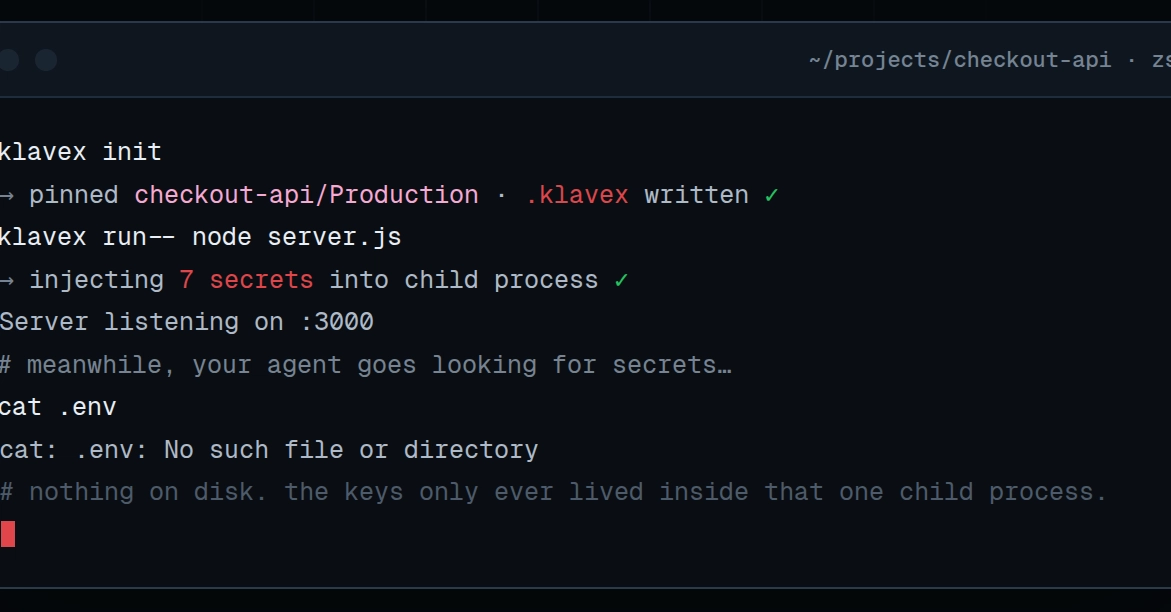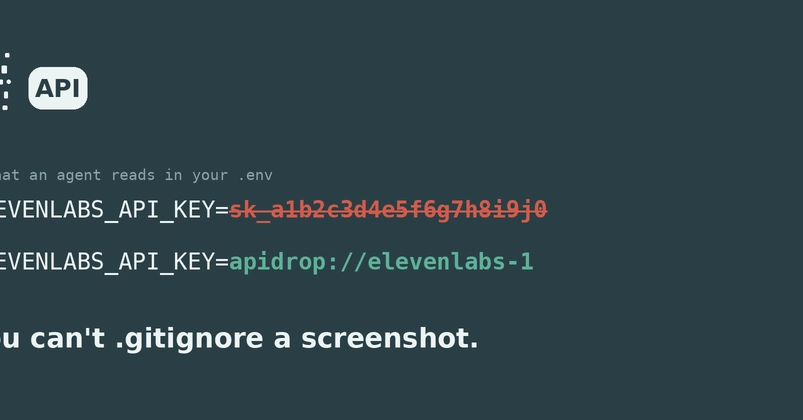
Every coding agent I use can read my .env file. Every one of them is a single prompt away from streaming its contents to a server I don't control. The fix has been obvious since the day Claude Code launched — redact on the way out, rehydrate on the way in — and a year later, no major vendor has built it into the client where it belongs.
Third-party proxies that do a version of this exist. The agents themselves don't ship it. That gap is the whole story: the one place this protection makes sense is the one place it's missing.
Start from an uncomfortable assumption — anything you send to an inference endpoint has zero security. Every major provider would object, and on paper they'd have a case. But two years of provider-side leaks have convinced me it's the safer bet to assume the worst. If you wouldn't paste a value into a public Slack channel, you shouldn't hand it to a remote model either. That covers two overlapping buckets: secrets like API tokens, private keys, and passwords; and personal data like names, phone numbers, and the occasional social security number that's somehow both at once. A proxy sitting in the middle can scan for all of it.
The Shape of the Fix
A local proxy sits between the agent and the inference endpoint. On the outbound side it scans the payload for anything that looks sensitive and replaces each match with a deterministic placeholder — [[REDACTED_PHONE:8f3a]], [[REDACTED_TOKEN:3f2a]], one per distinct value. Alongside the redacted payload it appends a short instruction telling the model what those placeholders are: opaque strings the client holds privately, to be treated as inscrutable identifiers and reproduced verbatim if the response needs them.