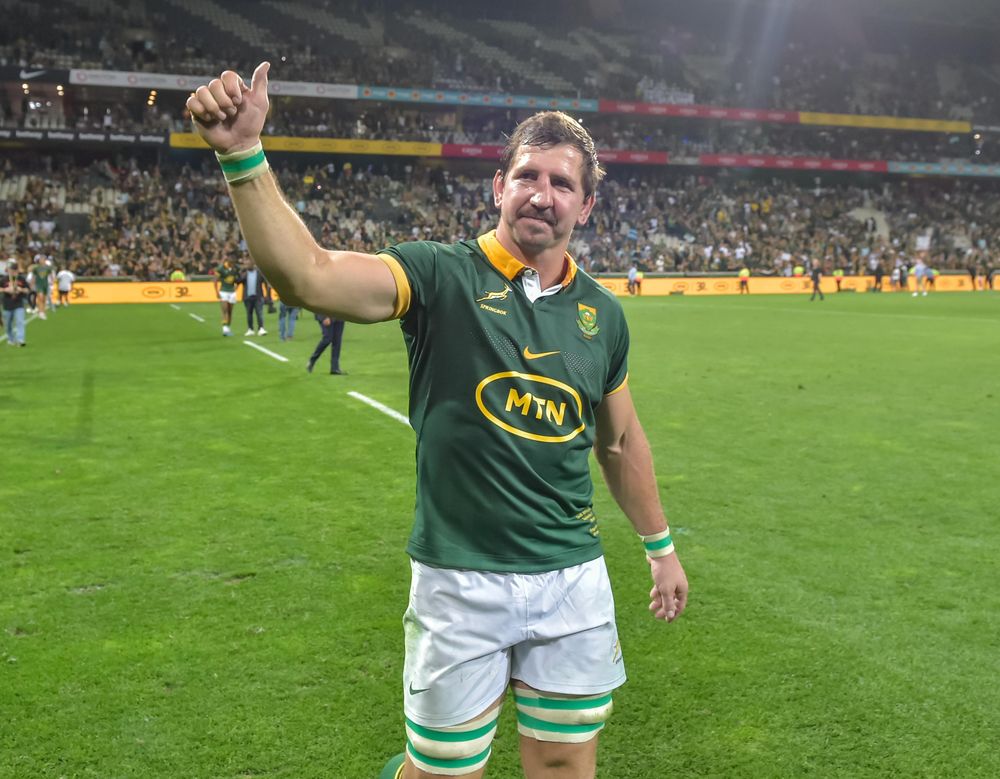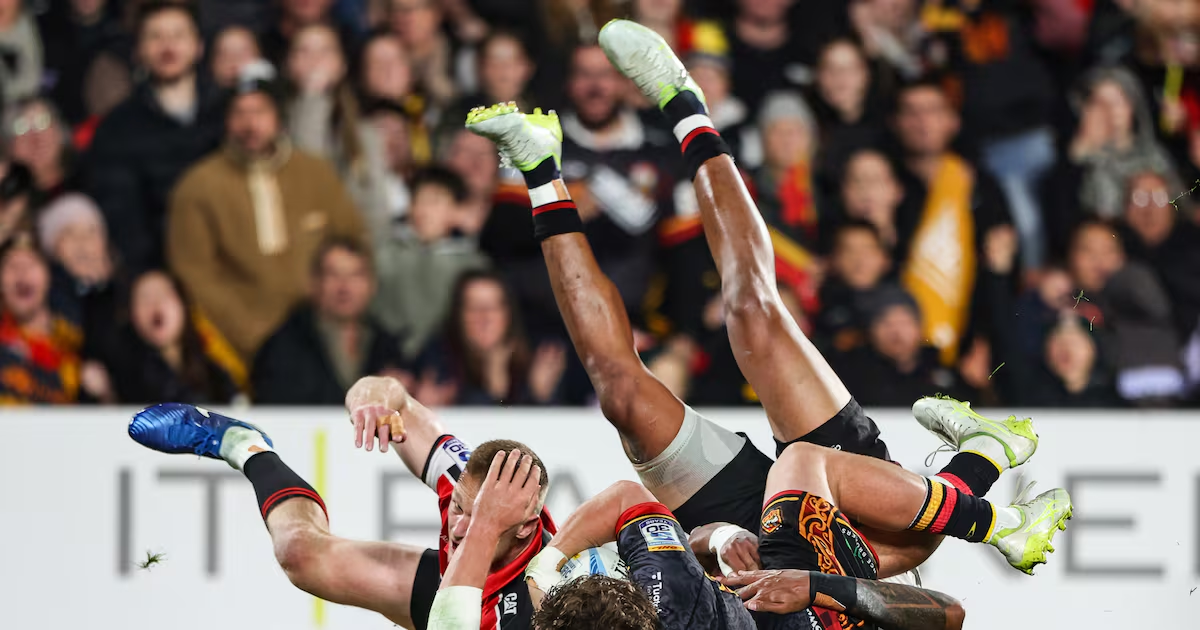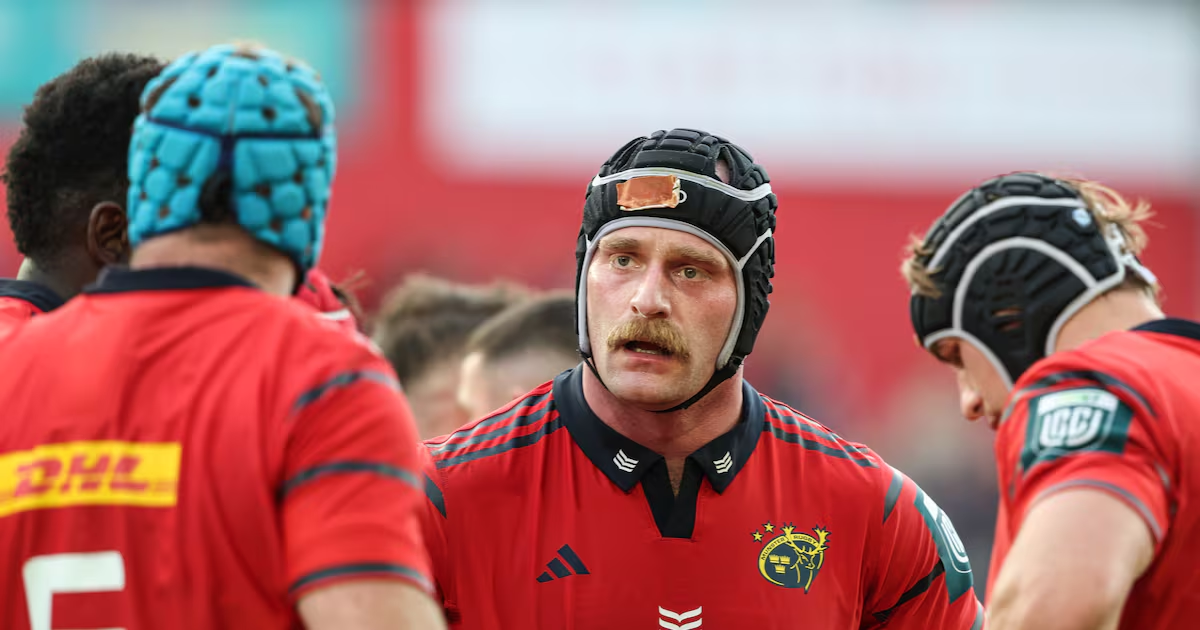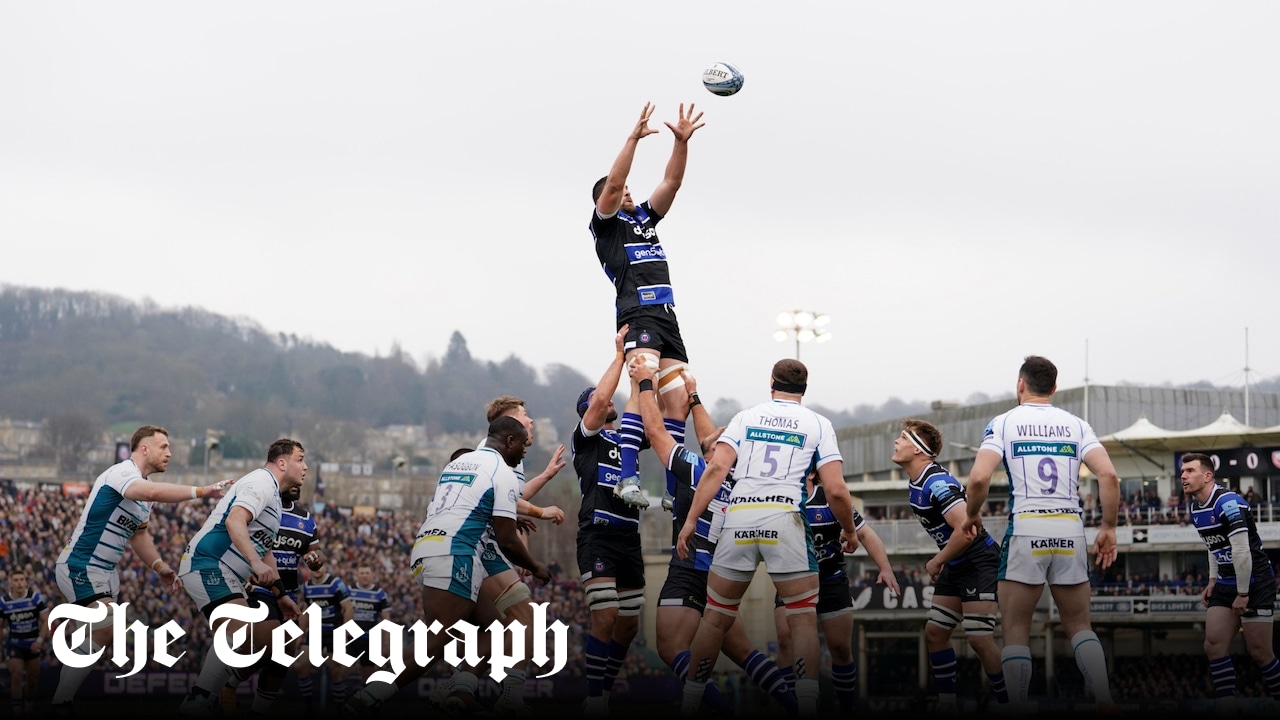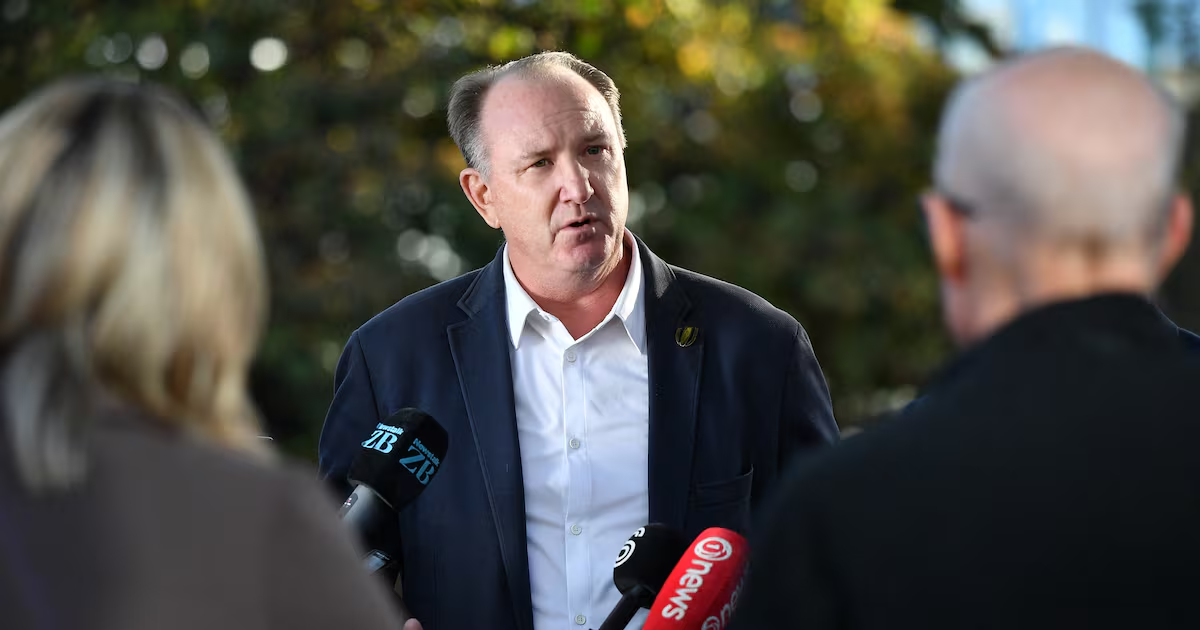
Very shortly, the great and the good of World Rugby will convene once more. First, let’s wind back the clock a little.“No changes to the laws, there was universal agreement that the on-field game is in good health across global competitions.” So spoke World Rugby (WR) after their Shape of the Game conference earlier this year. The chairman, Australian Brett Robinson, added for good measure that “the message is to focus on better explaining, selling and celebrating our sport”. Well said, but read on.Robinson had apparently travelled to the meeting determined to fix the game, which he saw as a priority. He wanted to introduce new law trials immediately, so they could be utilised at the 2027 Rugby World Cup. He had also opined that law changes should be enabled by a simple majority vote, rather than the 75 per cent required by WR’s regulations. We should all remember that “50 per cent plus one” can be divisive, rather than decisive. Just think back to Brexit.However, the chair ran into heavy headwinds. While France and South Africa were reportedly to the fore, they were certainly not alone in disagreeing with his assessment of the state of the game. The proposals were not formally discussed and Robinson wisely executed a sensible U-turn, completed with all the efficiency of a London cab driver.Having read those post-conference statements, we’d all have been forgiven for thinking “end of”.But no, Super Rugby Pacific (SRP) – principally Australia and New Zealand – have introduced a package of what they term “innovations”. Effectively, they are up the great Murray River paddling their own canoe. It’s bewildering that “no changes, agreed universally” translates into several major member unions of World Rugby doing precisely the very opposite. Once again, SRP are taking a scalpel to the scrum, introducing yet more free-kicks for minor offences which currently merit scrums. If they continue changing a few scrums to free-kicks every so often, we will wake up one day and the scrum will have gone completely AWOL, never to return. More free-kicks lead to more quick taps, which can be exceptionally difficult to defend. Any opposition player within 10m of where the tap is taken cannot be put onside, other than by a teammate. More times than not, the free-taker is “entitled” to a run of up to 10m (could be more) where he cannot be touched. Jamison Gibson-Park’s quick-tap try against England would have been a penalty try if he hadn’t scored. Cheap points.This “innovation” ignores that the scrum is one of the game’s fundamental characteristics. It is a very important attacking platform and key to enabling a game for all shapes and sizes. With reduced scrums, combined with the current lineout shambles, a hybrid version of league/union is unfolding – nothing more, nothing less. A game that throws union’s essential structures, its fundamental character and its very own charter to the wolves. Leinster's Gus McCarthy takes a lineout during last Saturday's URC quarter-final against Lions at the Aviva Stadium. Photograph: Ben Brady/Inpho The lineout now conveniently ignores current law, which states that players who enter the lineout cannot leave it until it is over. The throw-in signals the start of the lineout, but now it is actually also the moment when players leave, to prepare an illegal driving maul. The lineout is not over until the ball or a player carrying it leaves the lineout; or a normally formed maul moves through the original line of touch; or the ball goes into the 5m channel, or beyond 15m. It is easy to officiate and those attending the upcoming meeting need to double down on this issue, before it proves their undoing.It is not enough for WR to issue their new edict, which deals with players who end up on the wrong side of a maul. When players can no longer push or contest, they must get out, and not drag or pull any other player who is still legitimately involved.The global trial, whereby a crooked throw will not be whistled unless the opposition put up a jumper, has resulted in the phase too often becoming farcical. Much nonsense is happening. Try this for size: It’s play on when the ball is thrown fast and crooked to, say, the second man in the lineup. He doesn’t even have to jump – the opposition have no time to react.The trial has run into a morass of unintended consequences. It is fast becoming another contest for possession in danger of biting the dust. Australian referee Angus Gardner has given the innovations his full backing: “We’re looking for opportunities to get the game back up and operational, rather than necessarily going for a scrum.” We will probably see Gardner in the Nations Cup, where, appointed by WR, he will whistle to their tune.SRP have legitimised the pass back into a team’s own half, so that a 50/22 may be executed. Directly out of rugby league’s playbook, it will simply create more driving mauls. Exceptionally concerning is the TMO’s role in relation to foul play, with neck and croc rolls not appearing to get the attention they deserve. It seems that this is, once again, a triumph for spectacle over safety. A clear difference of opinion as to what constitutes serious foul play is certainly not healthy.It can’t really be a bolt from the blue that the “north” is unwilling to buy into radical change. The game is in rude health; scintillating, competitive rugby is being played, with huge numbers attending and tuning in on TV. If the situation was reversed, would SRP really be enthusiastically putting these innovations into play? Not a snowball’s chance in Wagga Wagga.Siya Kolisi of South Africa lifts the Rugby Championship trophy following the match between South Africa and Argentina at Allianz Stadium, London, last October. Photograph: Ryan Pierse/Getty Images SRP tell us that their approach is fan-centric. But what fans? Attendances are poor, particularly in Australia, whose financial woes are well known despite recently hosting a Lions Tour.And what of the Rugby Championship, supposedly the southern hemisphere’s equivalent of the Six Nations? Well, it won’t take place this year. Instead, New Zealand head off to South Africa, an old-fashioned tour that will undoubtedly be epic and cash-rich too. But it means a dreaded “Cancelled” notice will be glued over posters for the championship. Not much equivalence there.In all of this, WR have stated the necessity of closer alignment of refereeing across all global competitions, rather than different SRP-style directives to match officials. This doesn’t just have merit – it is utterly essential. How else can rugby union call itself a global sport if such basic uniformity does not exist? WR, including newly-appointed chief of rugby Mark Robinson, have a Herculean task to pull everything, and everybody, together. Failure is not an option, so we must wish them well. But is WR allowing the tail to wag the dog, risking a hemisphere split? Perish that thought, but where do we go next?
Owen Doyle: Rugby union in grave danger of being thrown to the wolves by new ‘innovations’
The sport is in rude health here. If the situation was reversed, would SRP really be pushing for heavy-handed change?
TL;DRAI
Super Rugby Pacific ha introdotto unilateralmente nuove regole (più free-kick, lineout modificato, tolleranza throw-in) contraddicendo l'accordo 'no changes' di World Rugby. La disgregazione del sistema globale rischia di ibridare il rugby con la league, erodendone l'identità fondamentale.
1,162 words~5 min read