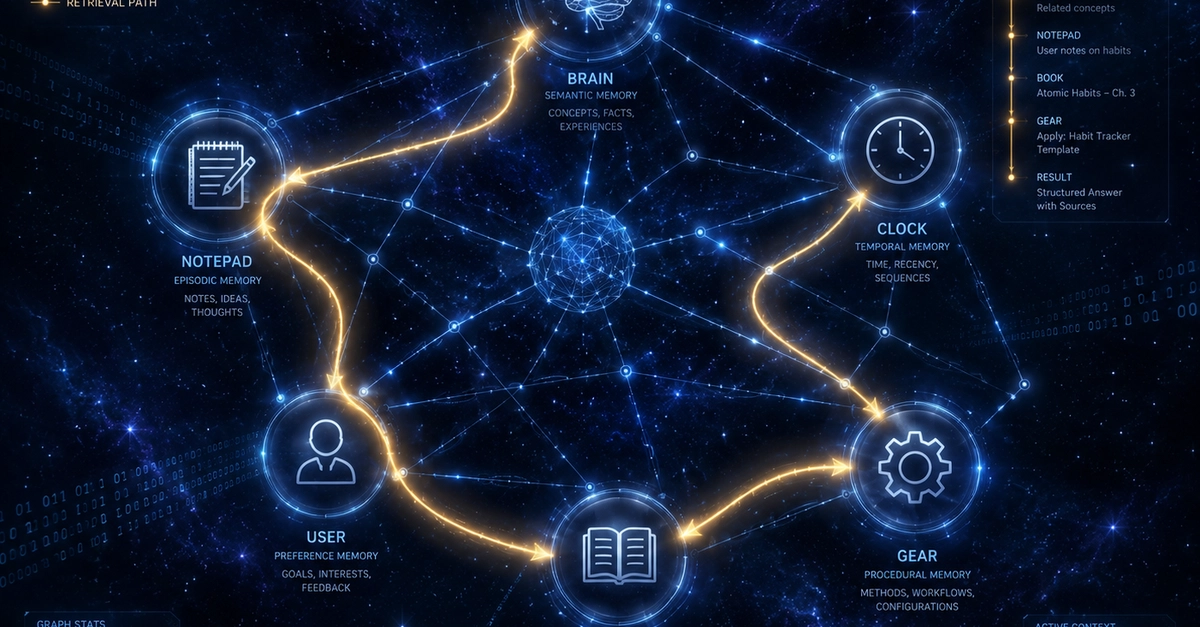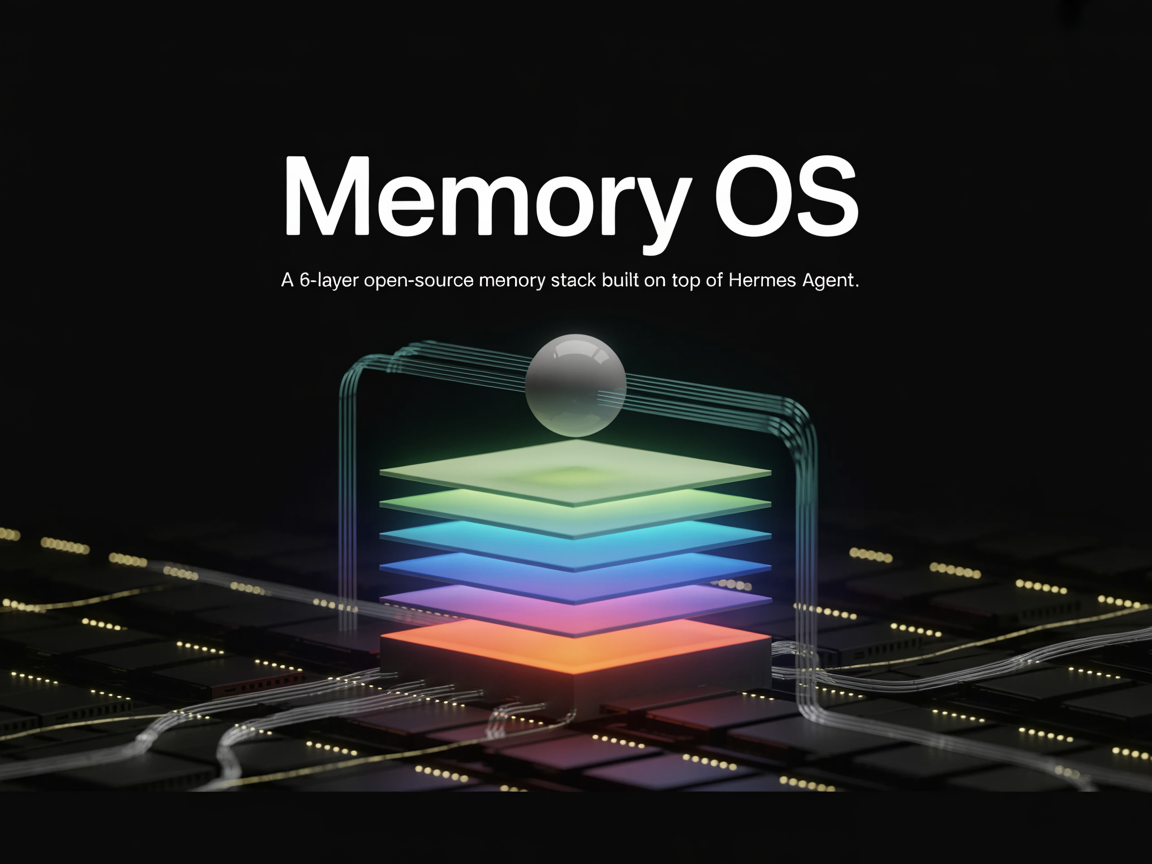
Hermes Agent already remembers across sessions. The open-source agent from Nous Research ships with curated memory files and full-text session search. But a new community project argues that built-in memory is too shallow for serious work. A new library named ‘Memory OS‘ has been released under an MIT license by a developer (ClaudioDrews). It stacks six memory layers onto Hermes. It adds a vector database, structured facts, and an auto-curated knowledge wiki. The project is new but it seems to have a good potential and its architecture shows how agent memory can be layered.
Memory OS is not a Hermes plugin you toggle on. It is a layered system that sits beside Hermes Agent’s own memory. Hermes already provides workspace files and a session database. Memory OS keeps those and adds four more layers above them. The full stack runs locally using Docker, Qdrant, Redis, and Python 3.11+. It works with any LLM provider Hermes supports, including OpenRouter, OpenAI, Anthropic, and Ollama. The README frames it as a “memory operating system,” not a single feature.
The Six Layers, From Files to Vectors
Layer 1 is Workspace. It holds MEMORY.md, USER.md, and CREATIVE.md, injected into the system prompt each turn.