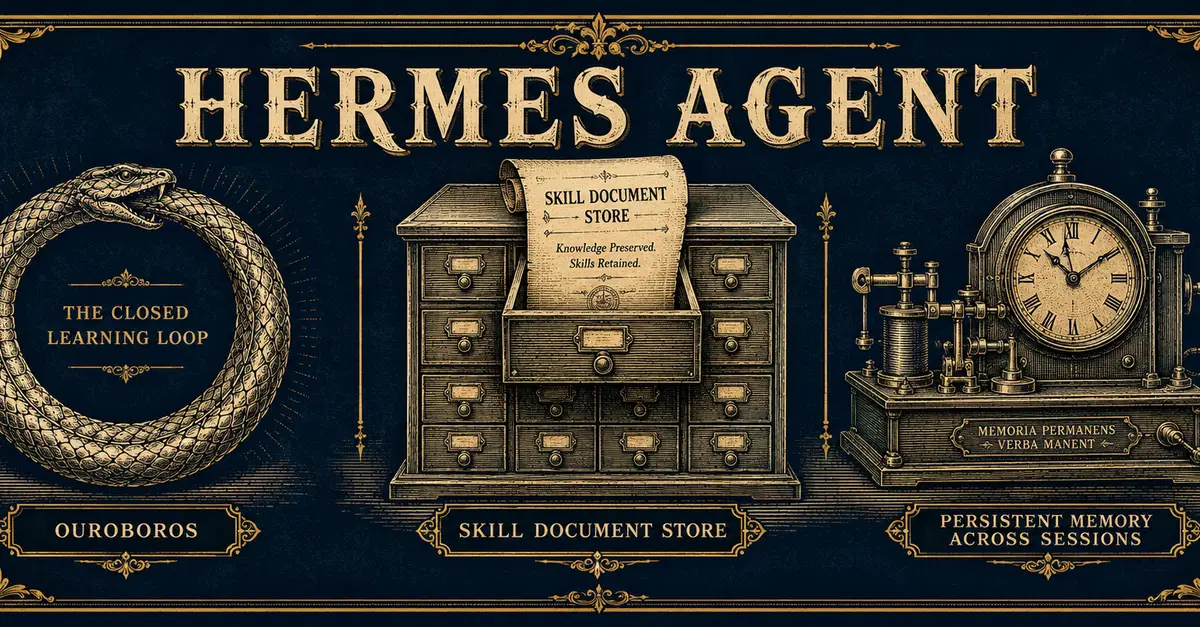
If you have ever built an autonomous AI agent, you have likely run into the "memory bloat" problem.
At first, your agent is fast, sharp, and highly efficient. It solves tasks, writes code, and stores new skills. But as the sessions pile up, something breaks. The agent's memory becomes cluttered with hundreds of highly specific, redundant, or outdated instructions. Suddenly, retrieval latency spikes, token costs skyrocket, and the agent begins to suffer from cognitive noise—hallucinating or retrieving the wrong "skill" for the job.
Most developers try to solve this with simple vector database search or basic Least Recently Used (LRU) cache eviction. But these are blunt instruments. They don't understand the meaning of the information they are discarding.
In the Hermes Agent framework, we solved this by borrowing a classic concept from systems engineering: Garbage Collection.
We built the Hermes Curator (agent/curator.py), an intelligent, stateful background daemon that continuously reviews, consolidates, and archives the agent's long-term skill library. It is the agent's "executive function," transforming messy episodic experiences into clean, structured semantic knowledge.