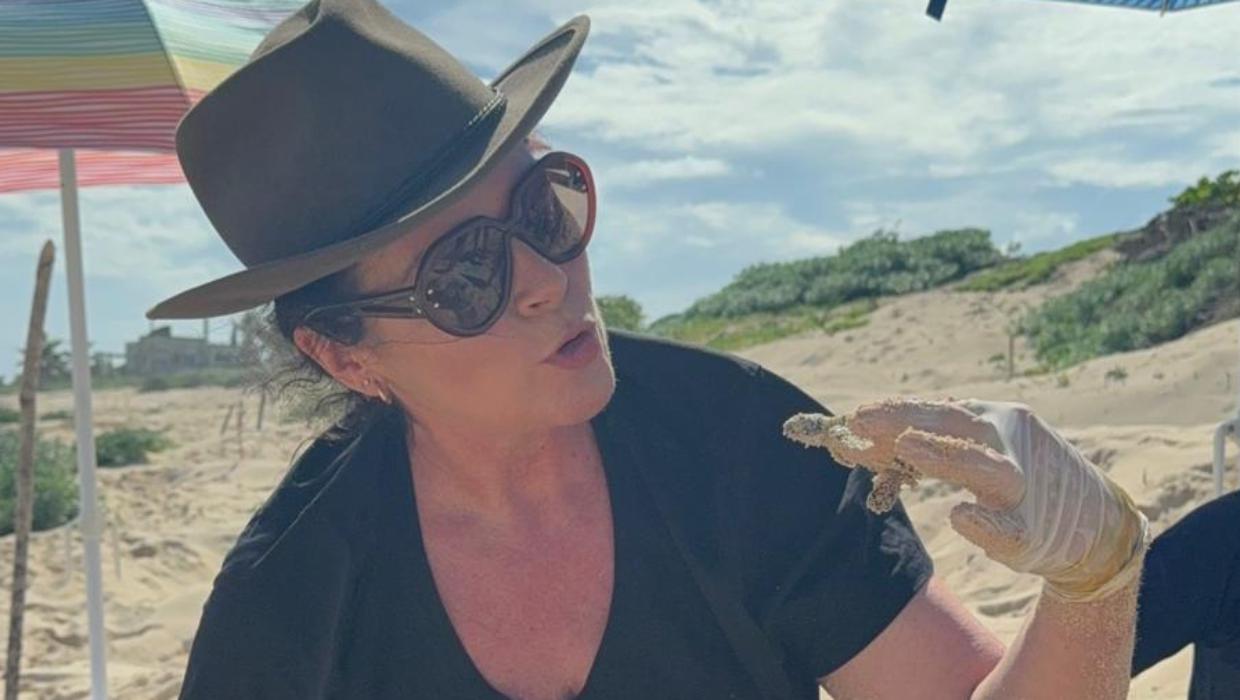
I’m lying face down in Mexican sand. Propping myself up on one elbow, my other arm reaches into a deep hole and digs, the walls in danger of collapsing at any time. A collapse could be life threatening.
While it sounds dangerous, I’m not in any strife, though the baby turtles I’m digging for could be. They’re tired little hatchlings we’re helping to safety and they definitely don’t deserve the deadly ironic twist of being almost rescued from under 80cm of sand and then getting reburied.
I’m on a conservation-focused “Protecteurs” excursion from MSC World America on a seven-night Caribbean cruise, docked here on Mexico’s largest island, Cozumel, a breeding ground for loggerhead and green sea turtles. Cozumel, I’m told, boasts more sea turtle nests per kilometre than anywhere else in Mexico. The mother turtles lay their eggs in said nests and from July to October, hatchlings climb out and make the dangerous journey down to the sea.
According to the MSC team, in the frenzy of a nest hatching, only about 80% of the turtles actually have the stamina and energy to do this themselves. Our job is to swoop in and help rescue the 20% who weren’t ready or able — handing them over to the biologists to look after them until they are strong enough to be released.