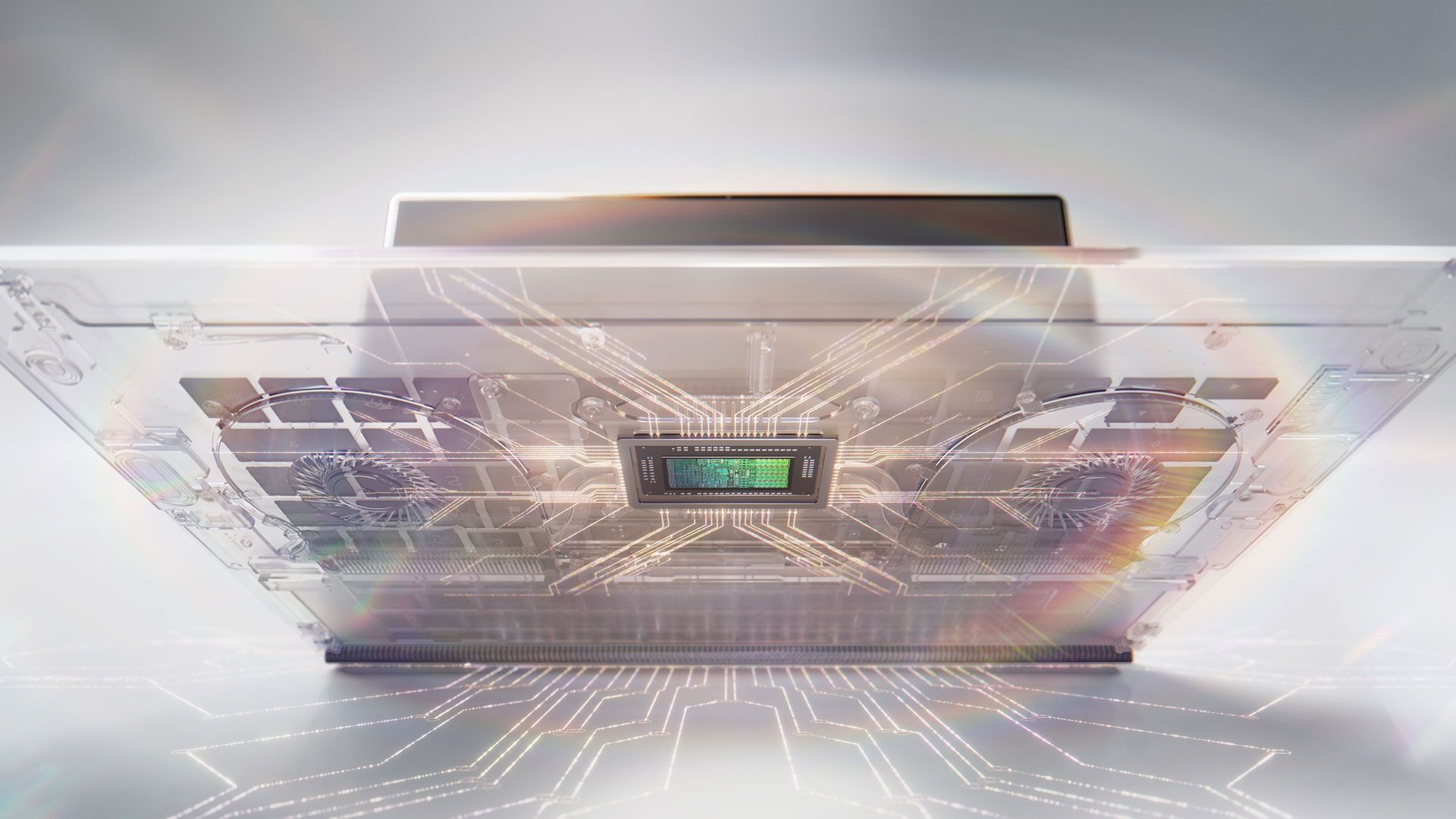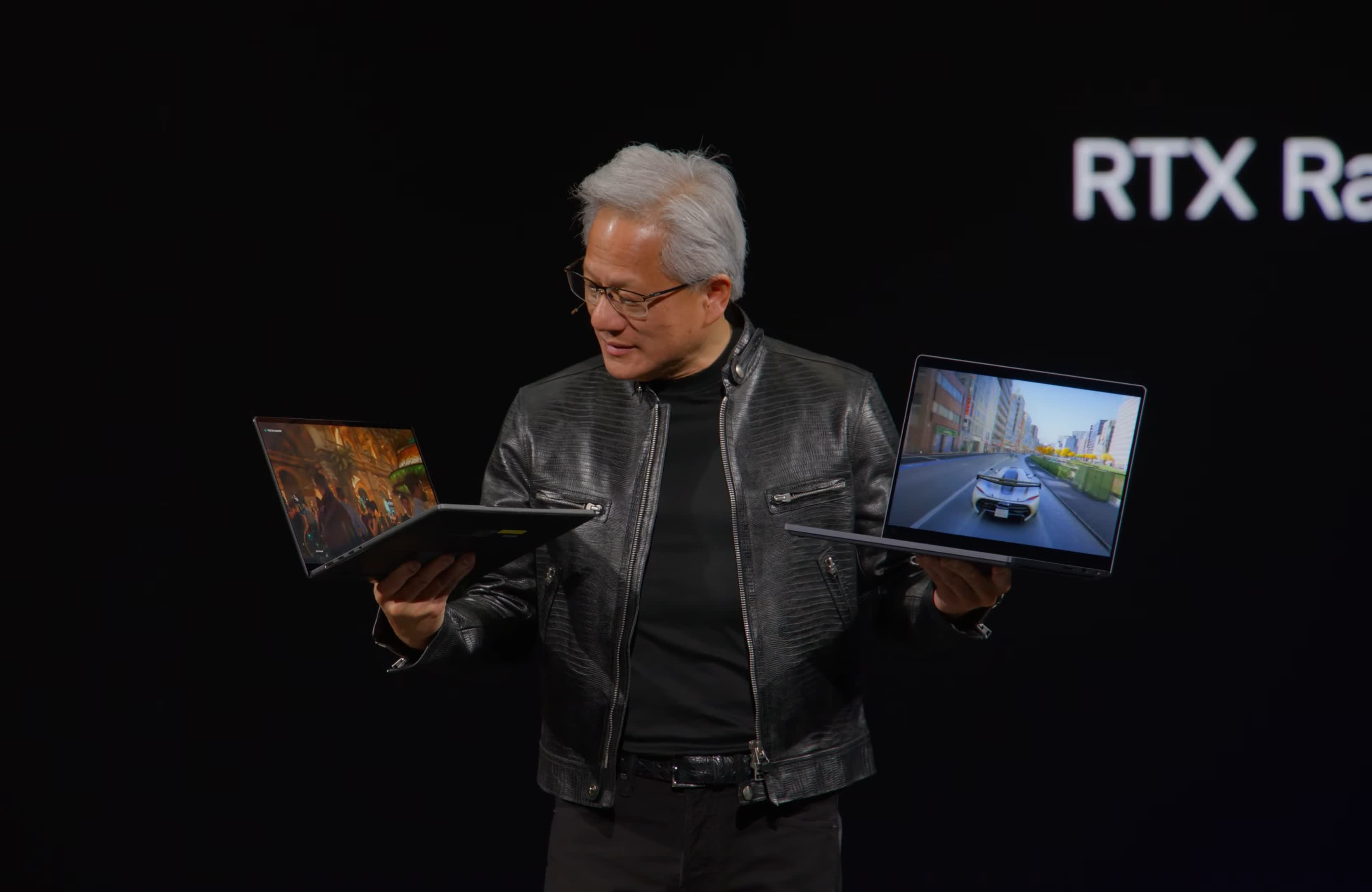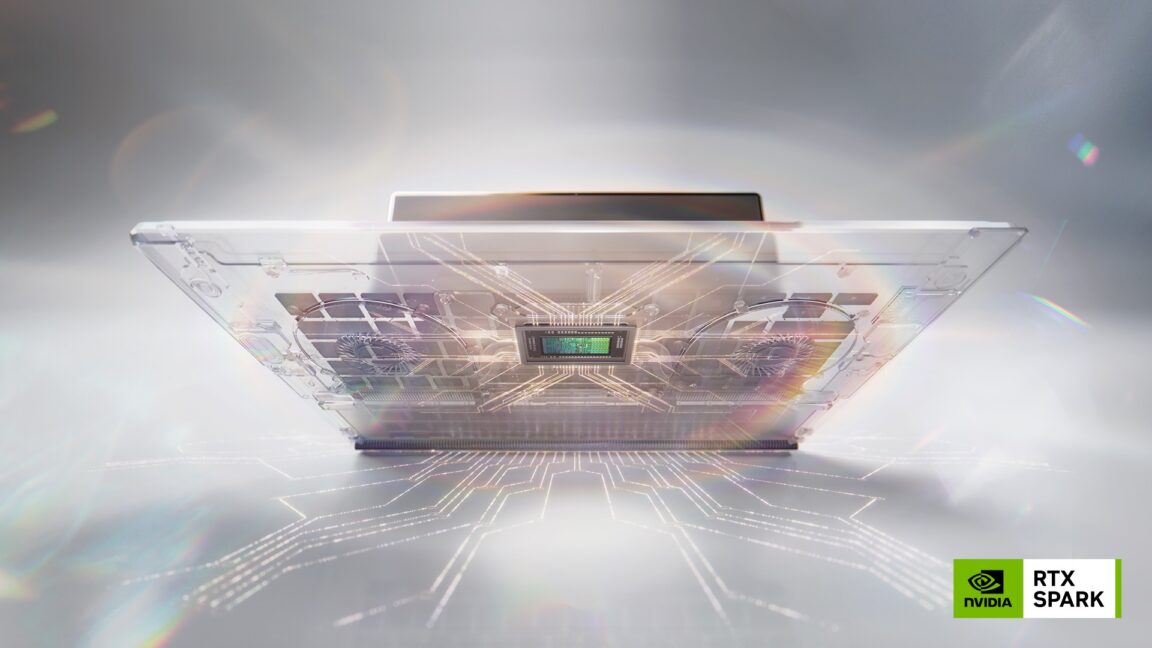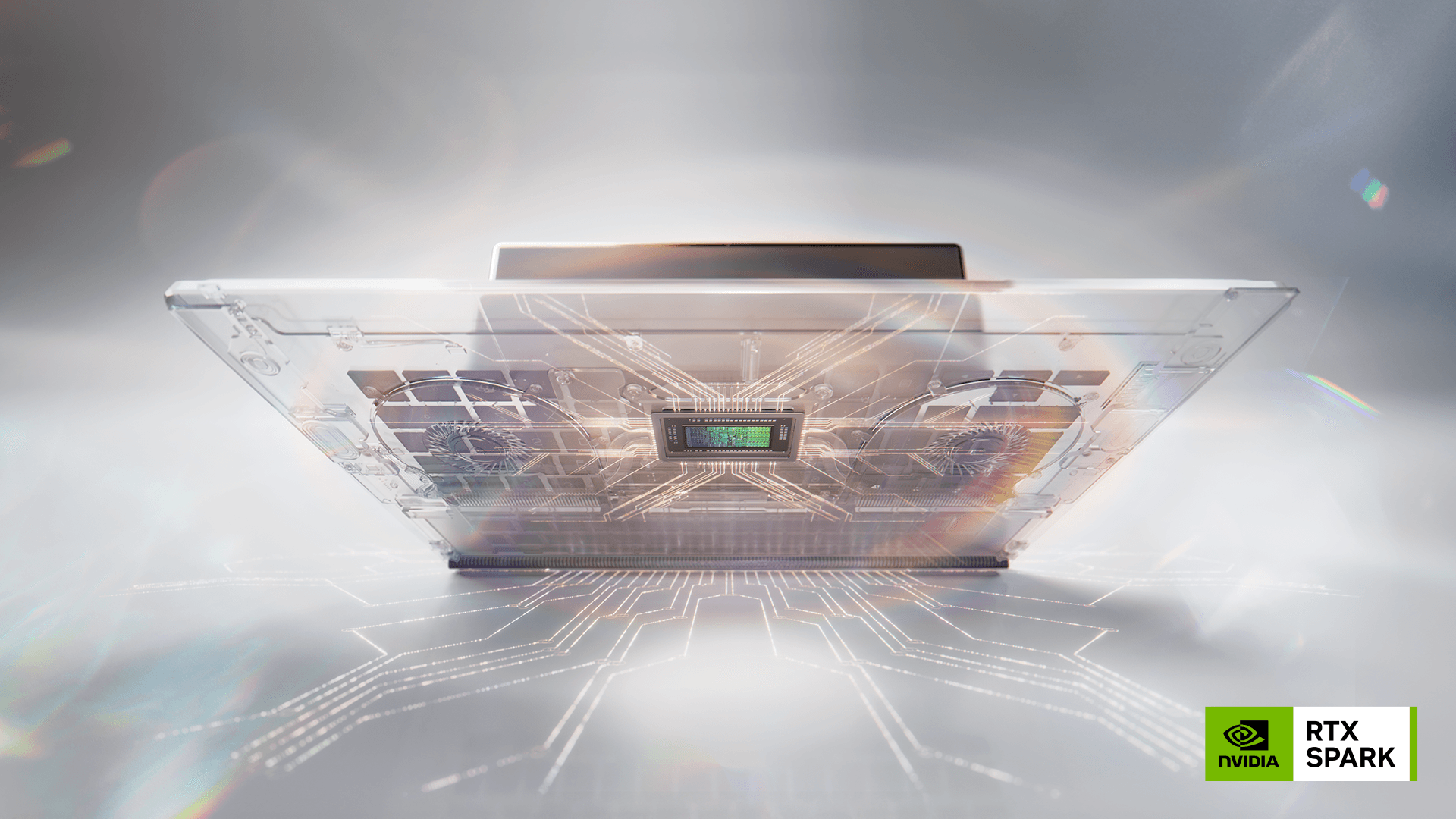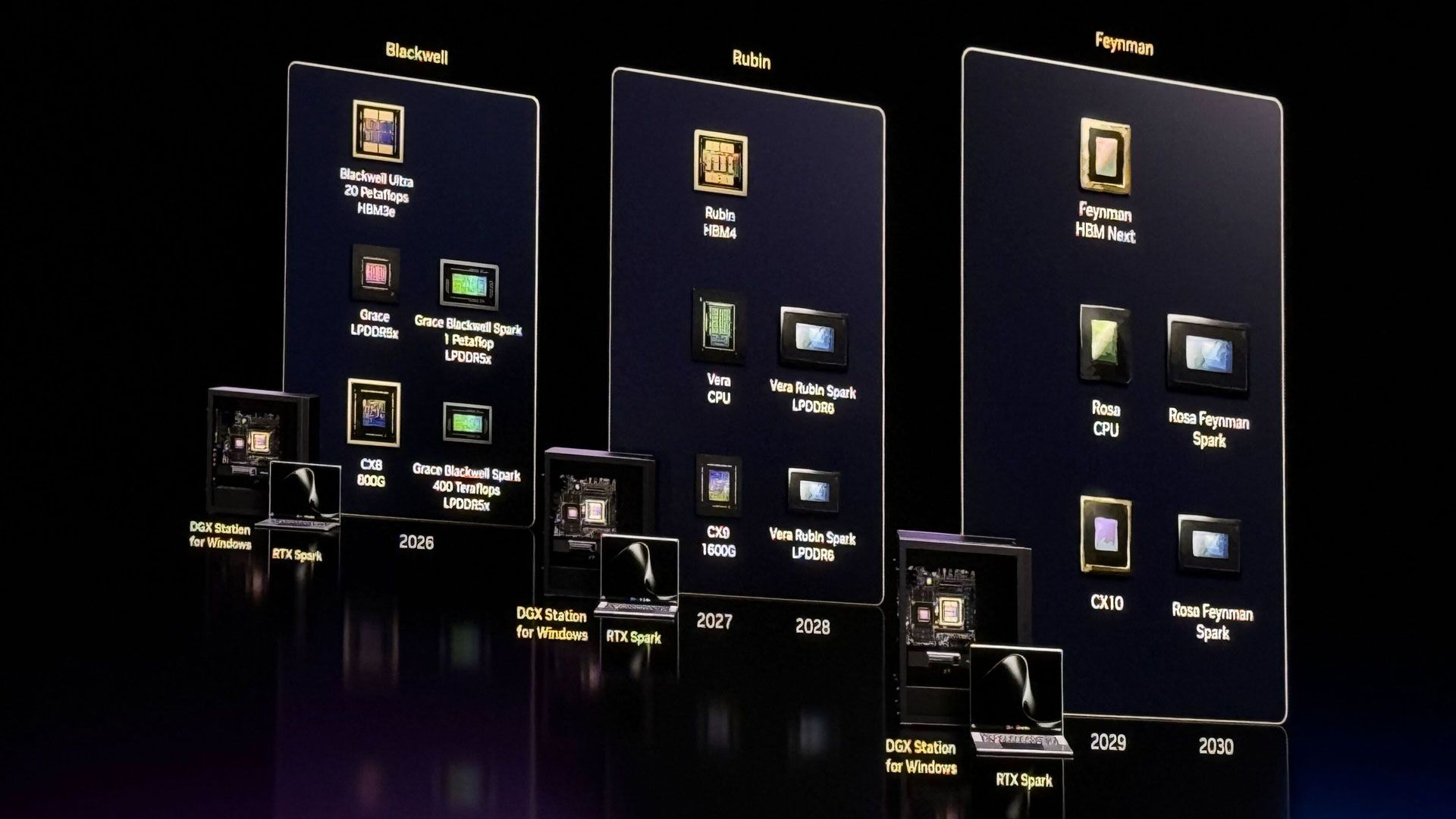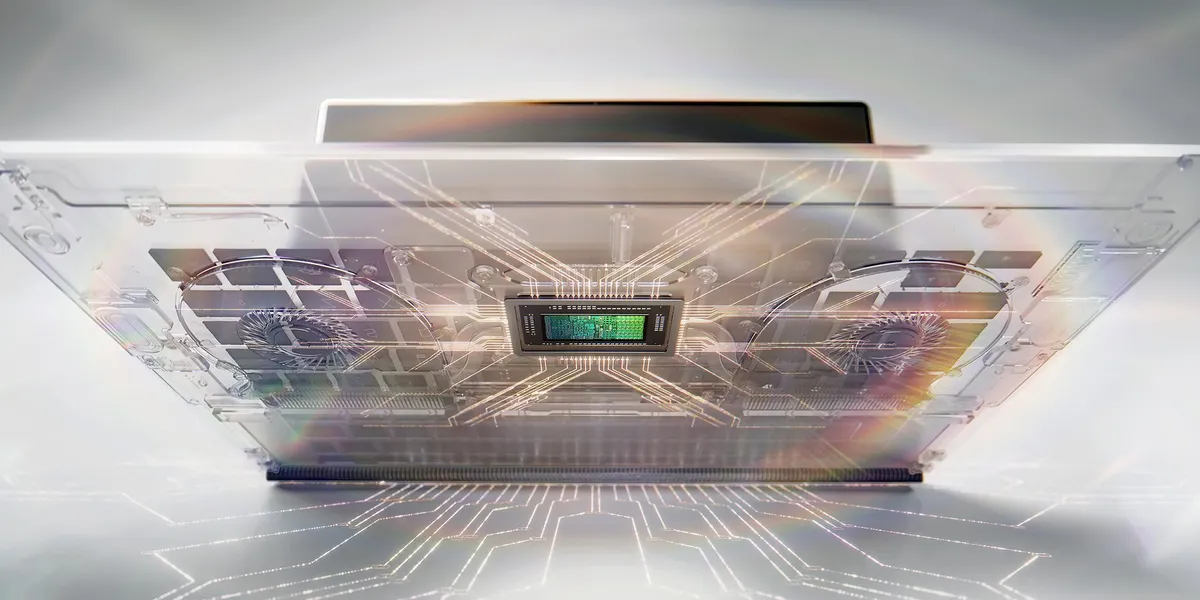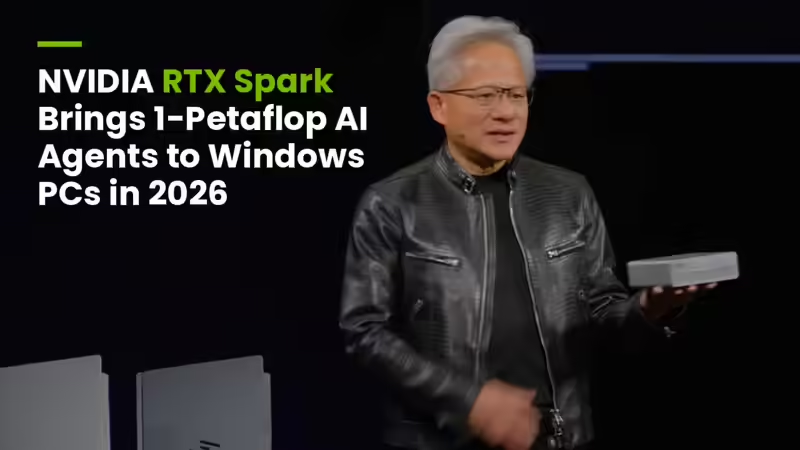
NVIDIA has walked onto Windows turf. At GTC Taipei during Computex 2026, Jensen Huang pulled the wraps off NVIDIA RTX Spark — a Windows-on-Arm superchip that fuses a Blackwell RTX GPU of 6,144 CUDA cores to a 20-core Grace CPU built alongside MediaTek, with 1 petaflop of AI compute and 128GB of unified memory. The ambition reaches well past the silicon. NVIDIA wants the everyday PC to become the home of the personal agent, and it has brought Microsoft, Arm and a row of laptop makers along for the march.Key TakeawaysNVIDIA RTX Spark is a Windows-on-Arm system-on-chip: a Blackwell RTX GPU with 6,144 CUDA cores, a 20-core Grace CPU co-designed with MediaTek, 1 petaflop of AI compute and 128GB of unified memory.The headline use is the personal agent — an on-device assistant that reads the screen, reasons across apps and acts for the user, with the heavy work staying local for privacy and speed.RTX Spark devices arrive in autumn 2026 from ASUS, Dell, HP, MSI and Microsoft's Surface Laptop Ultra, spanning slim laptops and compact desktops; the ASUS ProArt line ships with a preinstalled FLUX.2 image model.RTX Spark courts creators and gamers together: Adobe is rebuilding Photoshop and Premiere for up to 2x faster AI and editing, while the full GeForce stack — RTX, DLSS 4.5, Reflex, G-SYNC — targets 1440p above 100 fps in AAA ray-traced titles, with 007 First Light demonstrated on stage.Pricing stayed off the slides and an India date awaits confirmation; reported memory bandwidth of around 300 GB/s sits well below the desktop RTX 5070's roughly 672 GB/s, the gap that tempers the matching core count.What sits inside the RTX Spark superchip?NVIDIA RTX Spark is a two-die system-on-chip: a Blackwell RTX GPU carrying 6,144 CUDA cores, fused over NVLink to a custom 20-core Grace CPU, on a 3nm process with 128GB of unified memory and 1 petaflop of AI throughput. The GPU core count matches the desktop GeForce RTX 5070, which sets expectations high. Compute peaks at the same 1-petaflop figure as the GB10 silicon inside NVIDIA's existing DGX Spark developer box, retuned here for slim laptops and low-power desktops running Microsoft Windows.ComponentDetailGPUNVIDIA Blackwell RTX, 6,144 CUDA coresCPU20-core NVIDIA Grace, co-designed with MediaTekInterconnectNVLink C2C, GPU to CPUMemory128GB unifiedMemory bandwidthAround 300 GB/s (reported)AI performance1 petaflopProcessTSMC 3nm, around 70 billion transistorsOperating systemMicrosoft Windows (on Arm)Still openThe performance-to-efficiency core split and final clocks await NVIDIA's full spec sheetOne detail still sits behind that spec sheet: the split between performance and efficiency CPU cores, which leaks place at 10-plus-10 on LPDDR5X memory. Early reports peg memory bandwidth near 300 GB/s, a figure NVIDIA's official sheet should confirm.The agent is the product, the benchmark a sideshowHuang opened the segment with a claim sized for the history books: this is the first across-the-lineup reinvention of the PC in forty years. He held the chip overhead and called it "the most amazing chip the world has ever built," then described it as "everything we've learned over 33 years distilled into one chip." The keynote crescendo did its familiar work — every Jensen reveal lands with an "and one more thing" cadence borrowed from Cupertino — yet underneath the theatre sits a real product thesis.That thesis runs like this. The new PC layers a large language model and an agent runtime on top of the old operating system, so the user talks to an assistant that sees the screen, understands intent and acts across files, apps and the web. NVIDIA's phrase for the shift is tool to teammate. To run an agent on the machine itself, rather than a distant server, the company pairs RTX Spark's 1 petaflop and 128GB of memory with a security stack built with Microsoft: fresh Windows primitives for identity, containment and policy, plus an NVIDIA runtime called OpenShell that lets the user decide what an agent may touch, routes private queries to local models, and masks personal data inside anything bound for the cloud. Two third-party agents, Hermes Agent and OpenClaw, are adopting the stack for new Windows apps. NVIDIA's NemoClaw blueprint now spans the whole local line, from GeForce RTX cards through DGX Station.Why has NVIDIA marched on the PC market now?NVIDIA is marching on the PC market now because the agent era hands it a story its GPU pedigree can win, while AI-PC demand climbs and Windows-on-Arm carries Microsoft's full weight. The company has circled this territory for years. The x86 throne has belonged to Intel and AMD for four decades; the Windows-on-Arm marches have been held since 2024 by Qualcomm and its Snapdragon X banners, the lone house with Microsoft's blessing. RTX Spark redraws the map. Arriving with the full CUDA software estate and a graphics pedigree that Qualcomm and Apple each lack on Windows, NVIDIA enters as a pretender with real claim — and it rides in flanked by a four-house alliance of itself, Microsoft, Arm and MediaTek, each posting the same "a new era of PC" banner across social feeds days ahead of the keynote.Boldness suits the moment. AI-PC demand is climbing, Apple's M-series has proven buyers will pay for efficient silicon, and the agent story sells what raw benchmarks would struggle to. Win the agent, and the platform beneath it sells itself.The performance question NVIDIA left openHere the pageantry meets arithmetic. A core count equal to a desktop RTX 5070 reads superb on a slide, yet a laptop superchip feeds those cores through a narrower memory pipe — early reports put RTX Spark around 300 GB/s of memory bandwidth against roughly 672 GB/s on the desktop card. Core parity and real-world parity are separate things, and that bandwidth gulf is where buyer expectations can overheat.NVIDIA leaned instead on software gains, most measured on its own hardware and several built with the open-source community. The headline numbers, by the company's own account:WorkloadClaimed gainPlatformllama.cpp, Qwen 27BUp to 2x throughputGeForce RTXllama.cpp, Qwen 35BUp to 1.6x throughputGeForce RTXvLLM, Qwen 35B (NVFP4)2.6x over prior checkpointsDGX SparkH Company Holo computer-use models2x speed, 35 per cent less memoryRTX and DGXAdobe Photoshop and PremiereUp to 2x AI, editing, effectsRTX SparkMulti-GPU llama.cpp (tensor parallel)Up to 2x memory, 1.8x computeTwo matched GPUsTreat each as a vendor figure pending independent review. Two structural headwinds also shadow the launch. A memory market squeezed by the DRAM and NAND shortage lifts the cost of every 128GB machine. And a Windows-on-Arm app catalogue still matures app by app — NVIDIA's CUDA estate answers the developer and AI question with authority, while the everyday-app compatibility question belongs to Microsoft and time.Gaming is where RTX Spark parts from Qualcomm's Arm laptopsRTX Spark is the first Windows-on-Arm platform built to game in earnest, carrying NVIDIA's full GeForce stack — RTX ray tracing, DLSS 4.5, Reflex and G-SYNC — onto a chip that also runs AI agents. On stage, NVIDIA ran 007 First Light on Spark hardware, and the company pegs the platform at 1440p above 100 frames per second in current AAA ray-traced titles with DLSS 4.5 active. More than 1,000 RTX-enhanced games and apps are available, and DLSS 4.5 Ray Reconstruction reaches path-traced titles from August. This is the line Qualcomm struggled to hold. Snapdragon X put Windows on Arm on the map in 2024, yet its gaming story leant on emulation and an Adreno GPU short of GeForce pedigree, which left frame rates and compatibility patchy. RTX Spark answers with native graphics silicon and the CUDA estate behind it. Huang pressed the point, telling the room the chip "runs everything the world has ever created," and claiming the entirety of NVIDIA's software stack runs on it — a twin promise of full Windows app compatibility and full CUDA support. Both run bold, and the Windows-on-Arm catalogue will test the app-compatibility half title by title; the CUDA half NVIDIA stands behind today across its developer tools.Which devices ship, and when?RTX Spark hardware reaches buyers in autumn 2026, across slim laptops and compact desktops from a named roster of partners. ASUS, Dell, HP, MSI and Microsoft's new Surface Laptop Ultra lead the lineup, and NVIDIA showed an MSI RTX Spark Mini PC on stage. The first device with a concrete software hook is the ASUS ProArt creator line, which ships with Black Forest Labs' FLUX.2 Klein 4B image model preinstalled through the MuseTree app, tuned with NVFP4 and TensorRT for an up-to-2.5x speed gain and a large memory saving — unbox to local image generation in one step.Microsoft put the most specific flagship on the board. Its Surface Laptop Ultra, billed as the most powerful Surface laptop the company has built, becomes the first Surface to carry an NVIDIA Blackwell RTX GPU, up to 128GB of unified memory and full CUDA support — engineered with NVIDIA from the silicon up and tuned for RTX Spark. Microsoft rates it at 1 petaflop of AI compute and local models of up to 120 billion parameters, the clearest sign yet that the Spark laptop tier tops out near the 120B mark while the trillion-parameter figure belongs to the deskside DGX Station. The screen earns its own line: a 15-inch mini-LED PixelSense Ultra touchscreen reaching up to 2,000 nits of peak HDR brightness at 262 pixels per inch, which Microsoft calls the brightest panel it has shipped. It arrives in Platinum and Nightfall finishes, keeps a full port set — HDMI, USB-C, USB-A, SD card and headphone — and lands later in 2026.MakerRTX Spark productStatusASUSProArt creator laptops (FLUX.2 preinstalled)Autumn 2026DellXPS laptopAutumn 2026HPLaptopsAutumn 2026MSILaptop and RTX Spark Mini PCAutumn 2026MicrosoftSurface Laptop Ultra (15-inch mini-LED, up to 128GB)Later in 2026NVIDIADGX Station for Windows (deskside)AnnouncedLenovoLegion 7, Yoga (reported via leaks)Awaiting NVIDIA confirmationThe creative tentpole is Adobe. The company is rebuilding Premiere and Photoshop for RTX Spark, with a new Premiere video pipeline that taps the unified memory, the Blackwell GPU and TensorRT for real-time editing and colour, and a next-generation Photoshop engine geared to GPU compositing, live filters and HDR. Substance 3D Painter and Stager gain native support. Across these tools NVIDIA claims up to 2x faster AI, editing and effects, and Adobe will extend both flagship apps to work alongside Windows agents. Elsewhere, Blender 5.3 adds DLSS 4.5 Ray Reconstruction as a denoiser this autumn, NVIDIA Broadcast 2.2 graduates its Studio Voice feature out of beta today for GeForce RTX 3060 cards and above, and a new RTX Video Frame Generation effect — doubling or quadrupling the frame rate of AI-generated clips — arrives with Spark as a ComfyUI node. For professionals, NVIDIA also introduced DGX Station for Windows, a deskside machine that carries data-centre-class GPU and CPU into a Windows desktop for heavier inference.India gets the story before it gets the priceIndia sits in the second wave. NVIDIA left India pricing and a local availability window off the keynote, and the company's pattern points to global launch markets first, with India following once OEM channels open. For Indian creators and AI developers, the meaningful promise is a portable machine that runs sizeable local models — the kind of work that has tied them to cloud GPUs and recurring bills. Should the ASUS ProArt and Dell XPS variants reach Indian retail near their global window, the after-sales and warranty terms from each maker will weigh as heavily as the spec sheet, given the premium the memory market is forcing onto every 128GB design.Strip away the keynote shine and one wager remains. NVIDIA is betting that the agent, rather than the benchmark, is the product — that buyers will cross from x86 for an always-on assistant that sees, reasons and acts on the device in their bag. The silicon looks ready for that wager. Whether Windows-on-Arm, the memory pipe and the eventual price are ready alongside it is the contest autumn 2026 will settle.FAQ What is NVIDIA RTX Spark?NVIDIA RTX Spark is a Windows-on-Arm superchip for laptops and compact desktops, pairing a Blackwell RTX GPU of 6,144 CUDA cores with a 20-core Grace CPU co-designed with MediaTek. It delivers 1 petaflop of AI compute and 128GB of unified memory, and it is purpose-built to run on-device AI agents on Microsoft Windows.How does RTX Spark compare with a desktop RTX 5070?RTX Spark carries the same 6,144 CUDA-core count as the desktop GeForce RTX 5070, so the two share GPU horsepower on paper. Real-world output will trail the desktop card, because RTX Spark feeds those cores through a narrower memory pipe — early reports put it near 300 GB/s against the desktop RTX 5070's roughly 672 GB/s. On the gaming side, NVIDIA pegs the platform at 1440p above 100 fps in AAA ray-traced titles with DLSS 4.5 active.When do RTX Spark laptops launch?RTX Spark devices arrive in autumn 2026 from ASUS, Dell, HP and MSI, alongside Microsoft's Surface Laptop Ultra and an MSI Mini PC. Hands-on demos are expected at OEM booths through the Computex week of June 2 to 5.How is RTX Spark different from DGX Spark?DGX Spark is a Linux developer box for prototyping large AI models, while RTX Spark is its consumer and creator sibling, tuned for Windows and everyday laptops. NVIDIA also introduced DGX Station for Windows, a deskside supercomputer that carries the developer-grade approach into a managed Windows desktop.What will RTX Spark cost in India?NVIDIA withheld pricing at launch and left an India date open, so any rupee figure today would be guesswork. Indian availability is likely to follow the global autumn 2026 window once OEM channels open, with final pricing shaped by the current memory shortage and each maker's import and warranty terms.end of article
NVIDIA and Microsoft Reinvent the Windows PC With RTX Spark Superchip
Find latest technology news, gadgets reviews & ratings. Popular & latest gadgets specifications, features, prices, photos & videos. Trending mobile phone comparisons, slideshows, how tos and videos for latest mobile phones, tablets, technology news updates.
2,242 words~10 min read