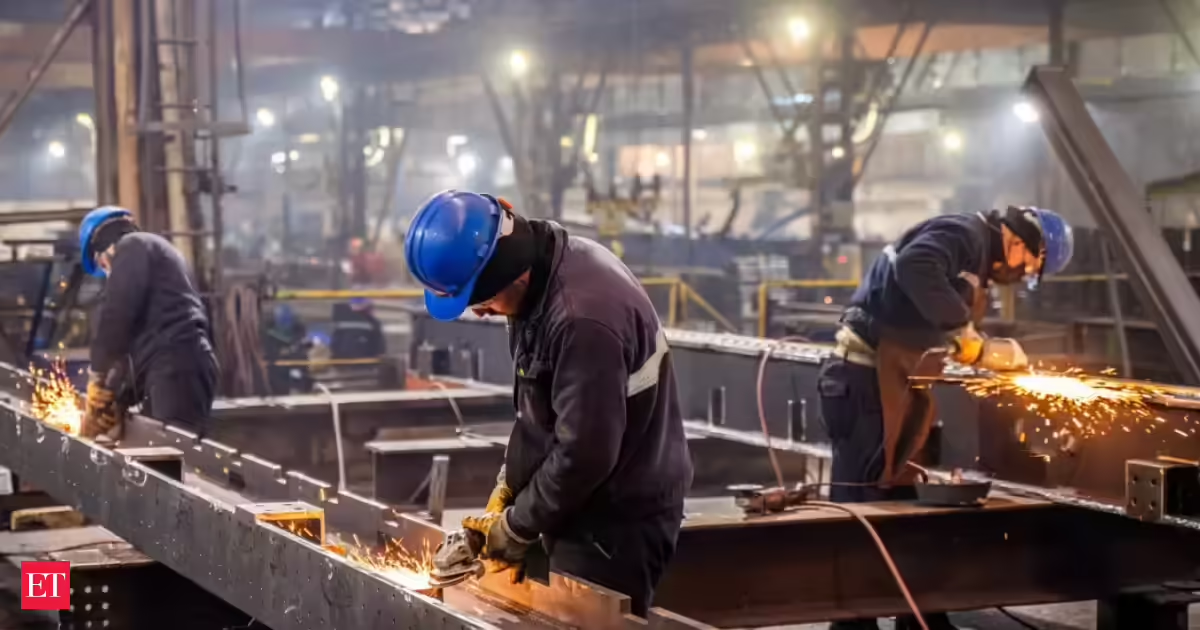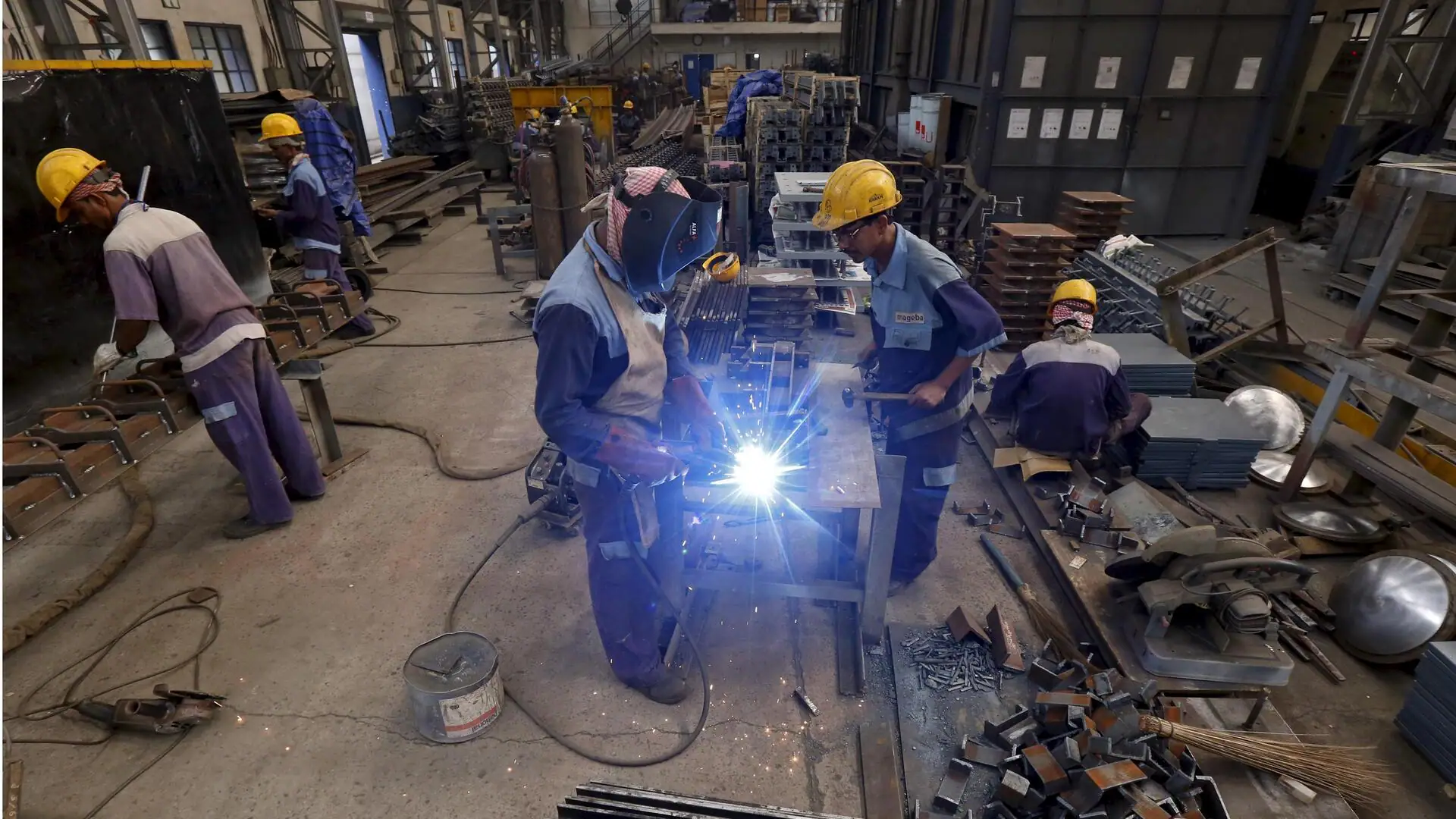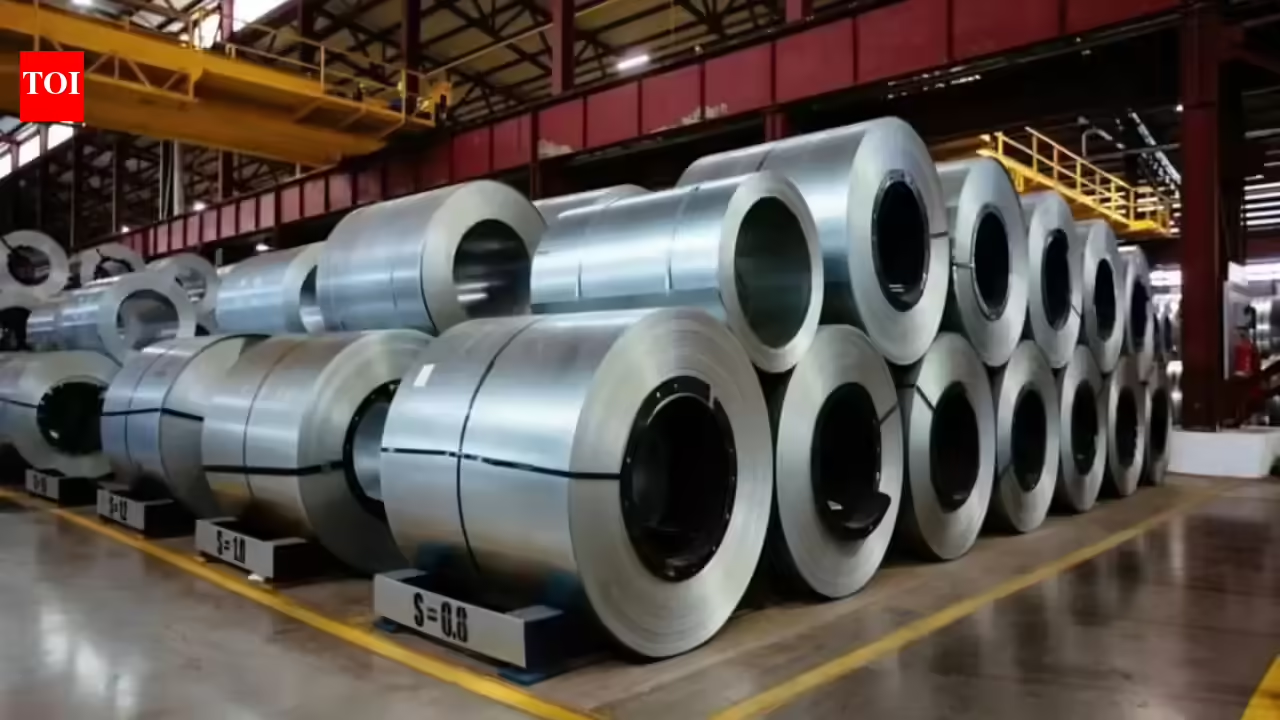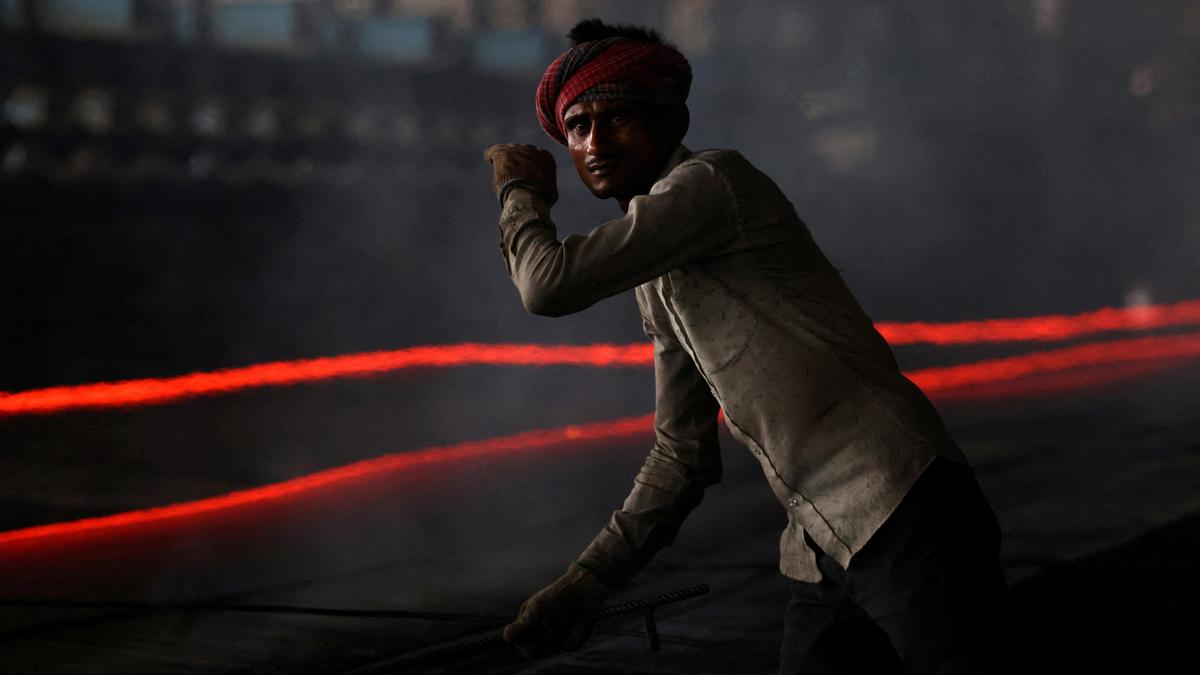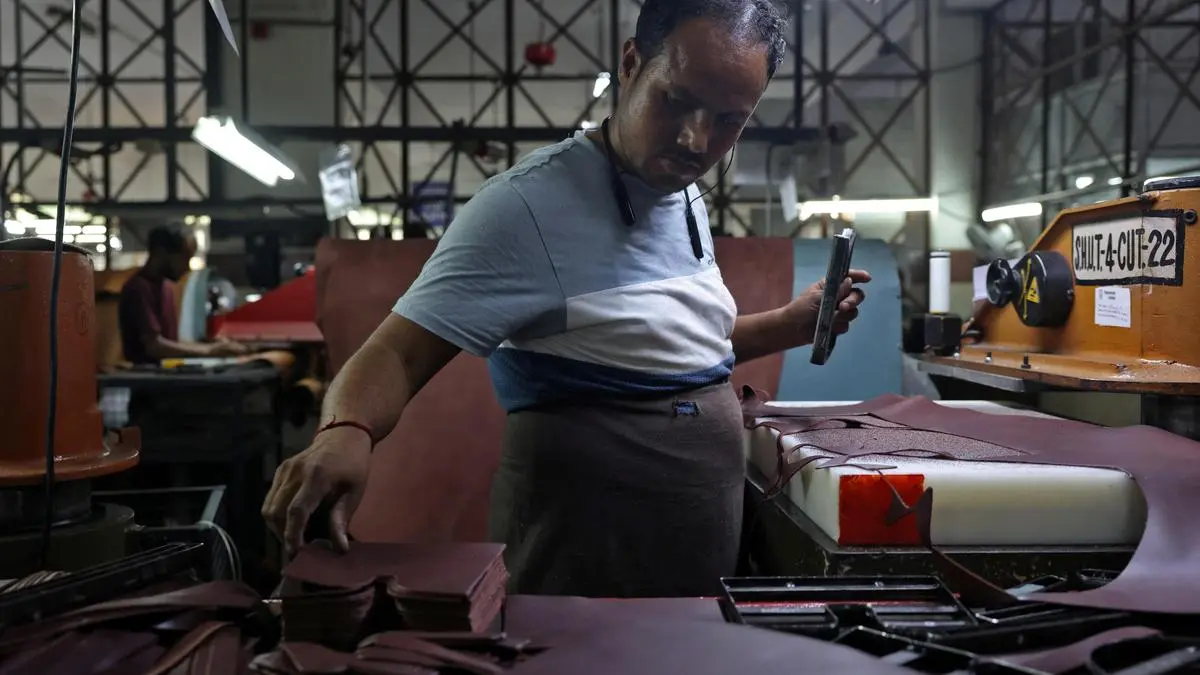
Factory output in India grew by 4.9 per cent in April, driven by manufacturing and electricity, despite global supply challenges.
The first print of factory output growth based on the new series of Index of Industrial Production (IIP) with base year of 2022-23 recorded 4.9 per cent in April, Statistics Ministry reported on Monday. It is lower than 5.7 per cent in the corresponding month of the last fiscal but higher than 3.2 per cent of the preceding month.The growth rates of the four sectors — mining & quarrying, manufacturing, electricity & gas supply, water supply, sewerage & waste Management — for April 2026 stood at (-) 5.1 per cent, 6.2 per cent, 4.9 per cent and 6.6 per cent respectively, an official statement said.Aastha Gudwani, India Chief Economist at Barclays said the impact of West Asia conflict on industrial output appears minimal, limited to chemicals and allied sectors so far In terms of the impact on industrial output from the conflict (from energy price rises/ shortages of inputs).“We note that output in the ‘manufacture of chemicals’ recovered somewhat in April (to 0.4 per cent y/y from -4.9 per cent in March), which corroborates our view that peak shortages for industrial inputs (from gas and petrochemicals rationing) seen in March saw gradual improvement in supply in April and May,” she said.‘Manufacture of coke & refined petroleum products’ was weak in April (-0.5 per cent y/y); however, the sector growth was generally subdued even prior to the conflict (February: -0.8 per cent, Jan: -0.3 per cent). As such, “we would not entirely attribute the Middle East-related disruptions to output weakness here,” she addedStronger growthAccording to Dipti Deshpande, Principal Economist at Crisil Ltd, growth in April is driven by stronger growth in manufacturing and electricity production. Domestic demand held up, as evident from auto sales, retail credit, electricity demand and others despite headwinds from the West Asia conflict.”Industrial production could remain subdued in the months ahead due to weaker global demand and supply chain disruptions. The larger risk, though, is rising costs. The energy supply shock caused by the conflict in West Asia has morphed into a price shock, with the costs of fuel, transport and other imported inputs increasing,” she said.The Ministry of Statistics & Programme Implementation (MoSPI) has revised the base year of the Index of Industrial Production (IIP) from 2011-12 to 2022-23. The revised basket consists of 1,042 products mapped to 463 item groups, including 120 new item groups. This is the 10th revision of the base year for IIP. The first IIP was prepared with a base year 1937.According to the MoSPI, the new IIP series provides greater granularity with separate indices for the generation of electricity through renewable and non-renewable, gas supply, fuel minerals, metallic minerals and non-metallic minerals, water supply, sewerage and waste management.Published on June 1, 2026