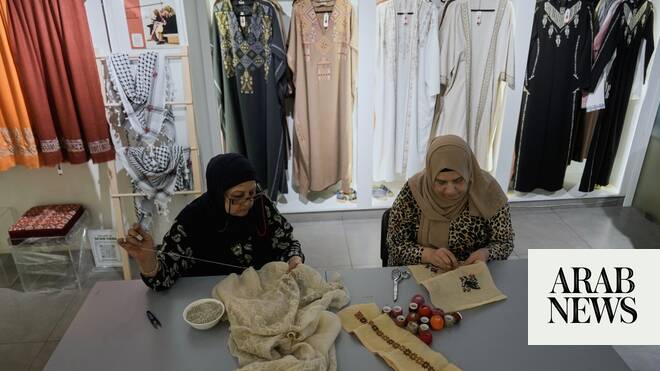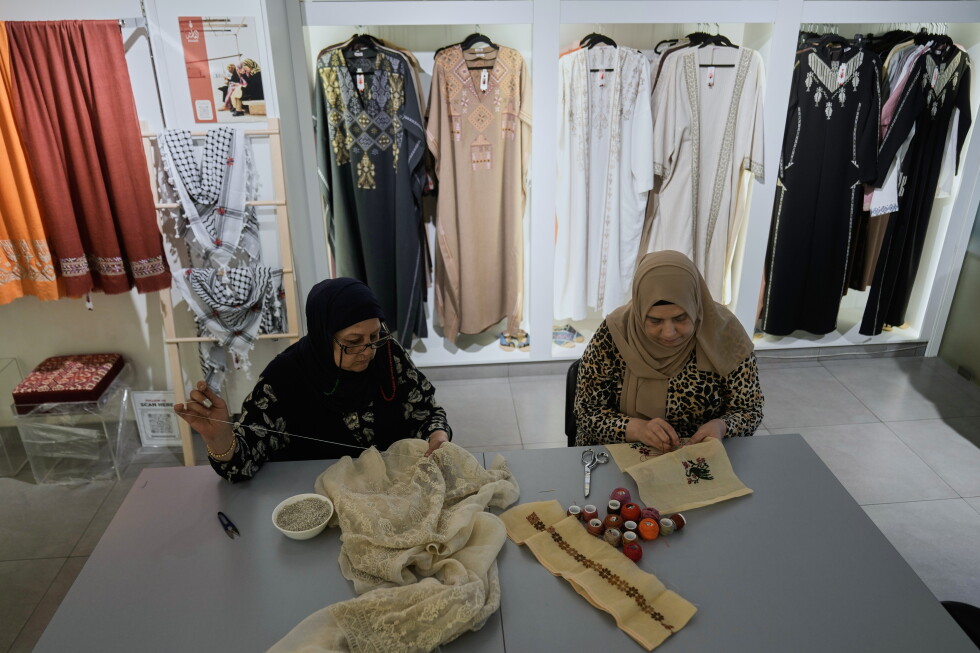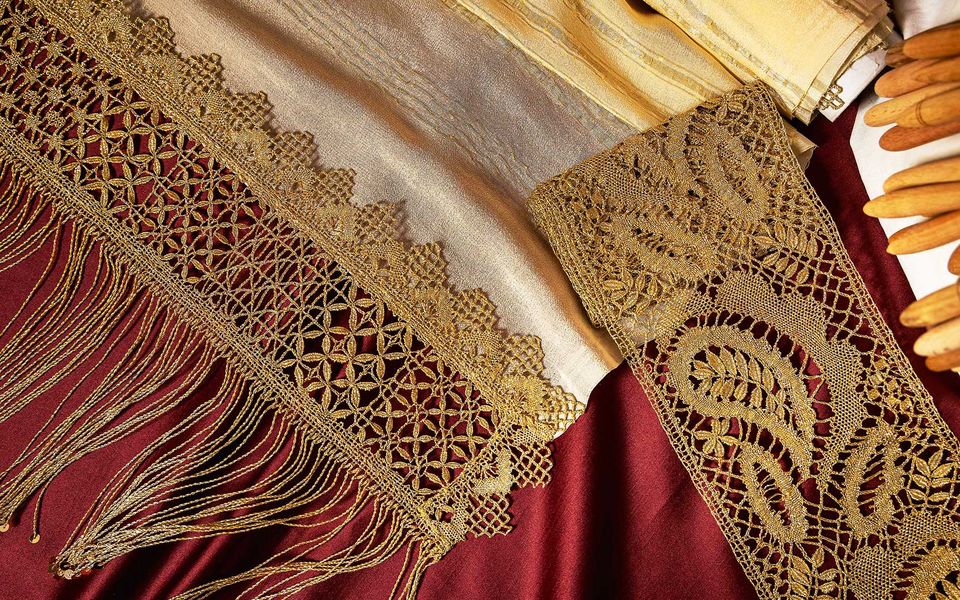
At a time when authenticity and craftsmanship are regaining their value, a traditional technique is making a dynamic return. The delicate and intricate lace-making art of Salamina, known as kopaneli (bobbin lace) was inscribed in March 2026 in Greece’s National Inventory of Intangible Cultural Heritage, an important development that opens new horizons for the renewed prominence of Greek lace on the international stage.
From the famed Flemish and French laces that once adorned Europe’s royal garments to the creations of leading fashion houses today, handmade lace has long held a prominent place in haute couture, lending both artistic and cultural value to textiles.
Greek lace-making boasts a rich tradition and a well-documented presence in international collections. Pieces from Naxos, Kythnos, and the Ionian Islands are preserved in the collection of the Victoria & Albert Museum in London. Particularly prominent in the collection, however, are Cretan laces, most of them crafted using bobbins: small wooden tools around which threads are wound. For decades, this technique formed an integral part of everyday life in Crete, especially in Hania (in Gavalochori), where it remains alive to this day.