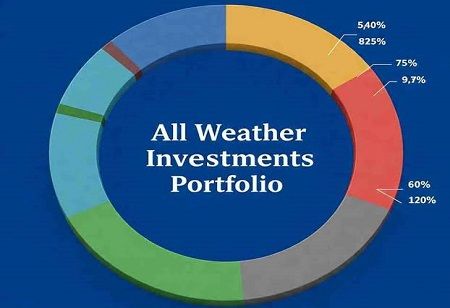
Despite witnessing upheavals and tectonic shifts over millions of years, the organisms that survived were not necessarily the strongest or the most intelligent, but those most adaptable to changing environments. A similar principle applies to generating sustainable long-term returns from an investment portfolio. Portfolios that dynamically allocate across asset classes—ranging from equities, debt and gold to InvITs and REITs—based on evolving macroeconomic conditions are often better positioned to navigate market cycles. Such strategies can even deploy derivatives to benefit from falling markets. In simpler terms, a dynamically managed portfolio can adapt and “breathe” through different economic regimes, capturing upside opportunities while mitigating downside risks.This blend of asset classes, commonly referred to as a hybrid allocation strategy, has historically demonstrated the ability to generate relatively superior risk-adjusted returns across varying market conditions. By combining multiple strategies, hybrid portfolios seek to diversify risk, remain ahead of the curve and reduce overall volatility. The framework increases exposure to equities and cyclical commodities during periods of strong economic growth, shift towards debt and defensive assets during slowdowns, raise allocation to gold during phases of deflation or economic stress, and reduce equity exposure while increasing short-term debt allocation during overheating phases of the economy. Since each asset class behaves differently across economic cycles, losses in one segment are often offset by gains in another, resulting in smoother portfolio performance over time.Hybrid asset allocation strategies have generally exhibited lower volatility compared to pure equity investments. Reduced volatility, in turn, enhances the consistency of compounding over the long term. Over the past eight years, hybrid asset categories have delivered some of their most consistent performances, with three-year rolling returns falling in the 12–16% range nearly 40% of the time. The core advantage lies not merely in generating returns, but in achieving them with lower volatility through diversification. Over time, hybrid asset allocation strategies have provided investors with a relatively superior investment experience. Ultimately, the key is not merely staying invested, but staying invested in the right manner and at the right time.Recognising the growing appeal of hybrid strategies in generating relatively stable, all-weather returns with lower volatility, asset management companies have introduced a new category under the Specialized Investment Fund (SIF) framework—Active Asset Allocator Long-Short Funds. These funds employ hybrid allocation strategies with a lower ticket size of ₹10 lakh, thereby significantly expanding investor accessibility. Earlier, similar strategies involving derivatives were largely confined to Portfolio Management Services (PMS) and Alternative Investment Funds (AIFs), where the minimum investment threshold was considerably higher and often beyond the reach of average investors.Active Asset Allocator Long-Short Funds dynamically allocate capital across equities, debt, gold and derivative instruments. Equity allocation may range between 35% and 80% of the portfolio, with fund managers having the flexibility to maintain unhedged or hedged exposure depending on market conditions. Debt and commodity allocations can range from 10% to 55%, while up to 20% may be allocated to alternative instruments such as InvITs. Typically, proprietary models are used to determine the optimal allocation between equities, fixed income and commodities. Valuation metrics and technical signals serve as key indicators in assessing portfolio health and determining whether equity exposure should remain hedged or unhedged. Daily monitoring and timely rebalancing help minimise behavioural biases and maintain consistency across different market regimes. These strategies also use valuation and regime-based signals to identify potential mispricing opportunities across equities, debt and commodities.
Can Adaptive Asset Allocation Improve Long-Term Investment Outcomes?
Can Adaptive Asset Allocation Improve Long-Term Investment Outcomes?
573 words~3 min read