Chinese AI company MiniMax has released its new model M3. It's billed as the first open-weight model to combine top-tier coding performance, a one-million-token context window, and native multimodality.
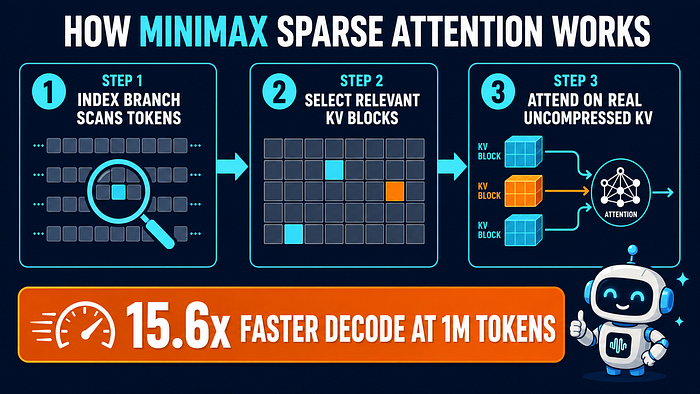
According to MiniMax, that combination was previously out of reach for open models and reserved for proprietary systems like Opus 4.7, GPT-5.5, or Gemini 3.1 Pro. A new attention mechanism makes the leap possible by stretching the context window to one million tokens without letting compute costs spiral out of control. In internal tests, M3 also planned, debugged, and self-corrected on its own over many hours.
Benchmarks put M3 in proprietary territory
On SWE-Bench Pro, an established software development benchmark, M3 scores 59 percent according to MiniMax. That puts it ahead of GPT-5.5 and Gemini 3.1 Pro, but just behind Opus 4.7. M3 also lands in proprietary-class territory on terminal tasks and tool use. On autonomous web search, it actually pulls ahead of Opus 4.7 (79.3) with 83.5 points on BrowseComp. Anthropic has since shipped Opus 4.8, a somewhat stronger model.
MiniMax positions M3 close to Opus 4.7 on its own benchmarks, partly ahead of GPT-5.5 and Gemini 3.1 Pro.