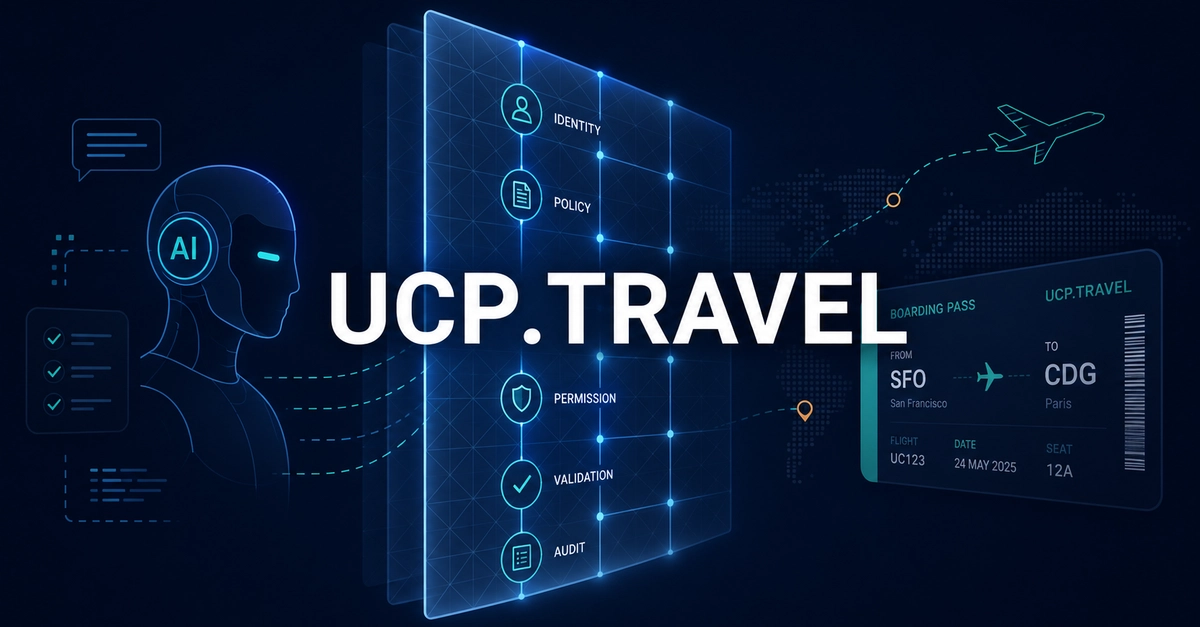
Michael Quoc holds 9 US patents and is the founder and CEO of Product.ai—truth layer for commerce.gettyAmerican retailers absorbed an estimated $890 billion in returns in 2024, according to the National Retail Federation, roughly 16.9% of retail sales. A meaningful share likely traces back to product descriptions that did not match what buyers actually received. This issue can be highly concerning when the claims have implications beyond the fit of a shirt, but the data is often worse in those categories. A JAMA Network Open study of 57 sports supplements found just 11% had ingredient quantities within 10% of what the label claims.AI agents now inherit this data wholesale and turn it into confident recommendations, often in a single pass. The browsing pattern that gave a buyer multiple chances to spot a mismatch before checkout has compressed into a single query and a decision.Try asking a shopping agent a simple product question. Does this jacket run small? Is this laptop good for video editing? Are these running shoes appropriate for flat feet? Whatever answer you get will sound confident.Under the hood, the agent is pulling text from merchant product descriptions, marketing pages and review snippets that were written to rank on Google, not to survive scrutiny from an AI making a purchase recommendation. The confidence has nothing to do with whether the claim is true.When large language models answer medical questions drawn from this kind of data, hallucination rates have been measured between 64% and 68%.In the last 12 months, the industry shipped four protocols for agent commerce: Google and other companies published the Universal Commerce Protocol (UCP), OpenAI and Stripe shipped the Agentic Commerce Protocol (ACP), Anthropic released the Model Context Protocol (MCP) and Mastercard added Verifiable Intent.Three of these address commerce transport directly: UCP, ACP and Verifiable Intent define how an agent assembles a purchase request, identifies itself or the consumer behind it, routes payment and completes the order. MCP is a general tool-and-context protocol that agents use to talk to any system, commerce or otherwise. Each was built to solve a piece of structured machine-to-machine exchange, and each solves it. However, none define what makes the underlying product data trustworthy.The harder problem sits one layer above. Transport assumes the claims in the product description are already trustworthy. Whatever an agent reads before it builds a purchase request (the dimensions, the ingredients, the compatibility, the warranty) comes from the same merchant data behind the returns and the label mismatches. Moving that data through cleaner rails does not change whether it is true.Agents can discover products. Agents can buy products. Agents cannot verify whether the product is worth buying. That is the layer the stack is missing.Consensus is not truth.Consider what the internet did the last time transport outpaced verification.HTTP shipped in 1991. HTTPS did not arrive until 1994. The three years in between were the years the web was fundamentally broken for commerce. Transport worked. You could just not verify the other end, which meant you could not move anything of consequence over it. Everyone knew the gap was the problem. Nobody could pretend HTTP alone was enough infrastructure for real transactions.Agent commerce is in the 1991 window.Read the UCP and ACP specifications, and the boundary is explicit. UCP defines checkout sessions, line items, totals and status, plus discovery, negotiation and handoff. ACP defines checkout and delegated-payment APIs. Neither defines a mechanism for the agent to test whether the product description matches the physical product. What the industry needs is a layer for verified product information. Not another way to move data around, but a way to know the data can be trusted. Every such layer needs four things: a claim that can be tested, a confidence score, a category (is this a physical measurement, a consumer observation or a sale-pattern signal?) and a shelf life, because product data goes stale. It also has to be tested against sources that disagree with each other, because a merchant spec sheet, a marketing page and a contractor’s blog post all lining up in the same direction is exactly how catalog data became untrustworthy to begin with.This is not a feature of the transport layer. It is the layer the transport layer assumes.The stakes are already here.Below a threshold of verifiable truth, sources are going to fall out of what AI agents cite at all. Competitive advantage in the agent era will invert from volume to veracity. The catalog built for SEO-optimized keyword capture will not be the catalog an agent cites. The product data engineered for affiliate conversion tracking will not be the product data an agent recommends. To survive as agent middleware, companies will have to build verification-first infrastructure before the stack demands it. My company is one of several teams working on this layer. Meanwhile, some global government initiatives, like the EU's Digital Product Passport, are rolling out category by category. The mandate requires machine-readable, structured product data from producers and importers across major consumer categories. Structured data is one step before verification, and regulation is pulling the supply chain through that step on a published timeline.I have spent 17 years building commerce infrastructure companies watching the gap between what is in our catalogs and what is verifiable grow wider every year. The agent era is what finally forces the industry to close it.The transport protocols shipped this year are necessary. They are not sufficient. The verification layer underneath is where the next decade of agent commerce gets decided, and the CTO reading this piece has a direct role in that decision. Audit your product catalog for verification-readiness. Ask what claims in your own data an agent could defend and what it could not. Whatever percentage of your catalog cannot be verified is the percentage of your brand that agent commerce is going to quietly route around.Better models will not fix this. Better transport will not fix this. Better infrastructure will.Forbes Technology Council is an invitation-only community for world-class CIOs, CTOs and technology executives. Do I qualify?
AI Agents Can Discover And Buy—They Can’t Verify
What the industry needs is a layer for verified product information.
999 words~5 min read