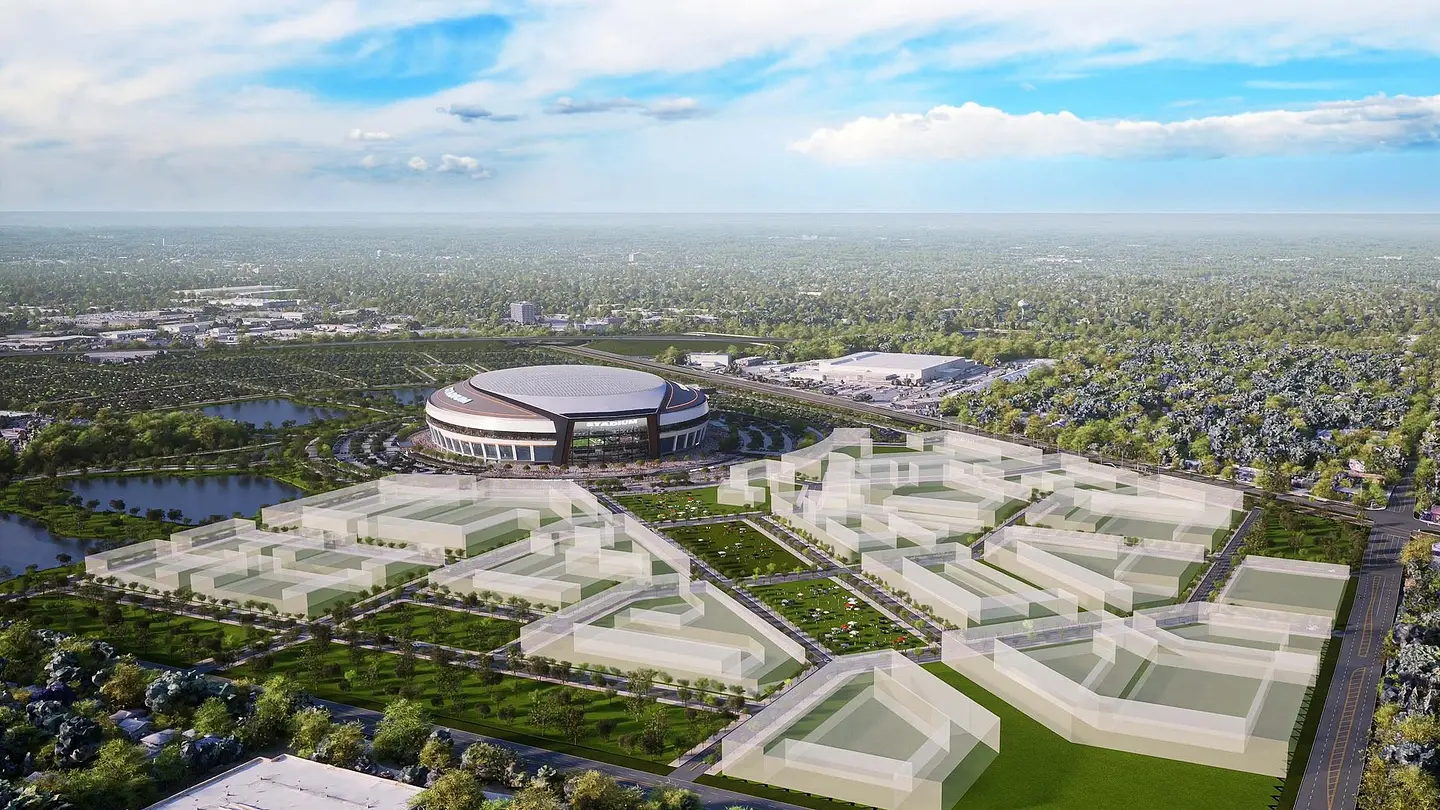
Caution and procedure caught up to the Bears in their late Sunday/early Monday bid to get a stadium built in Illinois. Now the question is whether it will chase them straight to Indiana.The future remains uncertain now after a quickly developed plan that would have allowed them to pay for building an Arlington Heights Stadium and then lease it failed to get enough support to pass the House after it passed 37-17 in the Senate at 3:39 a.m. As it hadn't passed before adjournment, a special session would be required to get it through. The next legislative session isn't until November.Afterward a statement was issued by the team that sounded ominous for Illinois."We will finalize our evaluation of both Arlington Heights and Hammond, and remain on the late spring/early summer timeline that we have previously communicated. We will provide an u pdate when we have a decision to share."Just briefly spoke with House Speaker Chris Welch about the decision not to take up the Bears bill. He says it’ll be resolved “sooner than later,” but no special session is planned pic.twitter.com/oNDnRCu4r1— Ben Szalinski (@BenSzalinski) June 1, 2026The plan considered would have allowed stadium authorities to be set up in any Cook County community of 70,000 or more, meaning Chicago also would have been able to vie for a Bears stadium against Arlington Heights. Essentially, it could have cut Indiana out of the picture because both Arlington Heights and Chicago would have been offering the same kind of package as Indian.The debate on the topic took it past midnight. They would have needed a three-fifths majority to pass it after the midnight deadline and couldn't get the required amount of support to bring it up for a vote. The sides were still caucusing after 1:30 a.m.According to Brenden Moore of Illinois Capitol News, concern over how hastily the bill was written and the lack of honest debate on it led to problems some in the Senate had before passing it.The original plan for payment in lieu of taxes that would have given the Bears ownership of an Arlington Heights stadium was defeated Saturday without a vote over concerns it might lead to problems for the taxpaying public. It failed to get Chicago support.— Burns (@therealburns3) June 1, 2026"The Bears have had a proposal on the table for a couple of years that asks Chicago members of the legislature to vote for a tax credit that would encourage a business to leave Chicago," Chicago state Sen. Bill Cunningham told Christopher Placek of the Daily Herald.. Legislators generally don’t do that. That’s always been an obstacle to passing this bill.”The lease option was an end-around. Paying for it and then giving the ownership away may have sounded unrealistic but it would have created a situation like the Hammond offer, like the Colts have in Indianapolis and even like Dallas has. The difference from Hammond is that the Bears already own the land in Arlington Heights.The Bears could have avoided taxes if the second plan passed, but they still would have had to pay them on the businesses they had planned to build around the stadium.The bill passed the Senate 37-17. On to the House. 2 Republicans voting in favor. DeWitte and Syverson. If the bill passes as is, Chicago becomes the huge favorite to land the stadium because of its proximity to One Central. Which I will explain in my next tweet. https://t.co/kAIU7BZoSe pic.twitter.com/chbUaOukmf— Brian Costin (@BrianCostin) June 1, 2026 The stadium board would have been calling the shots and would have collected rent from the team for at least 35 years.Now the Bears will have to decide whether Hammond is their only option or whether they can afford to wait until the fall legislative session to get a stadium plan passed, either through the lease or with an improved version of the payment in lieu of taxes. Some politicians in Chicago regarded the Bears' Hammond flirtation as a mere leverage play. Cook County treasurer Maria Pappas had voiced this thought on WSCR-AM 670 last week in an interview. It's been said countless times since December, when the Hammond idea first came up. Indiana was taking it seriously and had its house in order. Illinois did not. Now owner George McCaskey must decide if it's time to end their 105-year run of calling Illinois home. We have the most dysfunctional state government in the country. We as taxpayers should be embarrassed that this approach serves as the norm when it comes to how we operate. It’s IMPOSSIBLE to run a bill like this in an hour. https://t.co/C6mvXapoxZ— John Iwanski (@John_Iwanski) June 1, 2026Sign Up For the Bears Daily Digest - OnSI’s Free Chicago Bears NewsletterAdd us as a preferred source on GoogleFollow
Indiana Looms as Bears Option After Stadium Plan Dies in Legislature
Late bid could have made the team tenants in Arlington Heights or Chicago but flaws in the bill and concern over tax revenue led to issues during debate.
789 words~4 min read