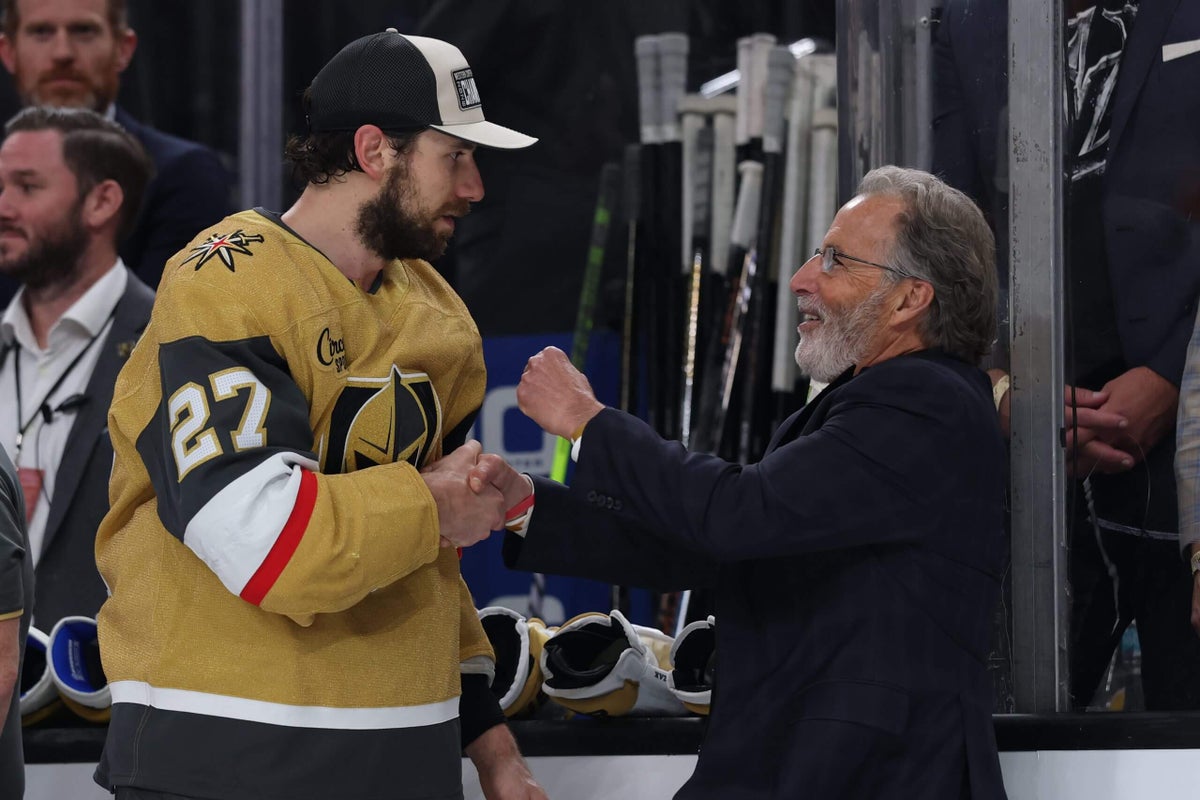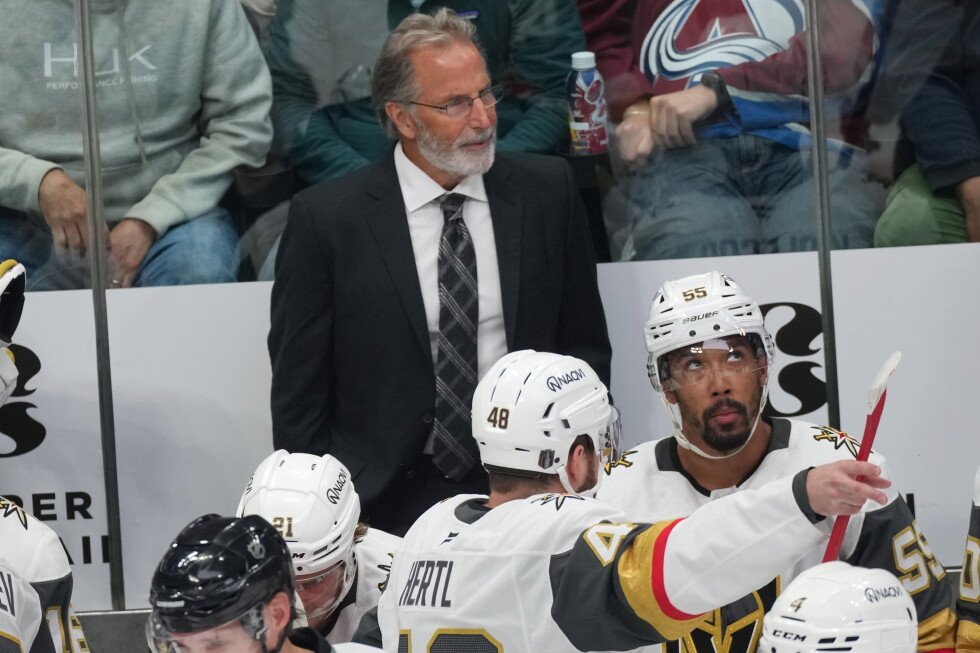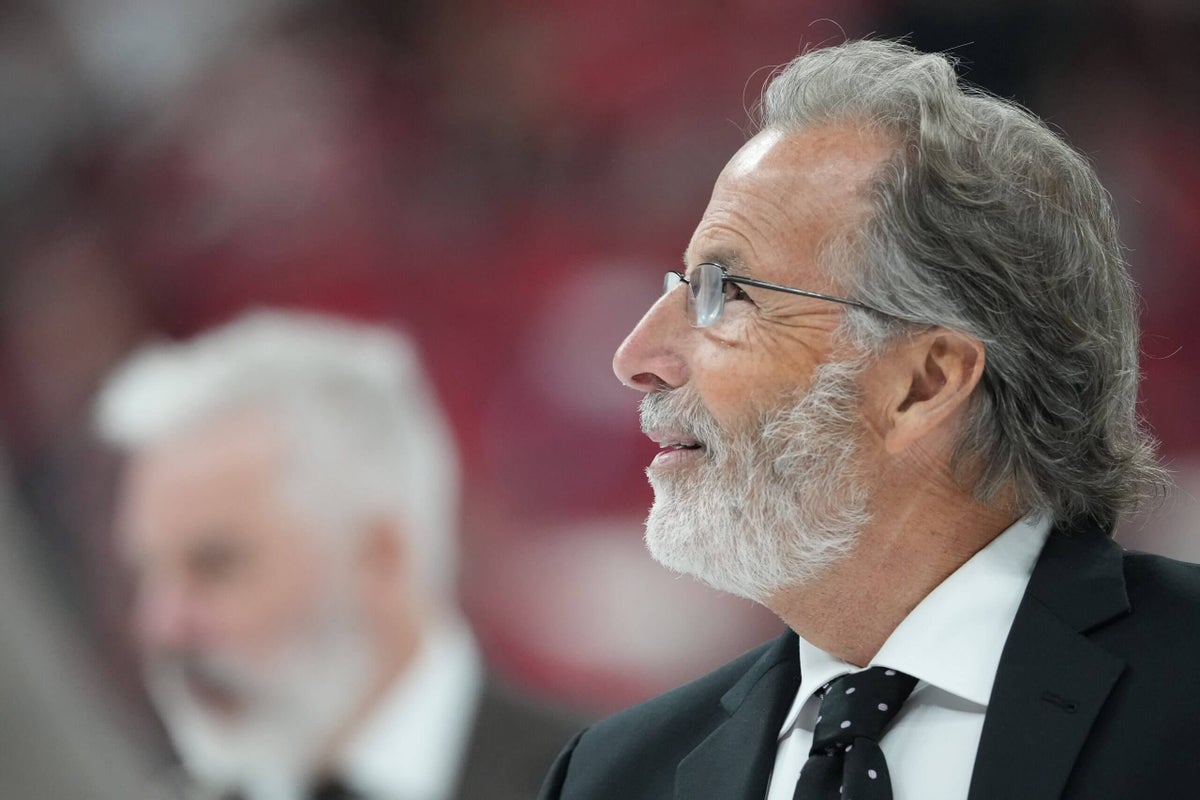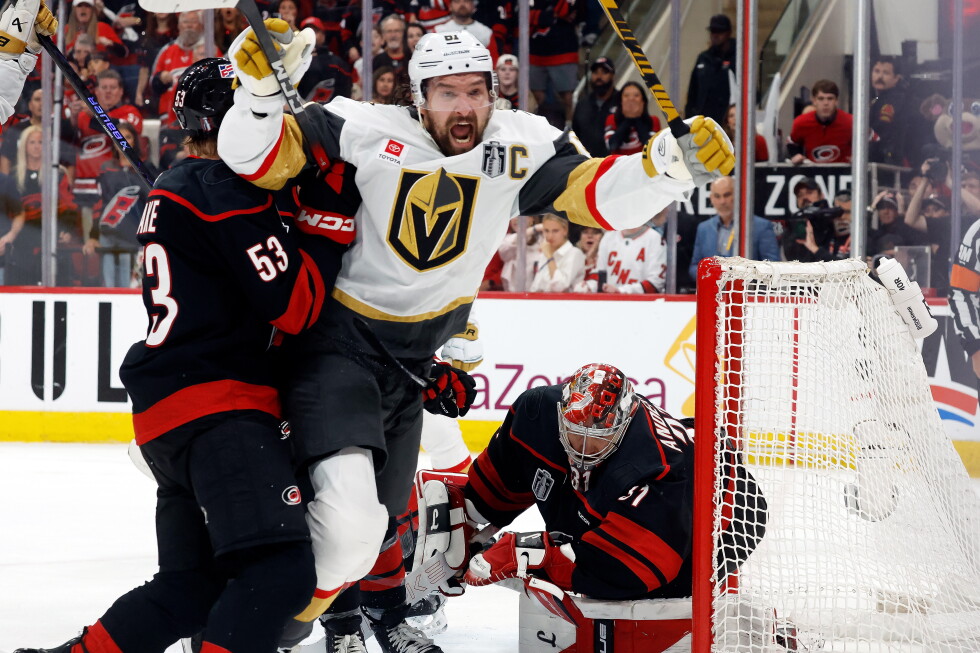
For much of the hockey world, John Tortorella’s coaching tenure in Philadelphia ended exactly the way critics always assumed it would.The Flyers were spiraling out of the playoff picture last season. After a 7-2 loss in Toronto on March 25 — their 11th loss in 12 games — Tortorella benched defenseman Cam York after only a handful of shifts. The two, according to league sources, had a heated exchange in the locker room after the game, and then an already heated coach had to immediately face reporters.Those media members had no idea what had just transpired, though, so there was shock when a frustrated Tortorella delivered comments during a minute-long presser that were widely interpreted as a coach waving the white flag.“I’m not really interested in learning how to coach in this type of season, where we’re at right now,” Tortorella said. “But I have to do a better job.”While he said clearly, “This falls on me,” the “not really interested” line sounded the alarms that Tortorella was emotionally fried.Two days later, the Flyers, who planned to let the rest of the season run its course, were left no choice but to fire him. The decision seemed obvious.Tortorella said after that game, “there’s nothing at the end of tunnel for ya,” so it just seemed as though he had burned out. The Flyers’ rebuild had finally ground him into pulp, especially after the trade deadline and a period when they were, in Tortorella’s words, “losing all the time.”He effectively reached his breaking point and talked himself out of a job with nine games left in Philly’s season.The irony?Less than 15 months later, after being hired with eight games left in Vegas’ season after the firing of Bruce Cassidy, Tortorella is on the cusp of his greatest achievement. Tortorella has the Golden Knights in the Stanley Cup Final against the Carolina Hurricanes, with Game 1 on Tuesday in Raleigh, N.C.Tortorella already has become the first in NHL history to coach teams to sweeps over multiple Presidents’ Trophy winners: Columbus over Tampa Bay in 2019, and Vegas over Colorado last month. Thirty years after winning his first championship as a professional coach and 22 years after winning his first Stanley Cup as coach of the Tampa Bay Lightning, the Golden Knights — 19-4-1 under Tortorella — are four victories from their second Stanley Cup championship in four years.The reality is, Golden Knights were the ideal fit for a coach who maintained, during the last year spent working as an ESPN studio panelist, that he was not retired, that he still had fire in his belly and that his comments after that game in Toronto were either taken out of context or weren’t conveyed exactly how he meant them.“I think he’s really evolved over time,” said retired defenseman Erik Johnson, one of the players traded by Philadelphia before last year’s trade deadline, “and I think maybe the media or hockey fans in general have this perception of him as a harda– and … all these things, and he can be all those things. But when you peel back the layers, he is a really, really good man that cares about people. And I saw firsthand when I played for him in Philadelphia the kind of guy he is.“I think he has a lot of leeway for those players because they’re veteran guys, they’ve won, they’ve played a lot of hockey, they know how to win. So I think Torts gave them a lot of rope to play with while implementing his style and how he wanted to play. So Torts has brought in his style while, I think, letting these guys play and have some breathing room and not being afraid to make a mistake. So these guys have the freedom to play within their skill set but also adding the tweaks in that Torts has wanted to put in.”There are no hard feelings in Philadelphia. The Flyers largely credit Tortorella for coming in and changing the culture, resetting standards and demanding accountability. But it was a job that became increasingly difficult, especially after Johnson and Scott Laughton were traded, for a coach whose greatest strengths have never been patience or player development.By Year 3 in Philadelphia, the torture of another rebuilding season had taken a toll. Tortorella is such a competitor that it was hard for him to accept losing and again not making the playoffs. The fit that once made sense no longer did.Vegas, meanwhile, offered the opposite environment: a veteran locker room, a team with established standards and championship expectations, and a roster that didn’t need to be rebuilt so much as pushed back onto the tracks.The same coach many assumed had talked his way out of Philadelphia suddenly found himself in a situation that may have been perfectly suited for this stage of his career.John Tortorella found perhaps the perfect spot for a comeback with Vegas. (Stephen R. Sylvanie / Imagn Images)Tom Fitzgerald, one of Bill Guerin’s assistant general managers for the United States at the Winter Olympics, witnessed just how much Tortorella wanted to return to behind an NHL bench while helping the gold medal-winning Americans in February.Tortorella spent the year scouting U.S.-born players for Guerin and was really leaned on by head coach Mike Sullivan as an assistant coach.“John Tortorella has been an entry-level coach,” said Fitzgerald, the former New Jersey Devils president of hockey operations. “He’s taken entry-level-type teams. And then he won. He grew and he did it the right way, as Ray (Shero) would say. He did it the right way. Didn’t take any shortcuts to get to where he was.“But then you get to a point where you know you’re a good coach and you need certain players to understand how you coach, and that’s usually veterans. I’m sure he learned a s— ton by working with all Philly’s young players and understanding really what level they were at and the phase that they were in. And I am sure that got old because he wasn’t getting any younger. He’s getting older and he wants to win, like we all do. But you’ve got to have the right coaches, and he did a fantastic job, but at the end, he’s in the right place right now because this suits him extremely well.”Six days before the Golden Knights hired Tortorella, he wondered if he’d ever get another shot behind the bench.In late March, Tortorella, 67, was in his Pass-a-Grille, Fla., home talking with The Athletic for a story on Bobby Brink. It was clear, even through the phone, that Tortorella’s passion for the game was still blazing. He loved the process. The relationship-building. The players who challenged him. It made him a better coach.And despite being fired by the Flyers a year earlier — with some thinking he quit — Tortorella felt he wasn’t done. He’d been a coach in the league for more than two decades, a Stanley Cup champion in 2004 with Tampa Bay. But he insisted he didn’t want the time in Philly to be his last dance.“Oh, God, yeah, I want to coach,” Tortorella said on March 24. “It’s not up to me. It’s up to … a lot of people think, ‘He’s too old, and this and that.’”By the next week, Tortorella was on the ice with the Golden Knights, leading them to a 7-0-1 tear to end the regular season. Talk about peaking at the right time.“Some people just have that it factor,” said Dane Jackson, a friend and former player under Tortorella. “He has the charisma and care for people. I don’t think people really see that side to him so much. They see the fiery press conference. But his players see that side where he wants the best for you.“I heard (the Vegas players) talking about the passion and energy and fire he brought, that he instilled. The way he has their adrenaline going. He brings that energy and accountability. The way he connected with those guys, it doesn’t surprise me at all.”Toward the end of the season, Tortorella was trading texts with Jackson. Jackson, now the head coach at the University of North Dakota, was preparing for the Frozen Four, which was also in Las Vegas. They caught up, wished each other luck.Thirty years ago, Tortorella brought Jackson in to be the captain of his AHL Rochester team, which won the 1995-96 Calder Cup (the first pro championship Tortorella won as a head coach). As their careers continued, they’d meet up in the summers in St. Paul, Minn., which is between Jackson’s cottage in the middle of Minnesota and Tortorella’s in Wisconsin. They’d talk life, family.But mostly hockey.Jackson has always sensed the same “fiery” Tortorella, a guy who can motivate, a guy who cares about his players. The idea that Tortorella “quit” on the Flyers didn’t make sense to Jackson — it was more about fit.He brought up Paul Maurice, who stepped down in Winnipeg in Dec. 2021, yet 18 months later was hired out of nowhere by the Florida Panthers, who are now two-time Stanley Cup champions under Maurice’s guidance.“I think guys that are of that mold … It’s almost like you kind of know when maybe your message or where you’re at with your mindset, if you’re frustrated, isn’t what the team needs,” Jackson said. “That’s interesting with those guys who have such a good feel, recognize that.”Brink knows full well how tough Tortorella can be on players. Especially when the Flyers were going through a rebuild during his three years as head coach.There was the time Tortorella made Brink a healthy scratch in January 2024, when Brink, the Minnetonka, Minn., native, was back in his hometown to play the Minnesota Wild. There were dozens of family members from all over the state getting tickets, ready to celebrate the storybook moment. His grandparents hadn’t seen him play live in years. Brink’s father, Andy, said the scratch was “miserable” and “embarrassing” for his son. But Brink’s father also said the tough love by Tortorella turned Brink into an NHL regular. And Brink agrees.“Obviously, a lot of it wasn’t very fun in the moment,” Brink said. “But I think it teaches you to be tough mentally. Obviously, there was a time where we might not have seen eye to eye. But I always thought he had my best interest at heart. He wanted to win. He did it his way. He’s had a lot of success in the NHL doing it that way. There was a moment where he gave it to me pretty good. Didn’t like what I was doing. But in the long term it helped me know what it takes to be an NHL player.”That morning, Tortorella and Brink had it out in the hallway of Grand Casino Arena. Brink didn’t see his name on the board for the lineup and asked to talk. “I went off the deep end. I went off hard,” Tortorella said. “I didn’t think he was playing that well. But if you start cutting corners and let people off the hook, I don’t think that’s fair to Bobby Brink and the process.”It ended up being a turning point in their relationship.“No doubt Torts helped him become an NHL hockey player,” said Andy Brink, a former University of Minnesota player who co-owns a sports academy with David Snuggerud, the father of St. Louis Blues forward Jimmy Snuggerud. “Other guys get emotional about it. You see Torts yelling at him or healthy scratching him. But any good coach who cares is holding players accountable. I’m going to take the kids that you know can take coaching and take teaching and take you’re going to invest in them.“Maybe people on the outside thought Torts was trying to be cruel or zing a player, but as a parent who has seen, who has been in competitive sports his whole life, I knew that wasn’t what he was doing. He was trying to get him to a higher level.”Charlie Huddy, a five-time Cup winner with the Oilers who has been on staffs with Tortorella, said, ‘The knock on him is he’s hard on guys. And that he doesn’t like this guy or like this guy. But it’s all for the right reasons. It’s not malicious. It’s to help the players get better and help the team have tougher, better players and to be able to win.”In the months after leaving Philadelphia, Tortorella never disappeared.He worked as an ESPN studio analyst, offering opinions, breaking down games and, despite widespread assumptions that his coaching career might be over, quietly making it known that he still wanted another chance behind a bench.Steve Levy saw it firsthand.Levy, ESPN’s longtime NHL broadcaster, remembers spending a night in the studio with Tortorella while speculation swirled that he could be a candidate for openings around the league, especially after Kevyn Adams was fired as Buffalo’s GM in mid-December and folks wondered what that would mean for coach Lindy Ruff.“Everywhere I turned, he was on his phone, people telling him he’s getting the Buffalo job,” Levy said. “Buffalo. Buffalo. Buffalo. It never ended. He kept saying, ‘I’m not. I’m not. I’m not.’ On the air, I even joked about it. It was so public at that point, and it made some sense, right? Because he and (new Sabres GM Jarmo) Kekäläinen were together in Columbus. So there was a previous relationship there. And Torts got mad at me even for referencing it on the air and joking about it.”The rumors never seemed to stop. But even though Tortorella made clear Buffalo wasn’t happening, he also insisted that he still wanted to coach again.“I knew deep down Torts really wanted to get back in, one last kick at the can,” Levy said.What neither man could have known then was how quickly the opportunity would arrive — or how perfectly it would fit.A veteran Vegas team. Eight games left in the regular season. A Stanley Cup contender needing a push more than a rebuild.For Levy, who is now covering the Stanley Cup Final for ESPN, the journey from Philadelphia to Vegas only reinforces what he believes many people get wrong about Tortorella.“I think he’s the most misunderstood person in hockey,” Levy said. “The rough, gruff internet clips that you see with him and (late New York Post columnist) Larry Brooks are not the true person that he is underneath, and I wish more people could know the real John Tortorella.“He happened to be working the night (Larry died). I spoke to him many times before that day about Larry Brooks, and ‘How do you want to handle this?’ He was really beaten up emotionally. People didn’t realize the good relationship that Torts actually had with Larry and Larry’s son, and that was a really emotional night for him. And I didn’t check the ratings on that, but I think the hockey world wanted to see what Torts had to say after Larry Brooks had passed. And I thought his words were beautiful that night. It was sort of a peek inside, a look inside the window of John Tortorella — the real John Tortorella, not the guy you see in the 15-second clip postgame after a tough loss, after being asked a difficult question. But every player I’ve talked to, every veteran player said they all wished they could have been coached by John Tortorella.“Great players want to be coached hard. They want to be coached tough. Coaches that’ll give it to you straight. I’ve never heard one bad thing about John Tortorella as a coach.”
How ‘misunderstood’ John Tortorella went from a breaking point to the Stanley Cup Final
Less than 15 months after an inglorious end to his previous coaching stint, Tortorella is on the cusp of his greatest achievement.
2,924 words~13 min read