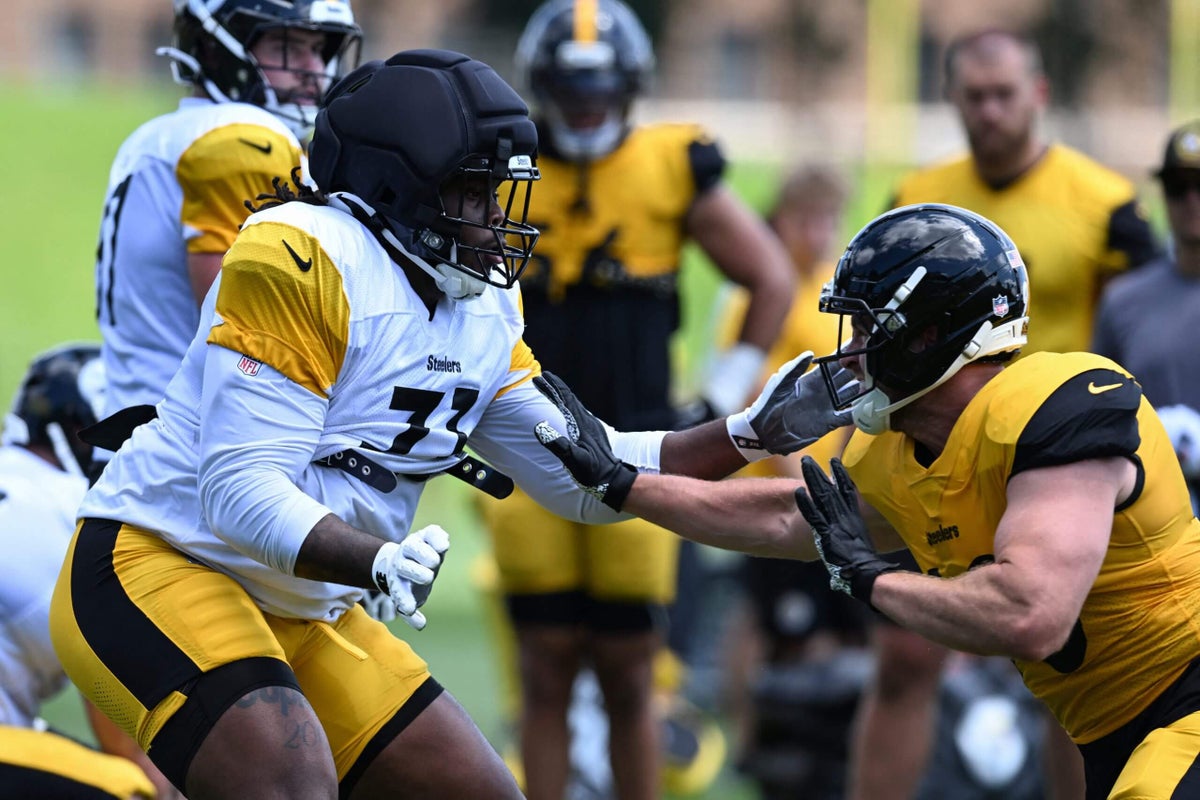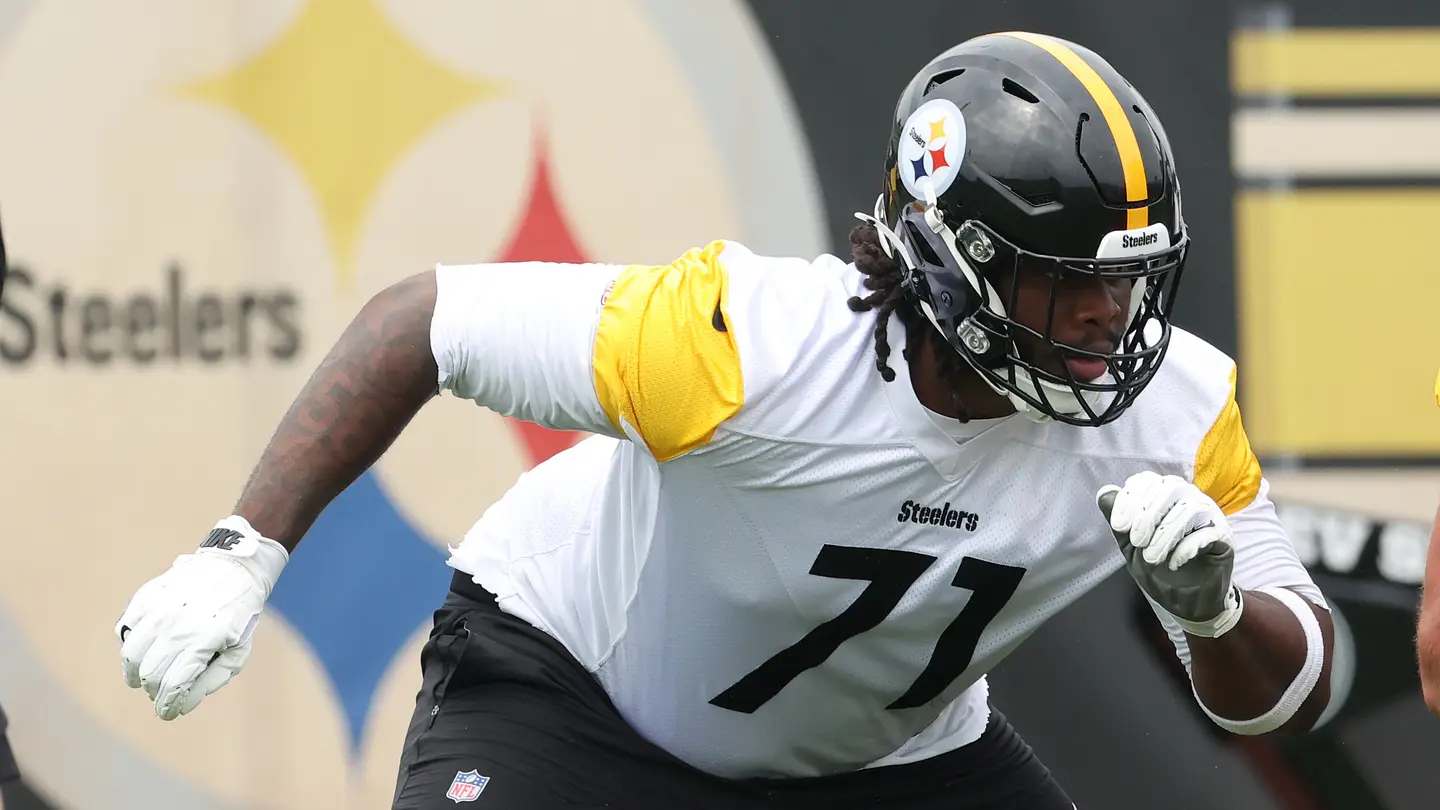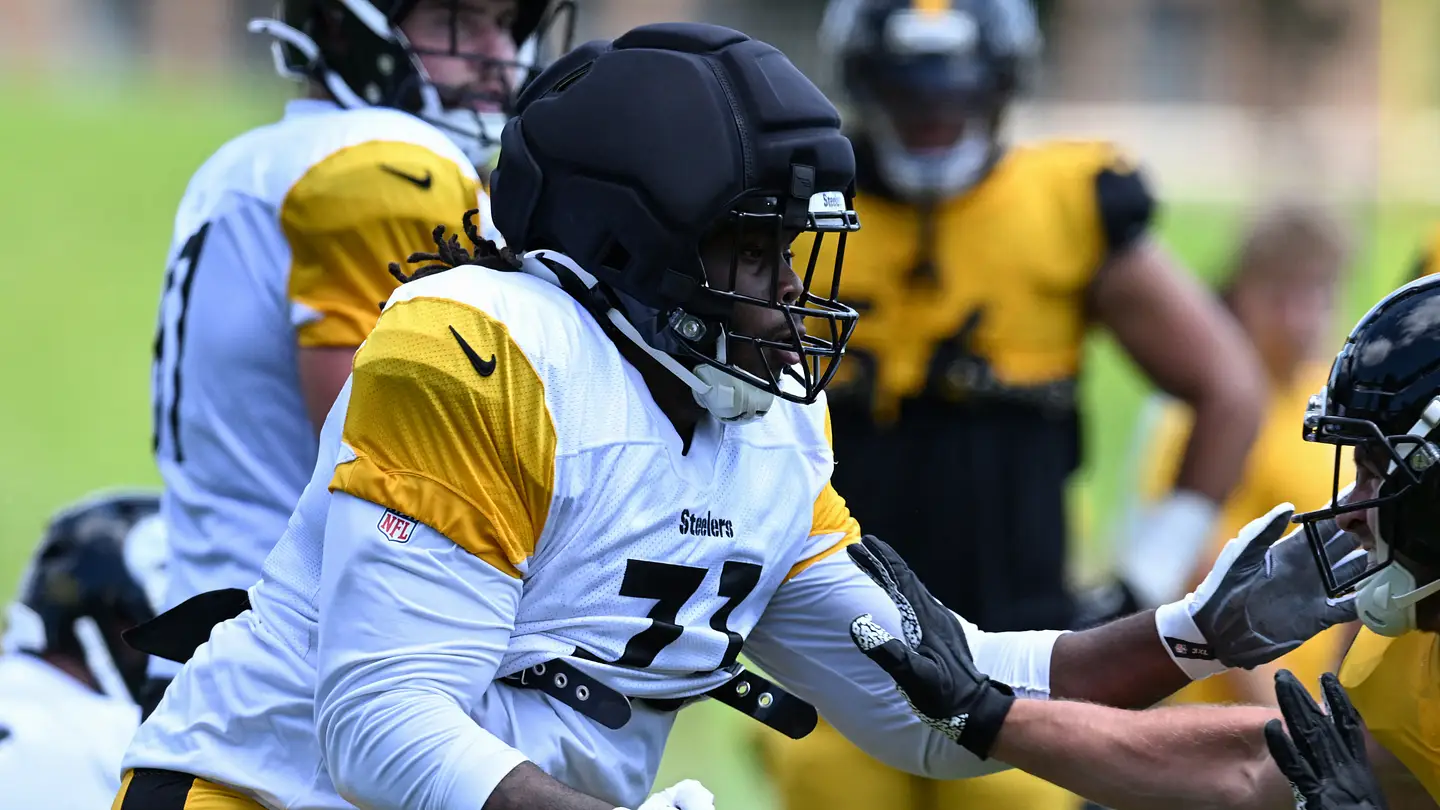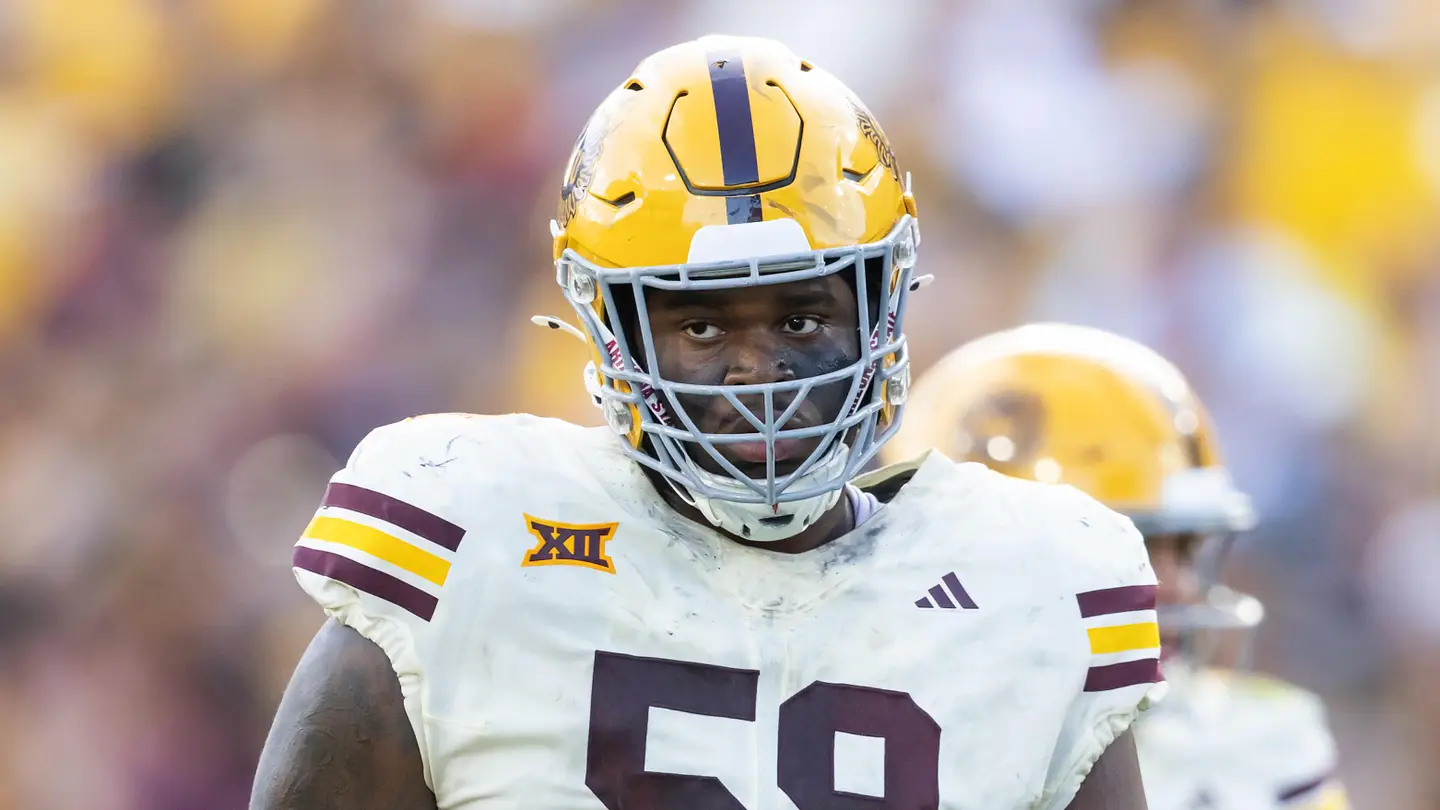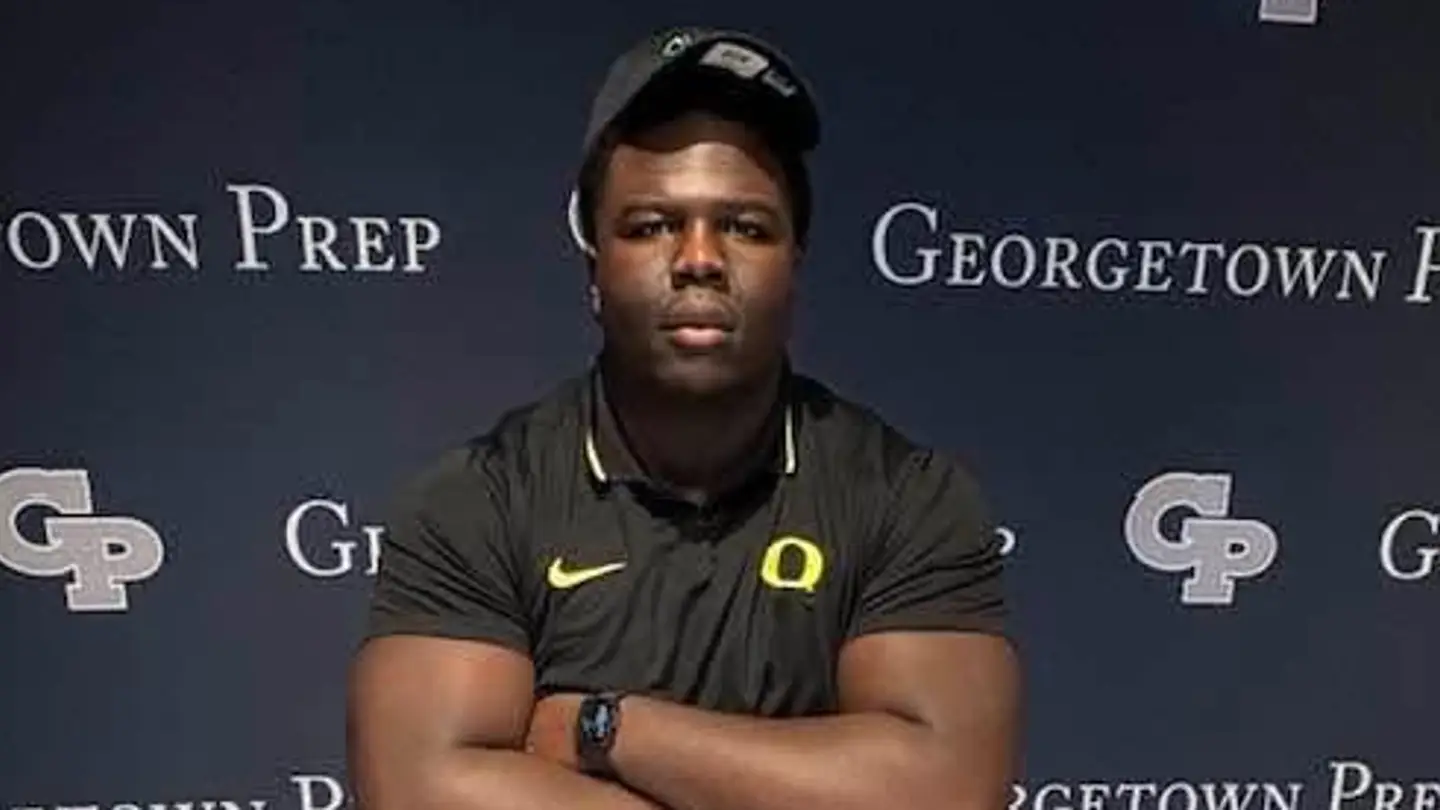
Max Iheanachor folded his 6-foot-6 frame into the passenger seat of a gray Toyota Tundra and set off on a ride that would change the trajectory of his life.Behind the wheel sat Cory DeSanti, the coach of Elev8, an AAU basketball program in Southern California. From the moment he met Iheanachor, DeSanti was struck by the big man’s agility and athleticism. Rather than living in the low post, Iheanachor handled the ball and took jump shots from the perimeter. When opponents drove to the basket and bumped into Iheanachor, they’d often end up on the floor; Iheanachor would stand there unfazed.“I’ve never seen anybody that size move like that,” DeSanti said. “I knew what I was seeing, but I just couldn’t believe it.”DeSanti, part of the 1997 Washington State team that made the Rose Bowl, knew instantly that Iheanachor had a bright athletic future ahead of him — but only if he changed sports. As the coach navigated the rolling hills on the outskirts of Los Angeles, he steered the conversation toward football.The game was completely foreign to Iheanachor (pronounced: “ee-HAW-nuh-chore”). At 13 years old, he immigrated from Nigeria to the United States with his parents and three siblings. He had never watched a single football game, couldn’t tell you the difference between a quarterback and a cornerback, and didn’t even know offense from defense. To him, “football” meant soccer.“It was just kind of blind faith,” DeSanti said. “He didn’t understand what I was telling him.”DeSanti laid out a vision. His good friend, Bobby Godinez, was the athletic director and head football coach at East Los Angeles College, a junior college in Monterey Park. High school basketball was over, and it was time to make a decision on the next chapter.“We just talked about just letting God lead the way,” DeSanti said. “I wasn’t trying to be biblical or anything like that. I just wanted him to understand to let his heart guide him. If God takes you into this path with football, just give it everything you got.”Iheanachor was reluctant. His parents — particularly his mother — were adamantly against the idea, thinking it was too dangerous and a waste of time. They came to America so that their children could get an education, not play a game they knew nothing about.“If you’re familiar with Nigerians, they love school,” Iheanachor said. “They love lawyers, doctors. They wanted me to go to a four-year (college).”DeSanti had been trying for some time to convince Iheanachor and his family that football was the right path. During that 30-minute ride, Iheanachor finally agreed he’d take the plunge.“I do believe that this is the right path for you, and I’ve never been more sure of it,” DeSanti said. “I promise you that if you do give it a chance, you’re going to play football at a very high level. You’ll be a pro.”Shortly after that car ride, a text message lit up the phone of East Los Angeles College offensive line coach Ronnie Castillo. It was Godinez, the head coach at ELAC.Hey, I’ve got a project for you.Castillo often trains young football players at Wilson Park in Torrance, a city not far from where Iheanachor lived. The coach invited Iheanachor to tag along. The former basketball player was down to try it. Just one problem, he didn’t have any cleats.“What size do you wear?” Castillo asked.Seventeen.Castillo had cleats in the equipment room, but nothing that big. He went to the local sporting goods store and bought up the last pair — the only pair — of size 17 cleats, in red and black, even though ELAC’s colors are green and white. Then, he picked up Iheanachor at his family’s apartment and went out to a grassy patch on the side of the park.It was there that Godinez and Castillo taught Iheanachor the basics of offensive line play: How to get into a stance, how to take his first kick steps, how to mirror a pass rusher.“He didn’t even know he had to put his hand in the ground,” Castillo said.The coaches felt like they were teaching a 17-year-old things a pee-wee football player would know, but they could see the potential. Two kick steps into the session, they were sold.“Do you want to make a lot of money someday?” Godinez asked.“Yeah, let’s give it a shot,” he remembers Iheanachor responding.“Look, you’re going to have to trust me,” Godinez said. “You’re really going to have to be resilient through this process, but if you stick with it, you’re going to get a Division I scholarship just standing there. How good you’re going to be depends upon how much you buy into this.”Even though another junior college was much closer to where Iheanachor lived, he trusted the staff and agreed to enroll. Each morning, he packed his bags and took an hour-long bus ride to ELAC. Every day after practice, another hour-long bus ride home.Max Iheanachor (73) on the move, in his size 17 red and black cleats, while playing at East Los Angeles College. (Courtesy of Ronnie Castillo)Meanwhile, the ELAC coaching staff devised a plan to develop a 250-pound basketball player into an offensive tackle with first-round potential. The first step was to add some weight to that 6-6 frame, and do so in a hurry. Godinez gave Iheanachor a peanut butter and jelly quota — eight to 10 sandwiches a day in and around his meals, plus half a gallon of chocolate milk.
Max Iheanachor’s NFL journey started with a search for size 17 cleats, PB&J quota
The Steelers' first-round pick, who never played high school football, took a leap of faith — more than once — on his journey to the NFL.
2,402 words~11 min read