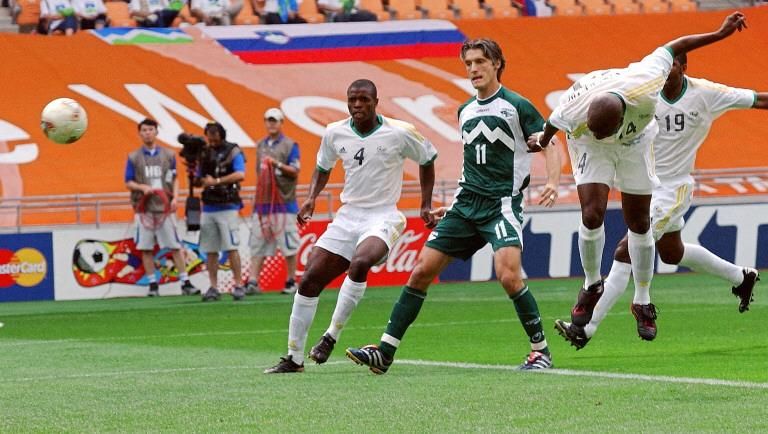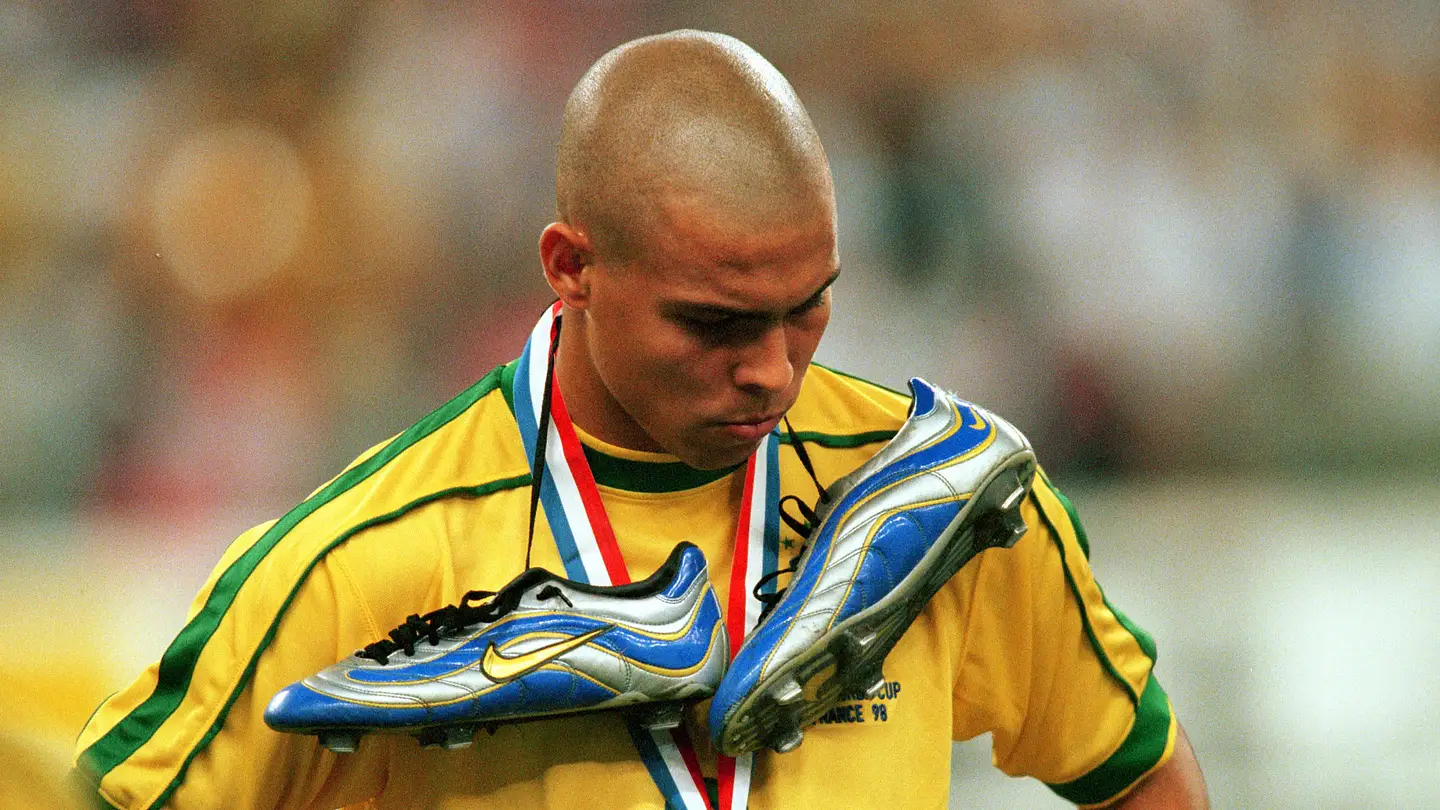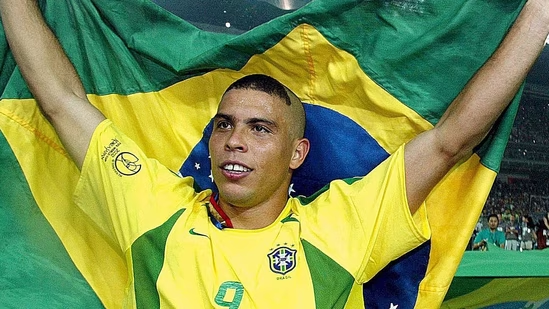
On July 12, 1998, Ronaldo stood in the tunnel of the Stade de France carrying the weight of Brazil, a World Cup final, and a mystery that still refuses to die cleanly.Ronaldo after winning the World Cup 2002. (X images)Four years later in Yokohama, he stood over Germany with the same shirt, a different body, and two goals that transformed one of football's strangest collapses into one of its greatest redemption arcs.The night Brazil lost its certaintyRonaldo arrived at the 1998 World Cup as the most frightening footballer on earth. He was 21, already a Ballon d'Or winner, already the face of a new commercial football age, and already the undisputed centre of Brazil's attack. He had scored four goals before the final, including one against the Netherlands in the semi-final, and Brazil entered Paris expecting his coronation.Then came the teamsheet.Brazil's first official starting XI for the final did not include Ronaldo. Edmundo was listed in his place. For the press box, it landed like a thunderclap. The best player in the world had vanished from the biggest match in football without explanation. Minutes later, a revised sheet arrived. Ronaldo was back. Edmundo was out. The final had not even kicked off, and Brazil already looked shaken.The official account of that night moved through confusion, medical language, and prolonged silence. What eventually surfaced was this: Ronaldo had suffered a convulsion earlier that day while resting at the team hotel. His teammates were alarmed. Brazil's medical staff rushed him for tests. He was initially ruled out.But the tests returned nothing conclusive. Ronaldo wanted to play. He later said he went to Mario Zagallo with the results and told the Brazil coach he was fit. In the brutal theatre of a World Cup final, that became enough.That is where the mystery still lives. The hard facts are established - the seizure, the hospital visit, the first teamsheet, the second teamsheet, the final. The unanswered question is why a player who had suffered so alarming an episode was permitted to determine his own availability on the biggest night of his career.Brazil never looked right. Their preparation had been fractured. Their emotional centre had been disturbed. Ronaldo played, but he did not look like himself. The sharpness was gone. The menace was gone. The player who had spent the tournament bending defenders out of shape now looked imprisoned inside his own body.France sensed it immediately. Zinedine Zidane scored twice from corners before half-time. Emmanuel Petit added the third late. France won 3-0, claimed their first World Cup, and turned Paris into a national carnival. Brazil departed with a wound that statistics alone could not explain.Ronaldo still won the Golden Ball as the tournament's best player, but the honour felt almost secondary. Paris did not remember him as the finest footballer in the world. It remembered him as the missing man who somehow played.Also Read: Zverev sends 3-word message to French Open opponents after Djokovic exit; GF shares updateThe body breaks, the question growsThe cruelty did not end in France. Ronaldo's body, once the most terrifying machine in football, began to betray him.At Inter Milan, he suffered a serious knee injury in November 1999. After surgery and months of rehabilitation, he returned against Lazio in April 2000. Within minutes, his knee gave way again. The damage was catastrophic. His right kneecap effectively disintegrated beneath him. The image of Ronaldo on the turf, screaming, became another chapter in the same long, dark story.By then, the question had shifted. It was no longer only about what had happened before the 1998 final. It was whether Ronaldo would ever return at all.Football had seen great players lose finals. It had seen great players suffer injuries. Ronaldo's case felt different because both disasters seemed bound together by some strange, unrelenting force. One night had taken his certainty. The two years that followed took his body.He had been the future of football. Suddenly, he was being discussed in the past tense.The answer in YokohamaBy the 2002 World Cup, Ronaldo was no longer the same player. He could not draw on the same explosive movement. The old blur had been replaced by a heavier, more deliberate striker. The pace had diminished, but the instinct had endured. The body had changed. The hunger had not.Brazil built their attack around Rivaldo, Ronaldinho, and Ronaldo, and the tournament slowly became his act of reclamation. He scored against Turkey, against China, against Costa Rica, and again in the knockouts. Each goal pulled him a little further from the shadow of Paris.The final gave football its cleanest possible theatre. Germany had Oliver Kahn, the tournament's most dominant goalkeeper. Brazil had Ronaldo, the tournament's great survivor. One man had spent the month stopping almost everything. The other had spent four years proving he was not finished.In the 67th minute, Rivaldo's shot squirmed free of Kahn's grasp. Ronaldo reacted first. The finish was simple. The meaning was enormous. Four years after the most haunting night of his career, he had scored in a World Cup final.Twelve minutes later, Brazil came again. Kleberson found Rivaldo. Rivaldo let the ball run. Ronaldo waited, set his body, and passed it low into the corner with the assurance of a man settling an old debt. It was not just a goal. It was a verdict.Brazil won 2-0. Ronaldo finished the tournament with eight goals, the Golden Boot, a fifth World Cup for Brazil, and the personal closure Paris had denied him.That is why this arc still holds such power. His 2002 was not merely a comeback from injury. It was a comeback from public confusion, private fear, medical doubt, and a night that had turned his greatness into a trial without a verdict.The 1998 final remains unsolved in the way sport sometimes refuses to be solved. But 2002 did not need to explain it. Ronaldo did something stronger.He left Paris as football's greatest mystery. He left Yokohama as its answer.
Ronaldo, 1998 and 2002: The mystery football never solved, and the answer it never forgot
Ronaldo's journey from the haunting mystery of the 1998 World Cup final to his redemption in 2002 symbolises resilience. | Football News
988 words~4 min read