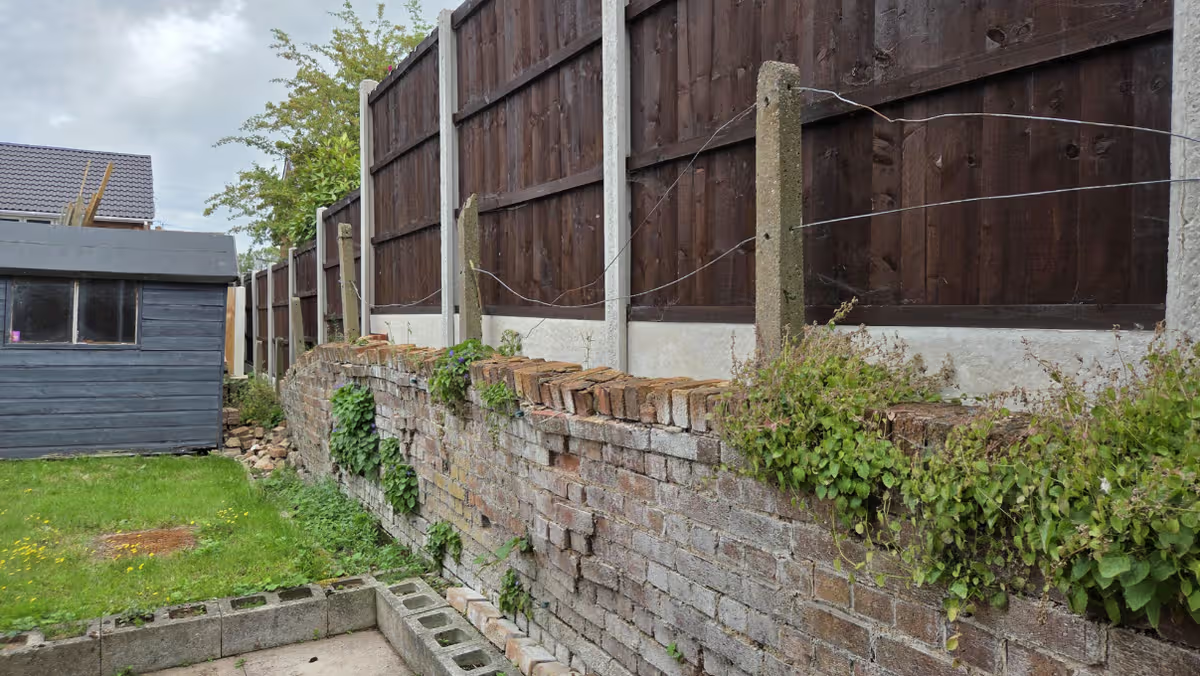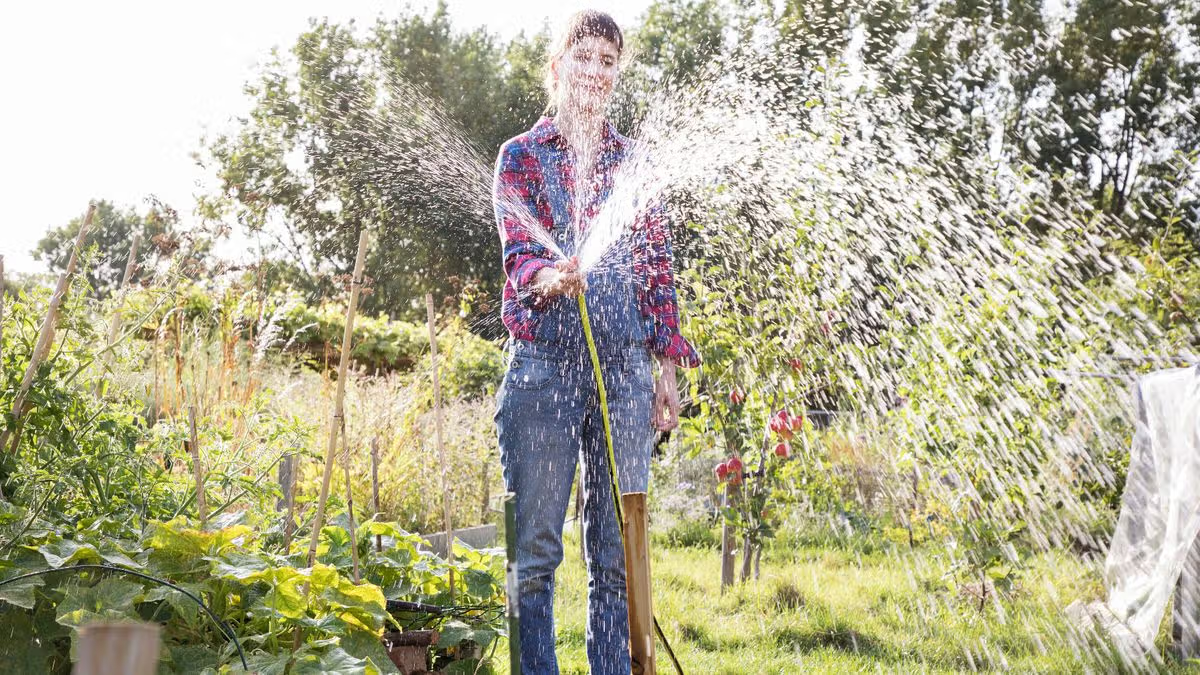
What happens when the deed map and ordnance survey (OS) map are not the same and the landowner has assumed that the OS map is the correct version on the basis that it affords them ownership of more space than they actually own? In the case I am writing to you about, the individual would appear to have been cultivating land they do not own for more than 24 years. The area in question borders the public domain.There are two distinct issues to consider in your inquiry, (a) the issue of the maps and (b) the use of the space for 24 years. In relation to (a), an ordnance survey map shows physical features including buildings, hedges, walls, streams, etc. It does not show legal boundaries to land titles. To define the boundary, the deed map should be read in conjunction with the clause in the deed that describes the land. This description clause, known as the parcels clause, determines how the boundary is defined. If it includes the words, “as more particularly defined on the attached map” or words that have a similar effect, then the deed map defines the boundary. However, if the parcels clause includes the words, “shown on the attached map for the purposes of identification”, or words that have a similar effect, then the parcels clause, rather than the deed map, defines the boundary. If there is no deed map attached to the deed and no reference to a deed map in the parcels clause, it may be accepted the parcels clause defines the boundary.You have not referred to a Land Registry (Tailte Éireann Registration) map. If the title to the land is registered, you should obtain a copy of the Land Registry folio and map for reference purposes. You should note, however, that the Land Registry operates a non-conclusive boundary system and its maps do not define land title boundaries.Patrick Shine is a chartered geomatics surveyor, a chartered civil engineer, and a member of the Society of Chartered Surveyors Ireland. In relation to (b), if the land is used by a person who does not hold legal title, the question of adverse possession arises. The 24 years of use is well in excess of the general rule under the Statute of Limitations, which is 12 years. However, adverse possession is a complex area of land law. Requirements for adverse possession, in addition to uninterrupted and exclusive possession for 12 years, include an intention to possess a defined area without the owner’s consent. After 12 years the occupier (squatter) may apply to be registered as owner of the title in the subject lands. If part of it was included in the public domain you refer to, uninterrupted possession of 30 years of this part would be necessary to claim adverse possession. [ My neighbour has been cultivating land that they don’t own. What can be done about this?Opens in new window ]However, it would be difficult to prove uninterrupted possession as public domain may have a passive use, such as open space for environmental, or roadside reservation, purposes. As stated, adverse possession is a complex issue and legal advice is essential.To resolve the situation, a survey should be carried out by a chartered geomatics surveyor and a map prepared showing all relevant boundaries. Discussion is necessary between the parties to seek agreement or compromise. Failing this, the landowner who feels dispossessed should seek legal advice and present all relevant information, including the boundaries map and occupation details, to a solicitor who will advise in relation to adverse possession and on the way forward. Litigation should be avoided if possible. If agreement is reached it should be surveyed, mapped and formally documented and registered or rectified in the Land Registry.Patrick Shine is a chartered geomatics surveyor, a chartered civil engineer and a member of the Society of Chartered Surveyors Ireland.Do you have a query? Email propertyquestions@irishtimes.comThis column is a readers’ service. The content of the Property Clinic is provided for general information only. It is not intended as advice on which readers should rely. Professional or specialist advice should be obtained before persons take or refrain from any action on the basis of the content. The Irish Times and its contributors will not be liable for any loss or damage arising from reliance on any content
My neighbour has been cultivating land they don’t own. What can be done?
The land they are claiming borders the public domain
720 words~3 min read