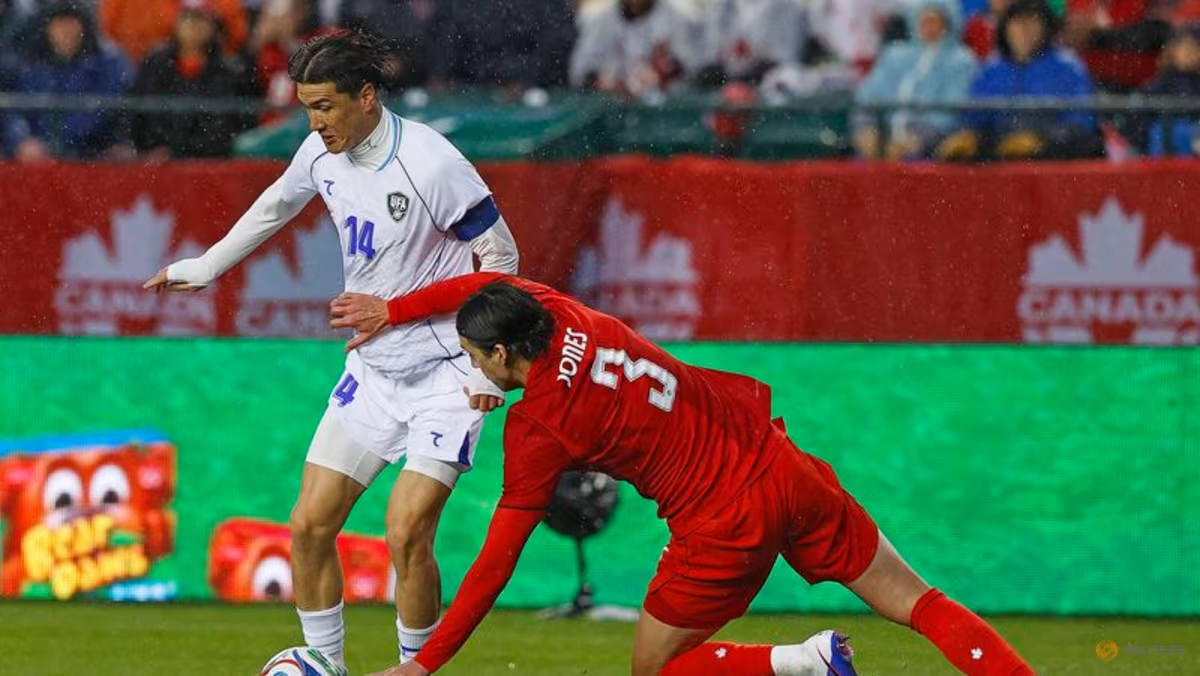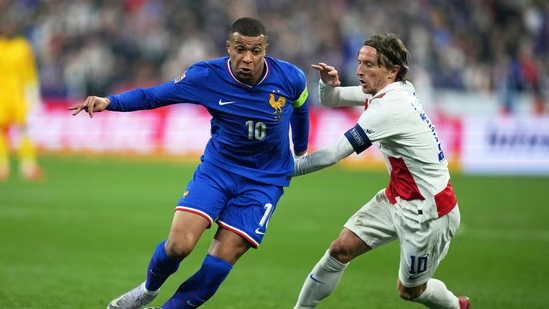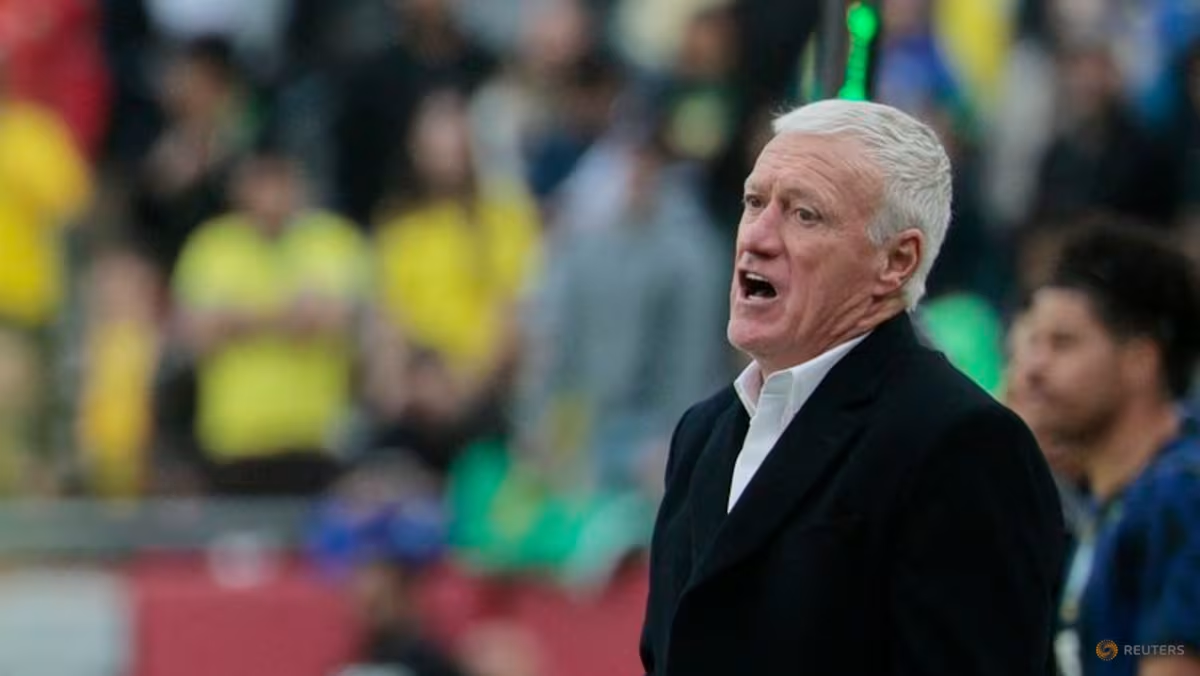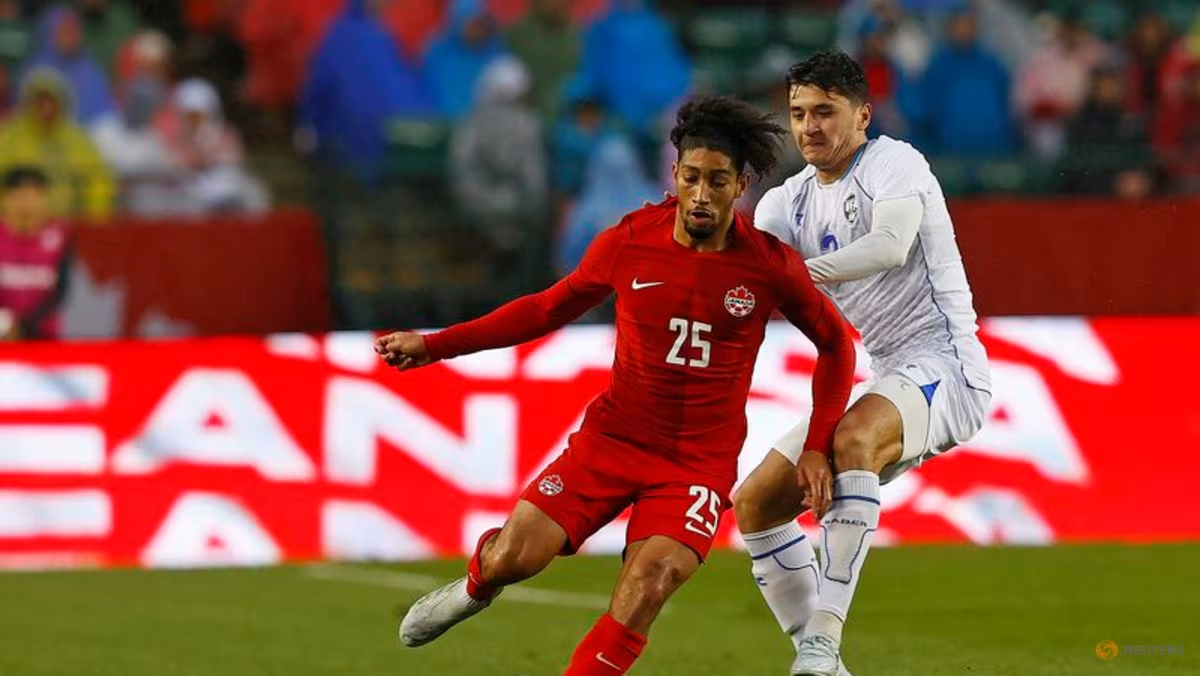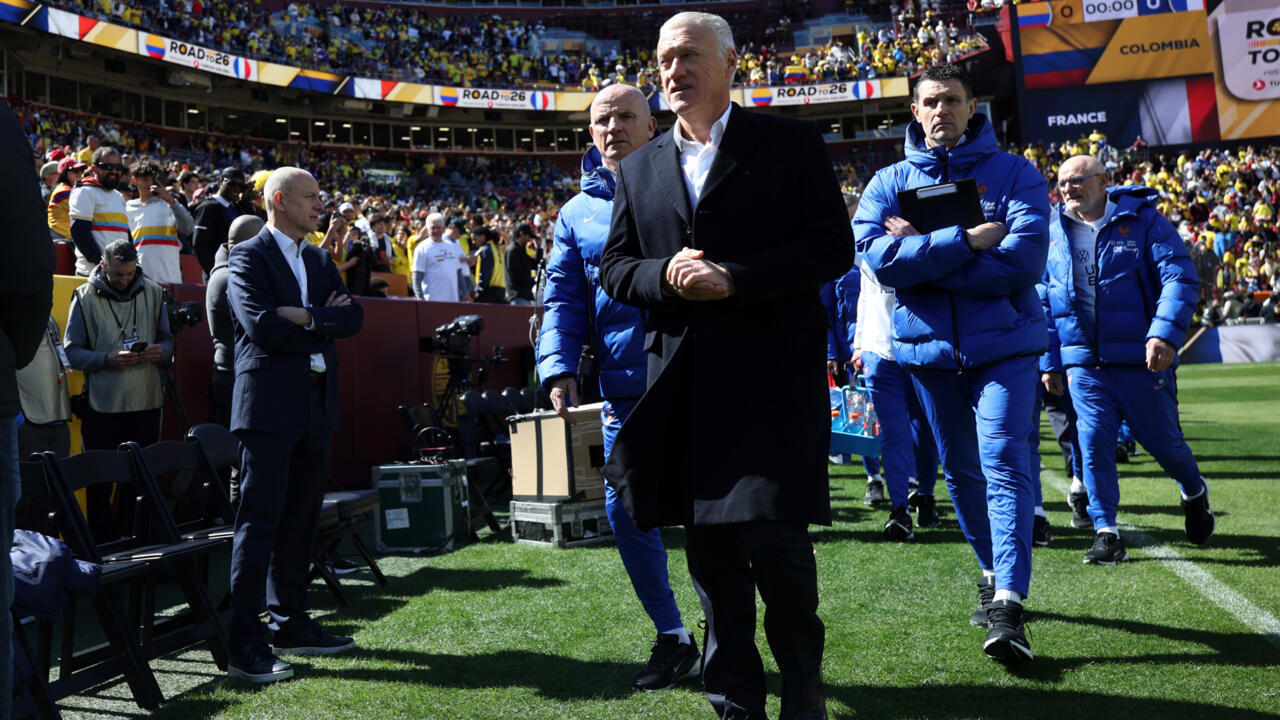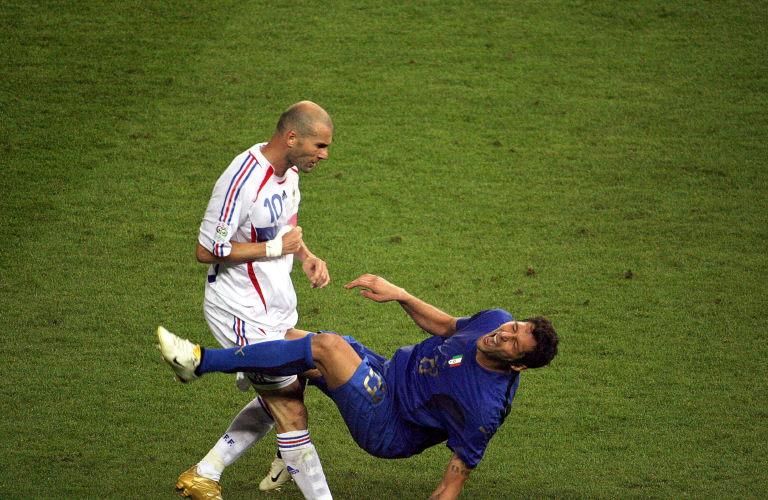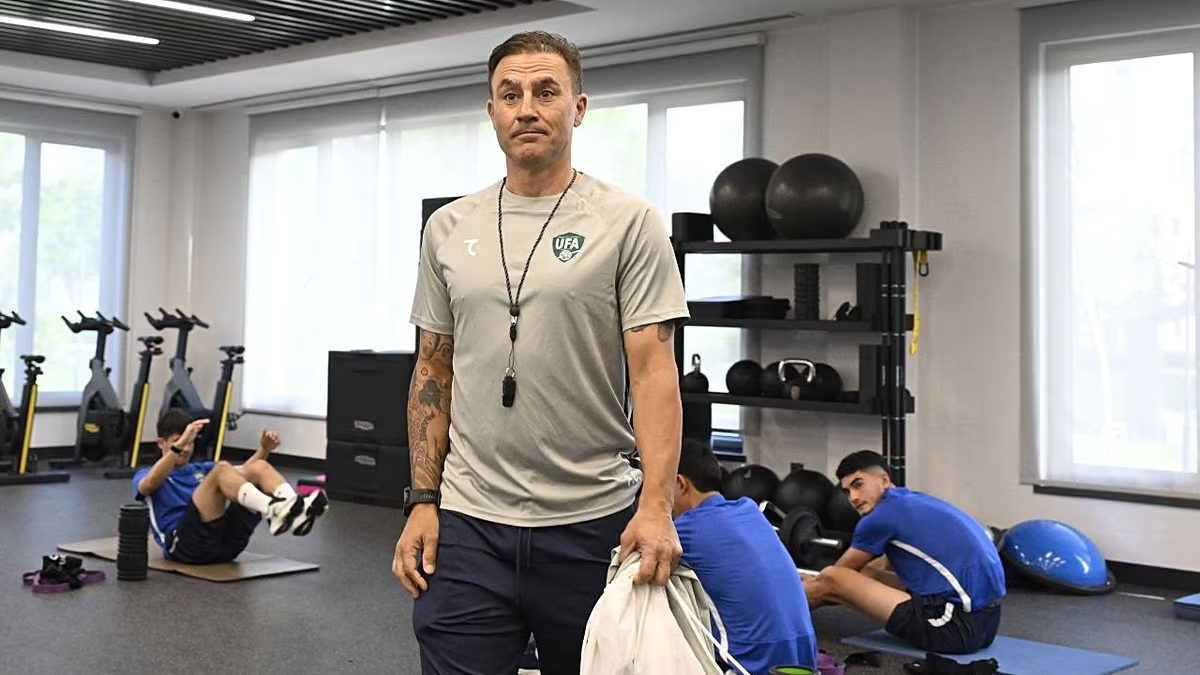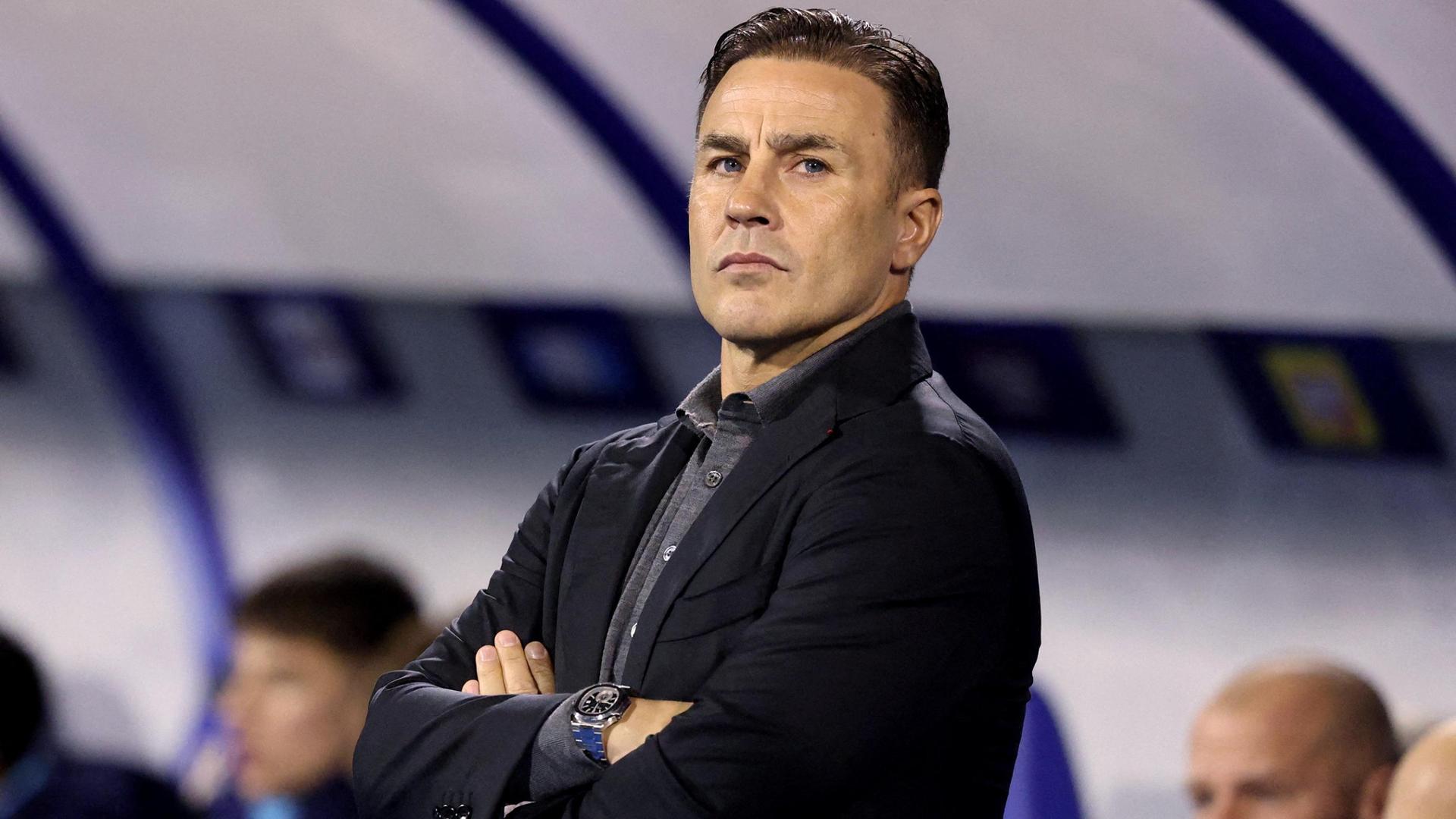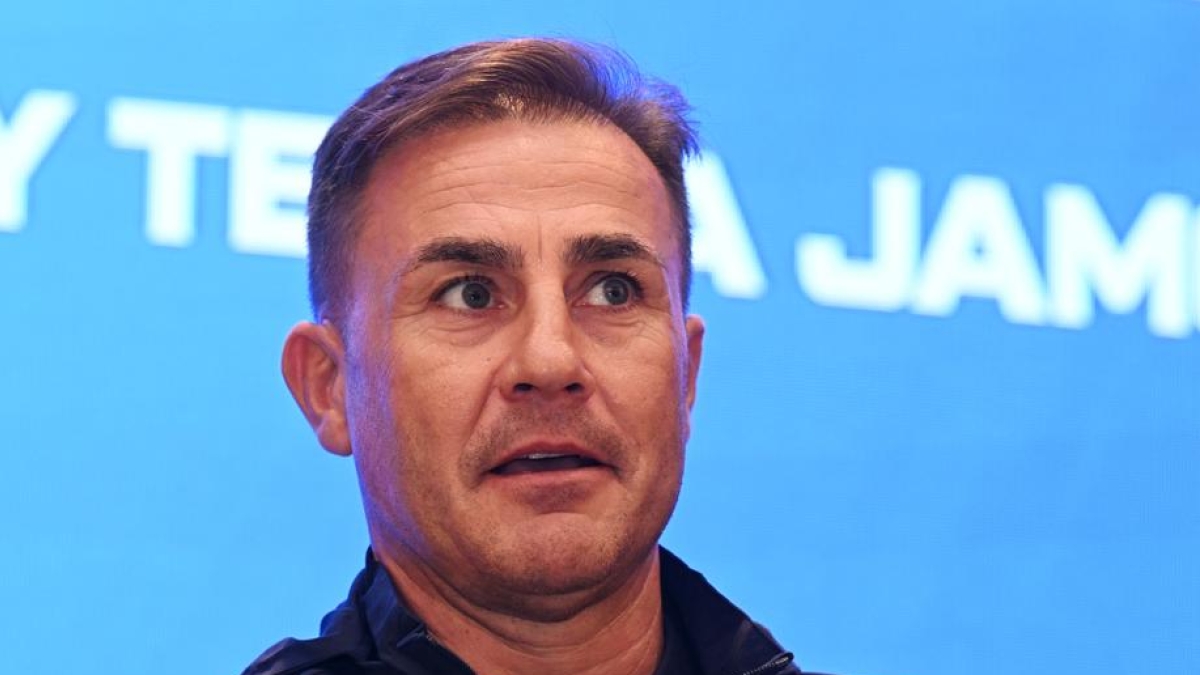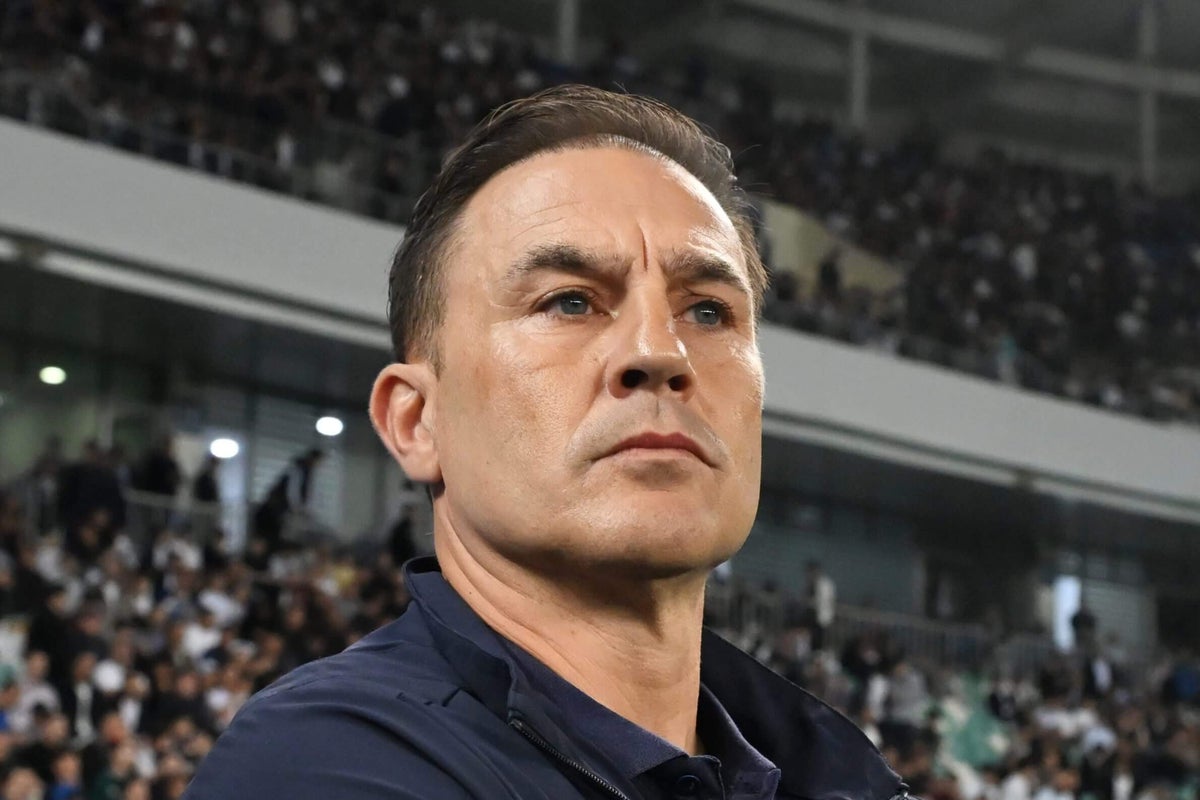
Only three male footballers have won the World Cup as a player and a manager.France boss Didier Deschamps is the most recent: he guided Les Bleus to the title in 2018, having previously lifted the trophy as France’s captain on home soil in 1998.Franz Beckenbauer led West Germany to winning the 1990 World Cup in Italy, 16 years after winning it as a player, also on home turf and also as captain.The first man to achieve the feat was Brazil’s Mario Zagallo, who was in the victorious 1958 and 1962 sides as a player, then, as a 38-year-old, he managed Brazil’s iconic 1970 team to victory in Mexico. He was also assistant manager in 1994 when Carlos Alberto Parreira’s side won the final on penalties in the U.S..What chance Fabio Cannavaro becoming the fourth on the list this summer? He captained Italy in 2006 when they beat France in the final in Berlin and is now leading a nation to this summer’s World Cup 20 years later.That sentence may come as a surprise if you haven’t yet heard who Cannavaro is in charge of. He agreed to become Uzbekistan’s new manager late last year and is the man tasked with guiding the White Wolves into their first-ever World Cup.Cannavaro’s decision to move to Central Asia (he has also taken his family with him to the capital Tashkent) reflects the 52-year-old’s eclectic managerial career to date.His playing days were mostly spent with titans of European football like Inter, Juventus and Real Madrid, but other than a brief stint at Udinese in 2024 (he guided them to Serie A safety during a short-term deal), Cannavaro the manager has plied his trade in football outposts like Saudi Arabia (before it was fashionable), China (when it very much was fashionable) and Croatia.Fabio Cannavaro was appointed Uzbekistan head coach in October 2025 (Anvar Ilyasov/Getty Images)With a league title along the way, Cannavaro may have anticipated a high-profile European job to come his way, given his vast experience and success as a player, but a couple of damaging stints with Benevento in Serie B and Dinamo Zagreb in Croatia, where both teams dropped below expectations, haven’t helped.So why Uzbekistan? A decent payday? A chance to manage at a World Cup? Undoubtedly, both play a part but Cannavaro is already talking about the 2027 Asian Cup (being held in Saudi Arabia in January) and there is more to the Uzbek job than meets the eye.Amid huge government investment in training facilities, stadiums and a new national football centre, Uzbekistan are planning to become a regular name at World Cups and hope to enjoy success in Asian tournaments, having done so at under-17 and under-20 levels in recent years. Cannavaro is known to be impressed at the scale at which Uzbek football has grown via long-term investment and planning in the last decade.Abdukodir Khusanov, Manchester City’s lightning-quick centre-back who Cannavaro will mentor through the World Cup, could be the first of many Uzbek players to be snapped by big European clubs in the coming years from a burgeoning generation of talented players.Cannavaro was only appointed last October, with the Uzbek FA ditching the guy who led the team to qualification (and the under-23 side to their first ever Olympic participation in 2024), Timur Kapadze, who himself had taken the job on from Slovenian Srecko Katanec. He had to step down during the qualification campaign for health reasons.Cannavaro, as Uzbek FA vice-president Ravshan Irmatov said when appointing him, has been enlisted for very specific reasons: “We have seen that a defensive playing style brings results.“We believe that with his international experience, professional culture and tactical structure, he will bring new spirit and a new system to our national team.”Cannavaro is not the first global football star to infiltrate Uzbek football (Rivaldo played for Bunyodkor for three years towards the end of his career) but his appointment certainly got a football-mad nation talking.When The Athletic visited Tashkent for the March international break, the hero-worship hadn’t yet ceased; Cannavaro was applauded both into and out of the press conference room by journalists, while some asked for selfies.Away from the press conference, Akbar Yusupov, editor-in-chief at the English-language newspaper The Tashkent Times, said there was strong support for Cannavaro but also expectations of doing well at the World Cup.“He’s very famous here; we know him as a World Cup and Ballon d’Or winner,” Yusupov says. “He has said Uzbeks are hard to play against and I agree. We may not play in many good leagues but we are hard to beat.Fabio Cannavaro lifts the World Cup with Italy in 2006 (Pascal Pavani/AFP via Getty Images)“Psychology is a problem for Uzbeks as a nation, confidence can be knocked quite easily. Cannavaro can change that but psychologically and also physically after 70 minutes, it’s always been our problem.“Giving fight is the minimum expectation from Uzbek people.”What’s abundantly clear from almost every answer Cannavaro gave in his press conferences was that he doesn’t want Uzbek people, amid their excitement, to underestimate just how difficult it will be for his team to compete this summer. In a group containing Portugal, Colombia and DR Congo, there is only a notable chance of victory in one match, which will be their final group game against the latter.Uzbekistan have had issues lining up matches against top opponents in recent years (in March, they played against Venezuela and Gabon), one of the many things Cannavaro wants to address.“The level at the World Cup will be completely different,” he said. “It will be really tough and if anyone thinks it will be easy, they will make a mistake.“The problem of our league (in Uzbekistan) is sometimes, the intensity of the games is not so high. The physical condition of our local players sometimes is not the best.“We need to work at more than 100 per cent (to win). This is my concern; the physical condition, and in the weeks before the World Cup, we don’t have time to push and prepare them.“I don’t worry about the quality level of the players, just their condition.”Cannavaro, whose side face Canada in Edmonton in a friendly later today, will lean on his experience of World Cups (he played in four; 1998, 2002, 2006 and 2010) in a bid to prepare his players for facing teams currently ranked fifth (Portugal) and 13th (Colombia).“I always want high intensity,” he added. “I want warriors; we cannot be dogs for 90 minutes. My idea is to have fighters.“It’s our first time at the World Cup and because we will face top teams, we need to put fear aside and to fight. We go to face everyone without fear. We have nothing to lose.”
Fabio Cannavaro: The World Cup icon out to turn Uzbekistan into ‘warriors’
Uzbekistan's head coach is a man famous for captaining his country to the World Cup. His aim is to make Uzbekistan 'play without fear'
1,115 words~5 min read