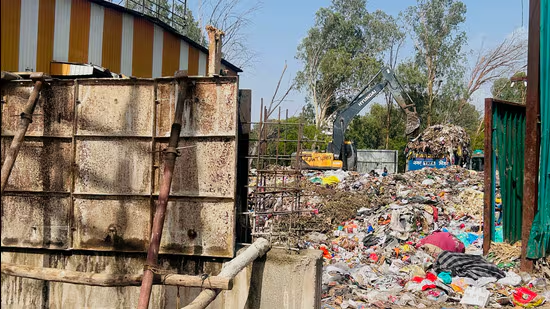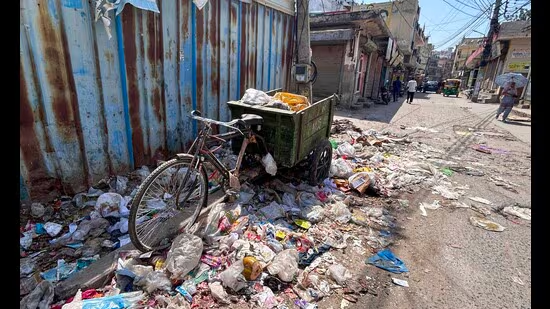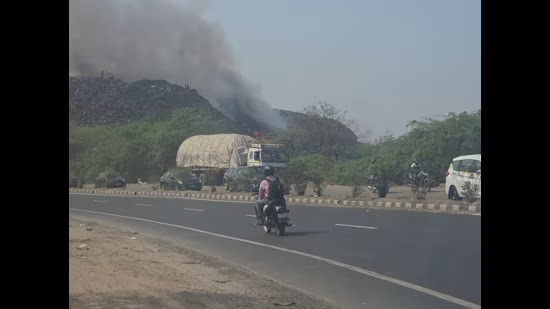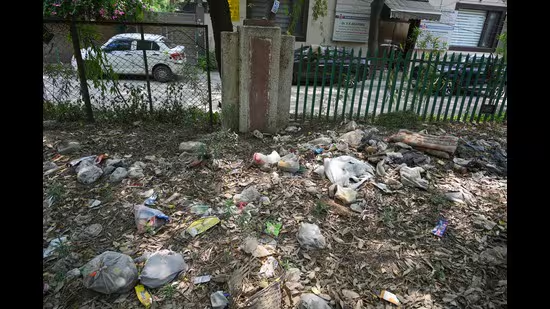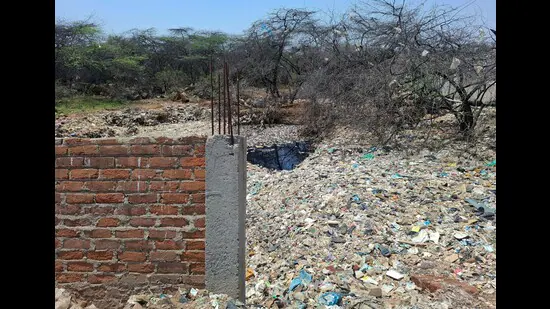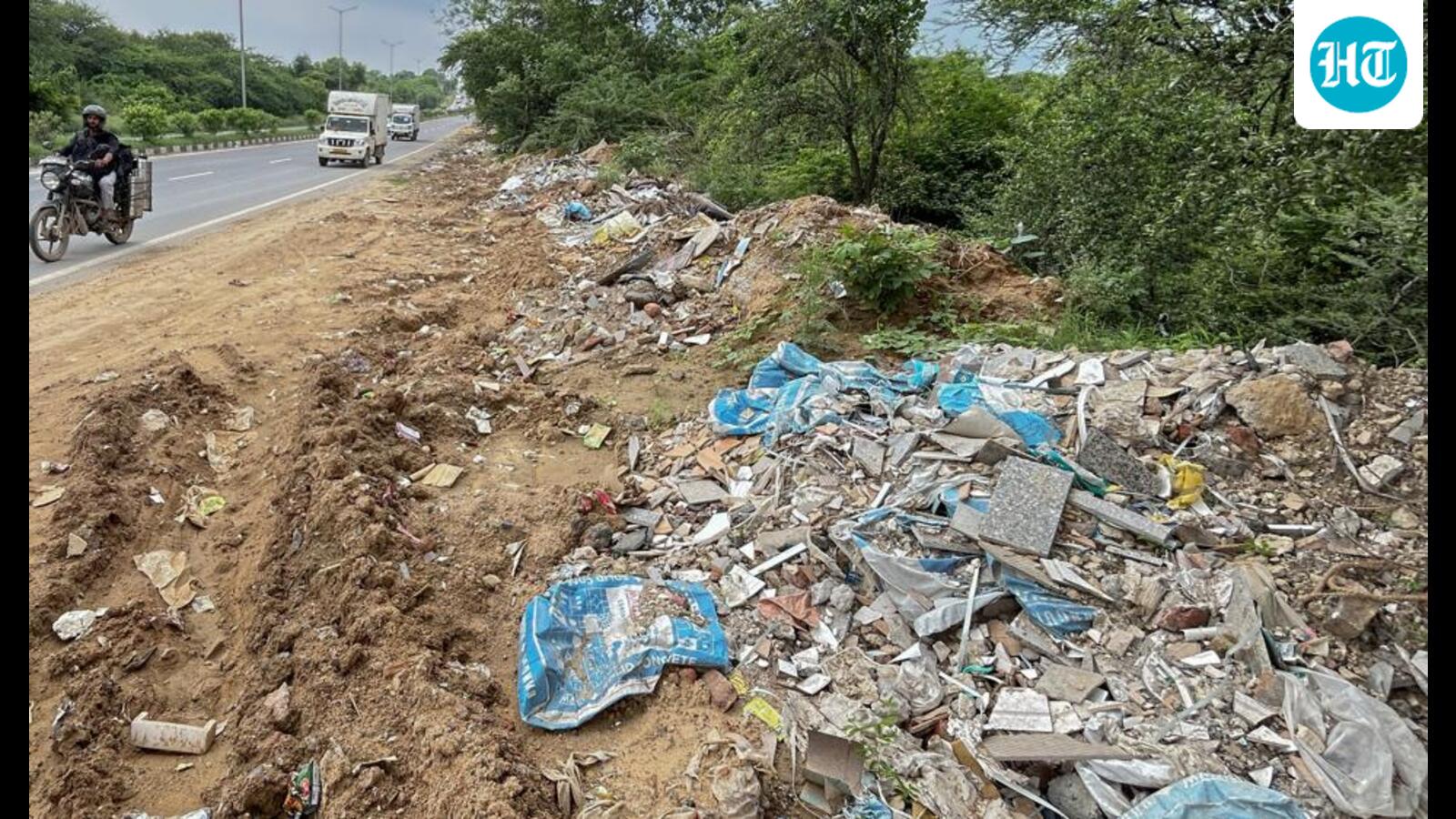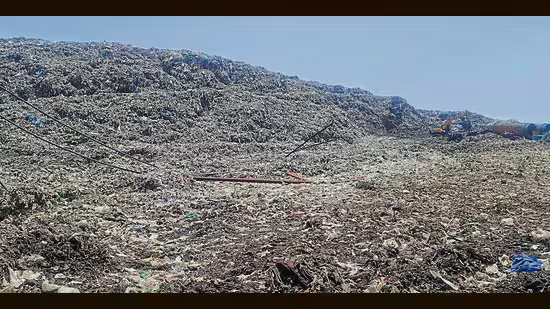
As one enters Gurugram through the Gurugram-Faridabad Road, the first landmark that often comes into view is not a gleaming high-rise or a symbol of the city’s rapid growth, but the towering Bandhwari landfill.A recent review directed authorities to assess the landfill’s environmental and groundwater impact amid ongoing remediation efforts. (HT)While the Municipal Corporation of Gurugram (MCG) has set a target of 2027 to clear the Bandhwari landfill, residents and environmentalists remain sceptical. In a recent meeting in May, the district administration was directed to assess the environmental and groundwater impact of the landfill site. Union Minister Manohar Lal Khattar also inspected Bandhwari landfill and urged quicker waste processing, involvement of more agencies and regular drone monitoring.I may have begun reporting on Bandhwari only recently, but for thousands of people living in its shadow and for environmentalists who have tracked its impact for years, the landfill is not a new story. It is a long-running battle marked by repeated complaints, legal interventions and growing concerns over its environmental and health toll.As a civic reporter, I set out to Bandhwari to move beyond reports and see firsthand the landfill that has become a symbol of the city’s waste crisis.The approach to the site offers an immediate glimpse of the challenges. Even before reaching the landfill, loose dust from the roadside and the road leading to the site forms a hazy veil over one of the main routes connecting Gurugram and Faridabad. As vehicles speed past, the dust thickens, engulfing commuters, while two-wheeler riders have little escape from the grit-laden air.Inside the landfill, the scale of the waste mound gradually comes into view. Trucks continue to arrive and unload fresh waste. Moving deeper into the site, broken and inadequate boundary walls can be seen in places, with heaps of garbage lying close to, and in some stretches, appearing to encroach upon, the Aravalli landscape.Further along, patches of stagnant leachate have collected in low-lying pockets across the site, forming dark pools amid the waste. Workers move steadily across shifting garbage mounds, often without adequate protective gear, relying on makeshift coverings or no masks despite constant exposure to dust, fumes and decomposing waste.Residents of Bandhwari village say they have endured years of water contamination, which they attribute to leachate seepage linked to the landfill. With summer temperatures at their peak, they also fear a repeat of seasonal landfill fires that have previously released thick plumes of smoke and intensified concerns over air quality and public health.Even as authorities set timelines and propose corrective measures, Bandhwari continues to grow as both a physical and symbolic reminder of Gurugram’s waste crisis. Between official targets, recurring assurances of remediation and the lived realities of those residing nearby, the gap between policy and ground situation remains stark. As the landfill continues to expand under the weight of the city it serves, the question of how and when this burden will finally be contained remains unresolved.(Mihika Shah is a correspondent with HT Gurugram, covering residents’ welfare, education, art and culture)
Reporter’s Diary: A mountain Gurugram cannot waste away
Residents and environmentalists continue to raise concerns over groundwater contamination, air quality and recurring landfill fires.
501 words~2 min read