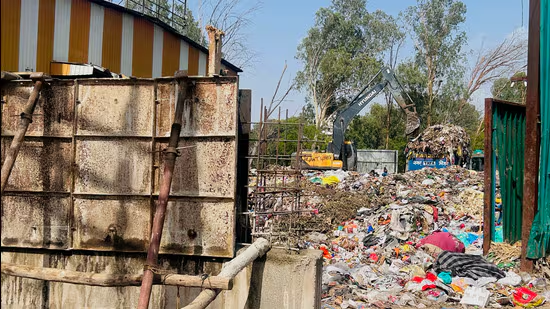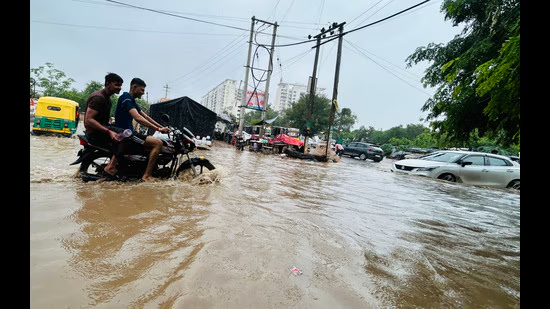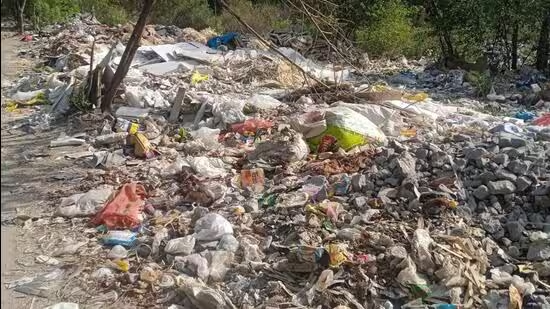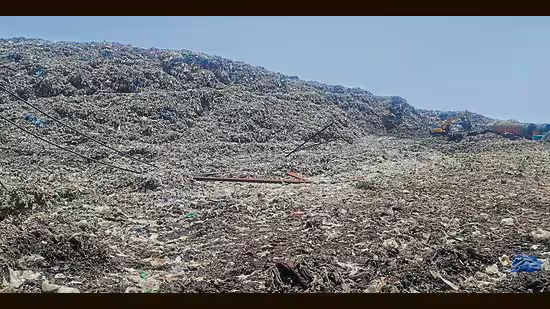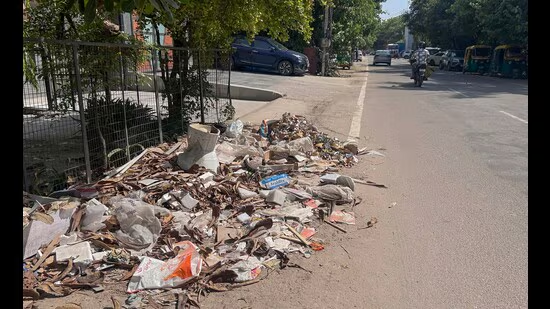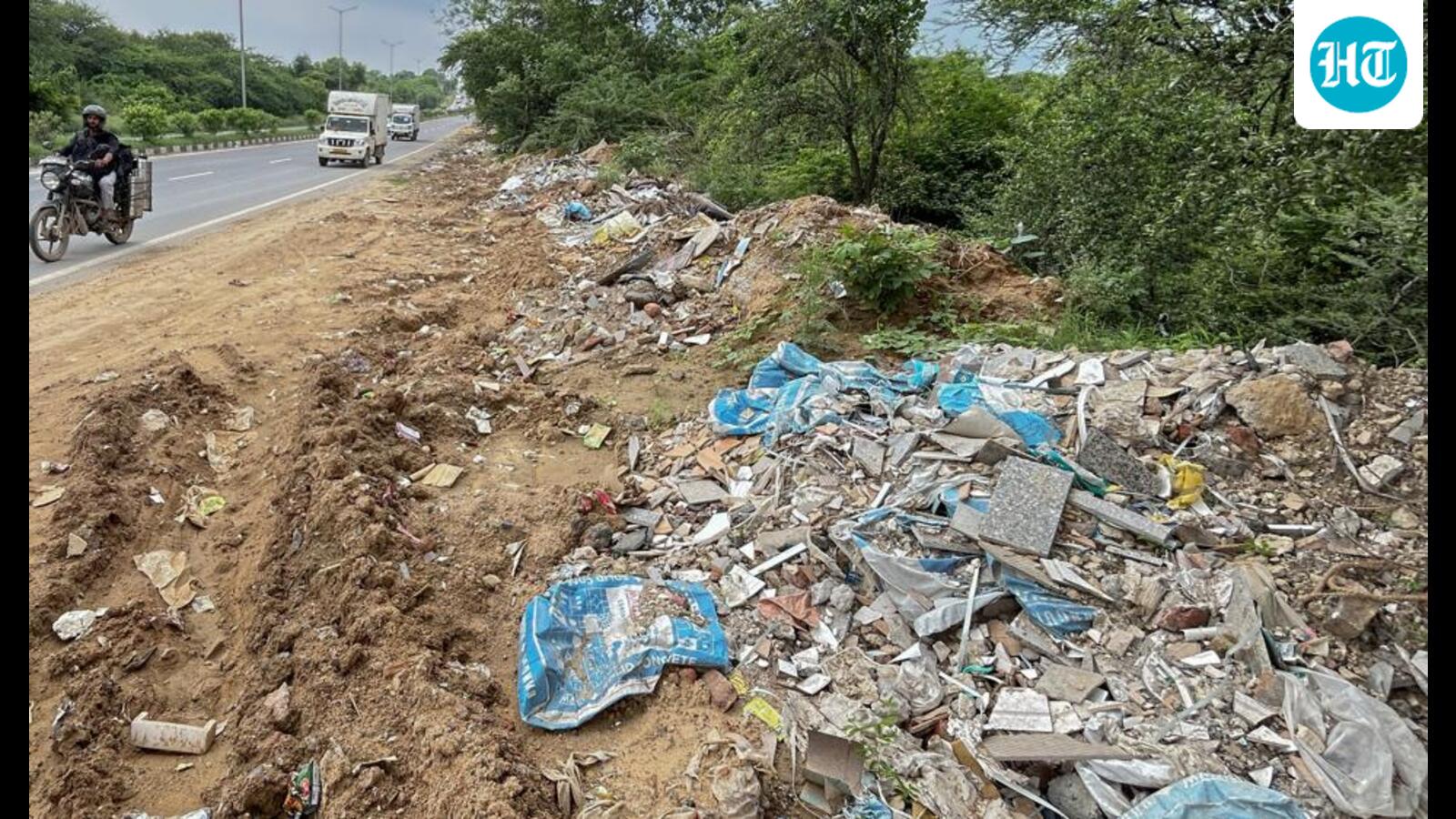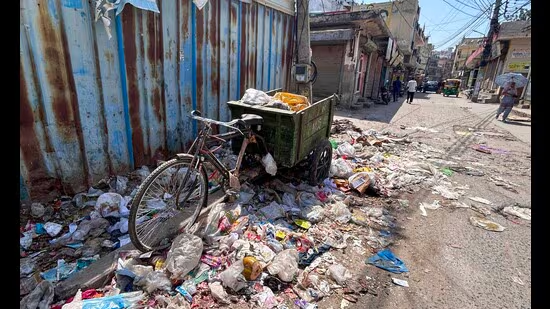
At 7am on a Sunday, as Gurugram’s glass towers reflected the early summer sun, a sanitation worker near Sector 49 pointed quietly towards a vacant plot overflowing with garbage and told me, “Madam, this is cleared every week. By night, it becomes a dumping ground again.”Illegally dumped waste on a road in Sector 11’s Heera Nagar, as seen on May 8. (Parveen Kumar/HT)Just metres away stood luxury residential towers worth crores, advertised as symbols of “international living”, “green landscapes” and “world-class infrastructure”. But between those polished high-rises lay rotting waste, torn mattresses, plastic bags and stray cattle feeding openly on garbage.That contrast perhaps explains Gurugram more honestly than any official presentation ever has.For years, Gurugram projected itself as the millennium city, a symbol of India’s urban ambition, booming real estate and corporate success. Flyovers appeared rapidly, villages gave way to skyscrapers and luxury developments reshaped the city’s identity. Yet somewhere amid the speed of urbanisation and endless construction, cleanliness slipped out of focus.Today, the city risks earning a different reputation altogether, not as a global city, but increasingly as a “garbage city”.The irony is difficult to ignore. Residents living in apartments priced at ₹3 crore or ₹5 crore step outside each morning to overflowing waste bins, foul-smelling dumping points and vacant plots buried under garbage. Across several sectors, open lands have effectively turned into unofficial landfill sites, piled with domestic waste, plastic, food leftovers and construction debris despite repeated drives by the Municipal Corporation Gurugram (MCG).To be fair, the civic body has not remained entirely inactive. Meetings have been conducted, sanitation drives organised, GPS monitoring plans proposed and awareness campaigns launched. Officials regularly carry out inspections, ministers issue directions and the corporation’s social media handles frequently post photographs of cleanliness drives.But on the ground, residents say little changes.Perhaps the strongest evidence of growing public frustration is social media itself. Nearly every week, reels emerge online showing garbage heaps in upscale sectors, overflowing drains and cattle standing amid plastic waste. Residents record videos while driving past dumping sites and sarcastically compare Gurugram with “international cities”.What feels more alarming than the garbage itself is how normalised it has become.Children walking to school cover their noses near dumping points. Morning walkers alter their routes to avoid the stench. In many residential sectors, vacant plots are now recognised less by landmarks and more by the kind of waste dumped there.The crisis extends beyond sanitation workers or municipal machinery. Gurugram’s waste problem reflects deeper failures involving weak enforcement, careless public dumping habits, unchecked construction activity, poor waste segregation and lack of accountability at multiple levels.A city does not become global through skyscrapers alone. Its true condition is visible in its footpaths, drains, public toilets and empty plots.From a distance, Gurugram still shines. Up close, beneath the glass towers and giant billboards, the smell of garbage often overwhelms the dream the city once promised.Leena heads the Gurugram bureau and has extensively covered civic issues, environment, crime, real estate and politics.
Reporter’s Diary: Trash– talk of the town
Overflowing waste dumps, poor segregation and weak enforcement are reshaping the image of the millennium city across several sectors.
494 words~2 min read