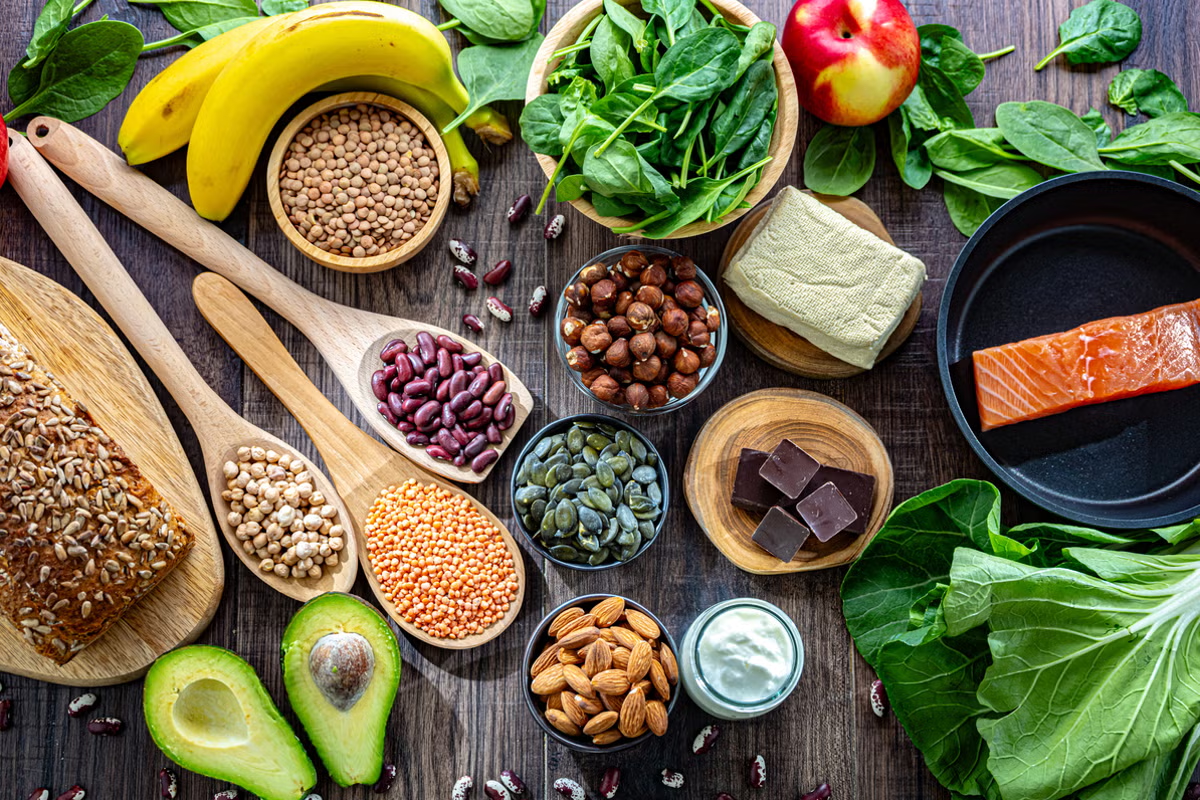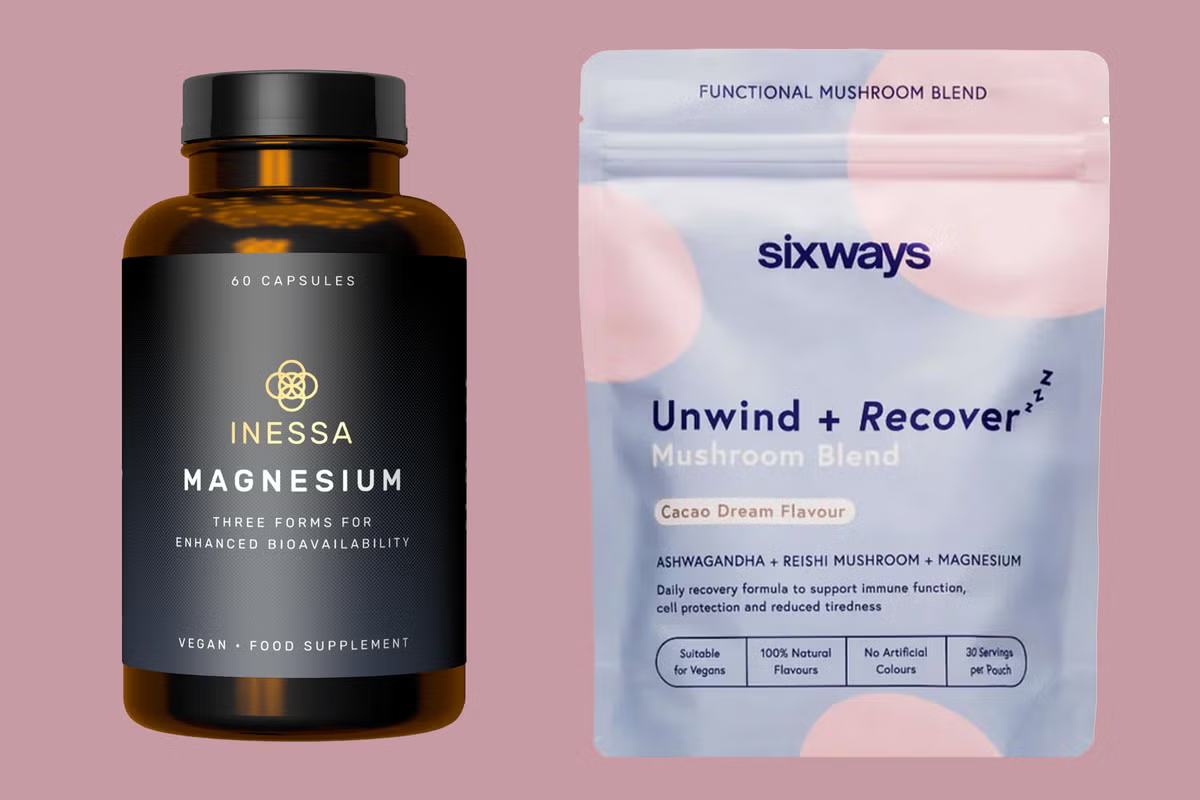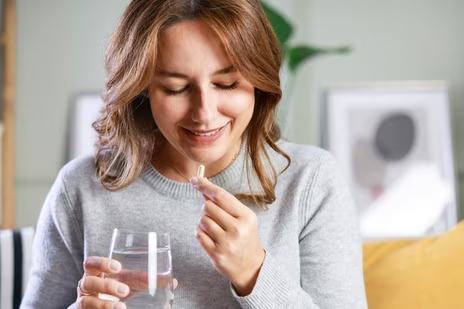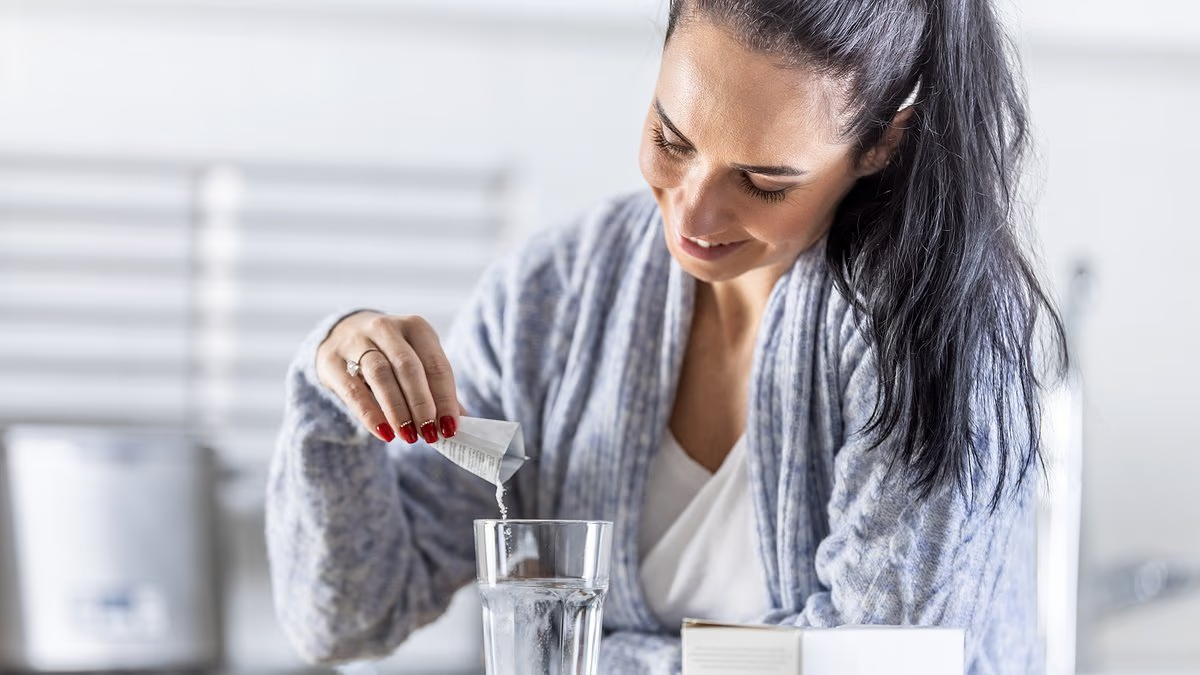
Walk into any pharmacy, health store or trendy cafe and you’ll see rows of magnesium on sale, offered in every variety from tablets and powders to fizzy drinks.Magnesium has become a buzzword in the wellness industry and barely a week goes by without a woman asking me whether she ought to be taking it and in what form.So let’s try to separate the science from the hype.Firstly, it isn’t some influencer fad. Magnesium is one of the most important minerals our bodies need, involved in hundreds of processes that keep us ticking over, from turning food into energy to keeping our muscles working.About 60 per cent of it is stored in our bones. The problem is that we can’t make it ourselves and so we have to get it through our diet, with a surprising number of us not getting enough.Surveys suggest the average British woman gets only around 238mg a day from her food when she should be getting 270mg.Among older adults, roughly one in six have low levels that could potentially cause issues, especially in women over 50. As oestrogen drops away during the menopause, the body seems to handle magnesium less efficiently, with levels dipping at the very moment life is throwing hot flushes, broken sleep and low mood at you.There’s decent evidence too that magnesium helps keep bones strong, which matters enormously once oestrogen disappears after the menopause.And it may ease migraines, and that grinding premenstrual irritability so many women dread.Something many women don’t realise though, is that alcohol has a negative impact on magnesium. It acts like a diuretic, flushing it out through the kidneys. That nightly glass we reach for to take the edge off the day is quietly sending a little more of this precious mineral down the loo. The more you drink, the more you lose, so if your levels are already running low, the booze won’t help. Magnesium supplements are mostly associated with improving sleep. The theory is that it gently nudges up a calming brain chemicalMagnesium supplements are mostly associated with improving sleep. A big review in 2021 found that older people taking magnesium fell asleep about 17 minutes faster, and slept a little longer than those handed a dummy pill.Helpful, but hardly the overnight miracle those pushing the supplement claim. The theory is that it gently nudges up a calming brain chemical called GABA, the same system prescription sleeping tablets act on.However, some scientists argue that unless you’re short of magnesium to begin with, any extra simply gets passed out in your urine.Much of the sleep benefits people claim to experience are likely to be the placebo effect doing its quiet, powerful work.I should make a confession here; I sometimes take it myself. I started after an episode of jet lag following a long-haul flight and have found it useful ever since.It seems to give me a deeper, longer sleep. Am I sure it isn’t the placebo effect? No, but when my body clock is all over the place after travelling, it helps me drop off and that’s good enough for me.Things get trickier when it comes to mood and anxiety.Low magnesium has been linked to a higher risk of depression, but studies into whether it might take the edge off mild anxiety are conflicting with none following people for longer than three months.Therefore, I’d never tell anyone to reach for magnesium pills instead of seeing their GP first about low mood or anxiety.If you want to up your magnesium levels, then my advice is to start with your diet. Pumpkin seeds, spinach, almonds, cashews, beans, wholemeal bread, even a square of dark chocolate, will get most people most of the way there. If you do fancy a supplement, the glycinate form is kinder on the stomach and the one usually recommended for sleep and mood. Stick to a maximum of 400mg a day (you can buy 90 capsules for under £10 on the high street.)A word of caution. Have a word with your pharmacist or GP first if you’re on other medication because magnesium can interfere with some antibiotics, blood pressure pills and osteoporosis drugs. Anyone with kidney trouble should be especially careful.Magnesium is no substitute for a healthy diet, but for a tired, frazzled woman in her 50s who enjoys a glass of wine most evenings, it might just be one of the few wellness trends worth a proper look.When I started out in medicine in 1997, an HIV diagnosis still felt like a death sentence. I trained on wards where people were still dying of an illness we could barely hold at bay. Today, it’s a different story. Researchers at Imperial College London have reported a trial of a new antibody treatment that allowed three quarters of patients with HIV to come off their daily pills for at least five months, and a quarter of them for as long as two years. It’s not a cure, but it’s another stride towards one.Someone diagnosed today and starting treatment can expect to live as long as someone without HIV. And here’s the part that still takes my breath away: we now know, thanks to a study by University College London, that a person on effective treatment, with the virus suppressed to undetectable levels, cannot pass it on to a partner. What makes me proudest is how big a part the UK has played in HIV treatment. From a death sentence to this, all within my working career. When I’m asked whether medicine truly makes progress, I think of the British researchers who helped change the world and continue to do so.Don’t rush to grow up, Harper Harper Beckham in the same vintage dress... ... her mother Victoria had worn days beforeLast week Harper Beckham, 14, stepped out for lunch in Ibiza in the same brown, floral vintage dress her mum Victoria had worn days before.Every woman who ever clattered downstairs as a girl in her mother’s heels will know how sweet and lovely it is when a daughter suddenly wants to dress like Mum.But, in this case, Harper’s dress came with a £1,275 clutch and £680 sandals. The speed at which girls are being ushered into a grown-up world of brands worries me.Harper is rumoured to be launching her own beauty range this summer, aimed at girls even younger than she is.Victoria has revealed this is because her daughter had struggled terribly with acne after being lured in by beauty brands and piling on products her young skin couldn’t cope with, leaving her in need of a dermatologist.Why then would Victoria think the answer is to sell more of the stuff to other children?To every parent, I’d gently say this: what’s the rush? Let girls be girls for as long as they possibly can.That grown-up world of mirrors and price tags will be waiting for them soon enough.A record 135,000 children were referred to mental health services in March. A fifth of all young people are mentally ill. But can that be true? I worry we’re quietly teaching children to treat every difficult feeling as a disorder. Dr Max prescribes... Where Should We Begin? With Esther Perel podcastEach episode drops you into the room as psychotherapist Esther Perel takes a single couple through a session of therapy. It’s one of the most humane, illuminating things you’ll hear. You’ll listen to strangers wrestling with affairs, grief and money woes. And in the middle of someone else’s marriage, you’ll catch a glimpse of your own. I haven’t finished an episode without learning something about how we love, hurt and forgive one another.
DR MAX: This 11p tablet could help women over 50 with a wine habit
Walk into any pharmacy, health store or trendy cafe and you'll see rows of it on sale, offered in every variety from tablets and powders to fizzy drinks.
1,262 words~6 min read