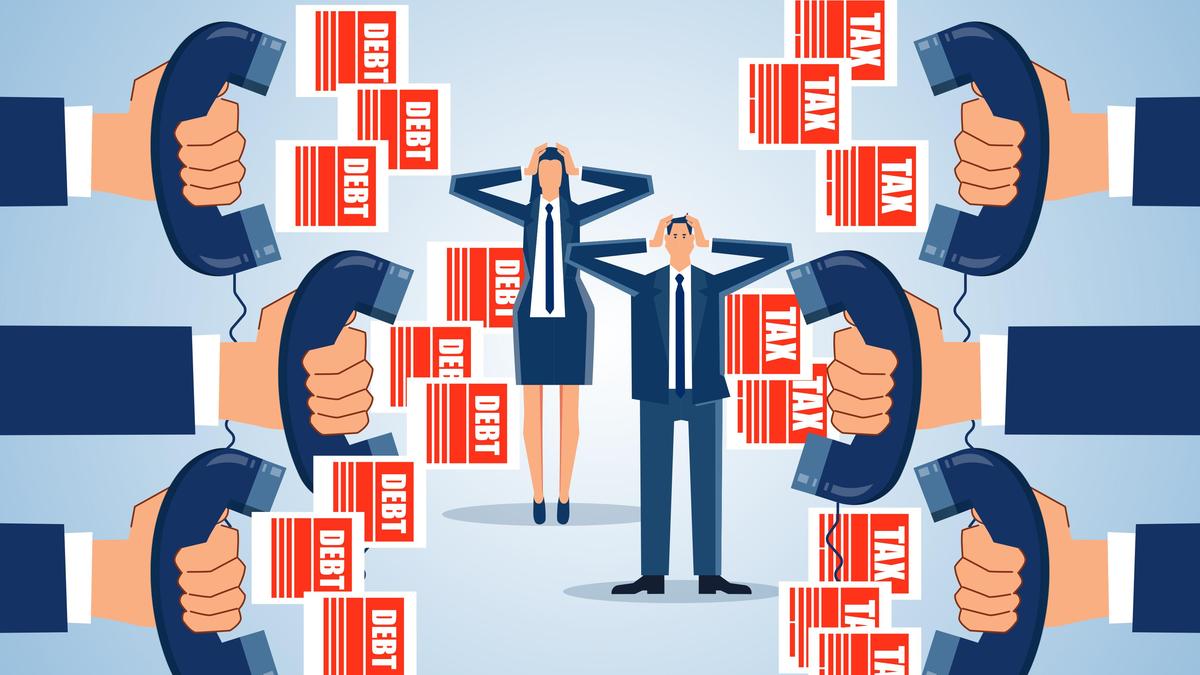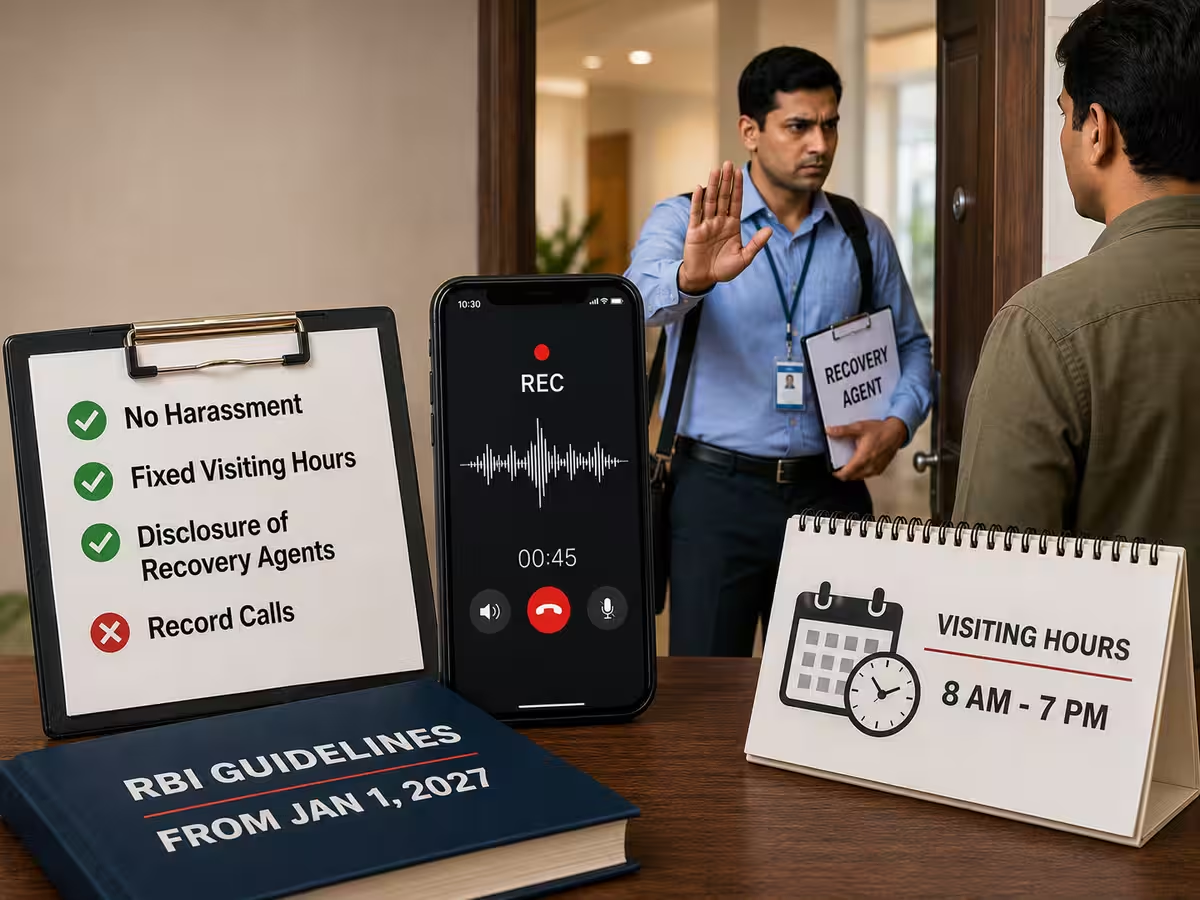
The calls simply wouldn’t stop—sharp, strident bursts all day long, spewing vile threats and abuse. Even before Vrinda Singh, 48, could come to terms with this verbal assault, the debt recovery agents started calling her family and Facebook friends posing as loan or police officers, threatening to shame her and take action against her for the unpaid loan. Then came home visits at odd hours, with door banging that gave her 70-year-old mother panic attacks. As the harassment continued, Singh developed anxiety, heart palpitations and suicidal tendencies.“I had to take personal loans when I inherited family debt, and this was compounded by medical emergencies. As a result, my equated monthly instalments (EMIs) exceeded my income and I could not repay the debt,” says Singh, who has a well-paying job, but is currently buried under Rs.56.5 lakh of debt.Most debtors like Singh are unable to service their loans after borrowing heavily for medical emergencies, job losses, or sudden financial needs. Many have a clear intent to repay, but don’t have the means to do so immediately. Worse, a large majority is unaware that, despite the huge piles of debt, they can exercise their rights as borrowers in the face of aggressive harassment by recovery agents. Consumed by guilt, fear and shame, they are paralysed into inaction when collection agents come calling, and suffer in silence without knowing how to resolve the situation.Sameer Bakshi from Agra knows the helplessness and humiliation too well. He incurred a hospital bill of nearly `40 lakh when his father was hospitalised in 2024. By June 2025, Bakshi owed `30 lakh and could no longer pay the EMIs. “The calls and messages started almost immediately—to me, my wife, relatives, friends—accusing me of being an absconder, with threats of police action. They even visited my office and I lived in constant fear,” says the 39-year-old.Most recovery agents, from thirdparty collection agencies recruited by banks and non-banking financial companies (NBFCs), exploit this fear with impunity in clear violation of the Reserve Bank of India’s (RBI) Fair Practices Code (guidelines for banks and NBFCs on borrower protection). “Unlawful conduct by recovery agents persists due to inaction by banks despite receipt of complaints regarding third-party conduct, limited awareness among borrowers of their statutory rights, inadequate training of recovery agents and third-party agencies, and minimal awareness campaigns by the RBI,” says Prateek Kumar, Partner at Khaitan & Co.Agrees Ritesh Srivastava, Founder & CEO of the debt counselling firm, FREED. “Despite the RBI’s guidelines on good recovery practices, governance and implementation are difficult, and this is exacerbated by borrowers’ ignorance of the avenues available to them to raise issues on harassment,” he says. So the recovery agents continue to unleash terror, fear and panic among unsuspecting borrowers, some going so far as to inflict bodily harm over paltry sums.Guidelines & borrower rights“The RBI has drawn very clear lines on what collection agents can and cannot do, and the rules became stricter with the new Digital Lending Guidelines (framed in 2025 for fintechs and online apps),” says Harsh Vardhan Masta, Head of Payments at Policybazaar.This year, the central bank has released the Draft RBI (Commercial Banks— Responsible Business Conduct) Second Amendment Directions, 2026, and more recently, the Draft RBI (NBFC—Responsible Business Conduct) Directions 2026, which will be implemented from 1 July after incorporating stakeholder feedback (see box). These aim to enhance borrower protection by preventing harassment during the loan recovery process.This means that collection agents cannot make repeated calls, and can call only between 8 am and 7 pm. They cannot use abusive, threatening and obscene language, or physically intimidate, threaten violence and publicly shame the borrower, which means they cannot contact friends, neighbours, employers, or family members. For Mumbai’s Anup Saxena, most of these guidelines were violated. “They called me 50-100 times a day, using obscene language, visited my house without informing me, and threatened to talk to my neighbours and boss at work to stop my salary,” he says.“Agents cannot pretend to be police officers, lawyers, or court officials, or access the borrower’s phone contacts and photo gallery, a practice the RBI has called out against shady digital lending apps,” says Masta. “Anything beyond these limits is not aggressive recovery, but a violation of the law, and in many cases a criminal offence,” he adds.As per law, banks are required to follow due process by initiating legal action in courts and specialised tribunals. The loan document itself outlines the course of action the bank may follow in the event of a default, says Kumar. But this seldom happens when debt collection is outsourced to third-party recovery agencies. In the first 30 days of delinquency, the lender usually sends polite reminders to the borrower via messages and phone calls. When it crosses 60 days, the pressure increases. “The portfolio is assigned to a collection agency, which tends to be more aggressive and often takes liberties with established protocols. After 90 days, when the account becomes a non-performing asset (NPA), all hell breaks loose because within six months the lender may have to write off the loan and, in a year, sell it off to asset reconstruction companies (ARC),” says Srivastava.What to do if you’re harassedThere is a detailed grievance redressal mechanism in place for harassed borrowers, wherein a complaint can be filed with the lender and escalated to the RBI. “In worst-case scenarios, the RBI can cancel the lender’s licence, but this extreme step is usually not taken and only a monetary penalty is levied,” says Anurag Mehra, Founder, Expert Panel, a debt counselling platform. The problem is that most people don’t know about this recourse or how to go about it. It helps to approach a debt counselling firm in the early stages of harassment, as they can minimise it, guide borrowers through the grievance redressal process, and negotiate with the lender.VRINDA SINGH, 48, DelhiHow she was harassed...Non-stop calls with threats and abuse.Called up family members, Facebook friends posing as loan/ police officers.Home visits at odd hours without intimation.Banging of doors at home.Piling debtHome loanRs.31 lakh (unpaid)Personal loans (2)Rs.23 lakh (unpaid)+ Rs.11 lakh (paid)Credit card debt (3)Rs.2.5 lakh (unpaid) + Rs.2 lakh (paid)Current statusOngoing negotiations with help from debt counselling firm.“The first step is to keep proof. Record the calls, take screenshots of messages, and note down the agent’s name, the time of the call, and what was said. Next, file a formal complaint with the lender. Every lender is required to have a grievance officer, and the contact details are listed on the website and loan documents. The lender gets 30 days to respond,” says Masta.“With help from Expert Panel, I first wrote to the lenders and then uploaded the videos of harassment to the RBI,” says Saxena. “The time frame of 30 days for the lender to respond is too long and defeats the purpose. This period should be reduced in order to escalate the issue quickly,” says Mehra.Borrowers can then file a complaint with the RBI Ombudsman online, and the lender is bound to accept the decision. If the behaviour involves threats, abuse, or public shaming, a first information report (FIR) can be filed with the local police, and a complaint can also be taken to the consumer court. “If the app or company is not even registered with the RBI, the right place to report it is the Sachet portal run by the RBI,” says Masta.Singh had to take help from a police official she knew. “The harassment stopped only after he had a word with the recovery agent, but FREED personnel also helped me by fielding all the menacing phone calls and negotiating with the lender,” she says.What to do if you are harassed
Harassed by loan recovery agents? Know your legal rights and 6 steps to fight back - The Economic Times
Borrowers struggling with debt often face harassment from recovery agents through abusive calls, threats, public shaming, and unauthorised visits, despite RBI rules prohibiting such practices. Experts say many borrowers are unaware of their rights and grievance mechanisms. RBI guidelines allow complaints against harassment and provide borrower protections, while debt restructuring and one-time settlements can help resolve repayment difficulties and reduce financial stress.
1,865 words~8 min read