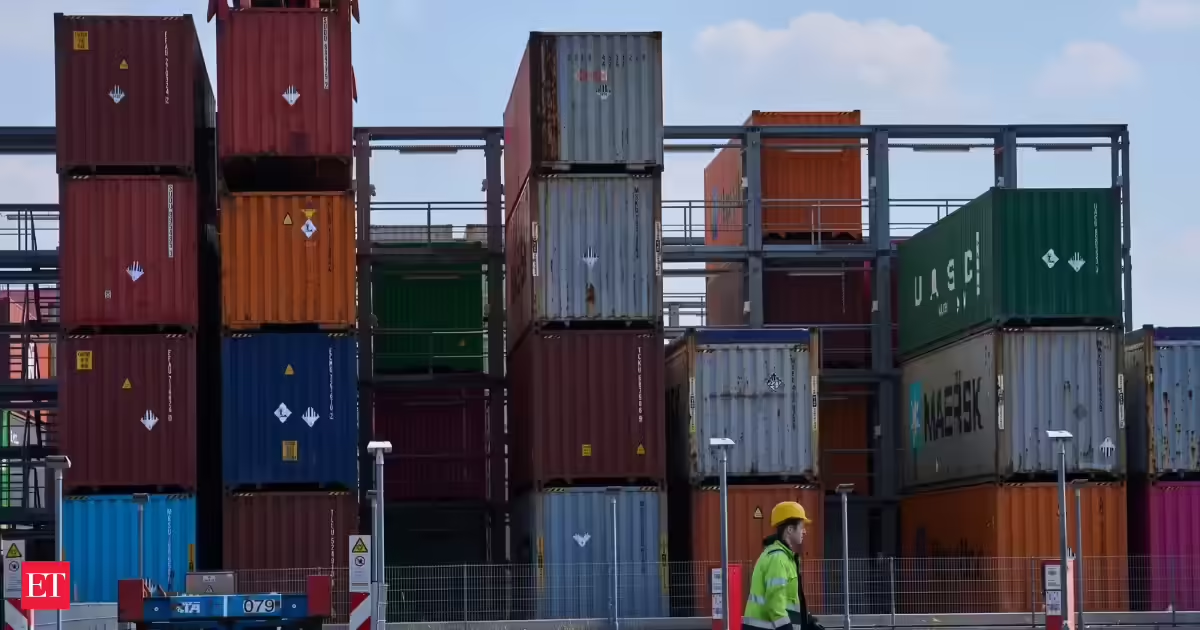
Kolkata: Indian consumer goods companies Dabur, Britannia Industries, Tata Consumer Products and Emami are shifting manufacturing and sourcing away from West Asia, as the Iran conflict and blockade of the Strait of Hormuz have disrupted their business operations.Dabur, whose regional supply chain was largely centred on Ras Al Khaimah in the UAE, has moved part of production from there to India, Egypt and Turkey, despite the higher cost that weighs on margins. The company has also established new export routes from these alternative manufacturing locations.Britannia has shifted manufacturing for West Asia and North American markets from Oman to its export-oriented facility at Mundra in Gujarat, from where products are shipped by sea. “We have taken measures to ensure the supply channels that we have now are not dependent on the Hormuz Strait,” chief executive Rakshit Hargave told analysts recently.“So, we are quite confident that we will do better (exports) this quarter,” Hargave said.Britannia's international manufacturing facilities were largely concentrated in Oman and Dubai. The company had moved production for North America from Mundra to Oman to benefit from lower tariffs, before the latest disruptions prompted a rethink.Tata Consumer Products has also recalibrated its sourcing strategy. The company previously imported plastic closures and PET material for its domestic operations, but has diversified supplies since the beginning of the Gulf war.Its Capital Foods business, which owns brands such as Ching's Secret and Smith & Jones, had also faced disruptions in exports to the US routed through West Asia during the March quarter, though shipping conditions have since improved, managing director Sunil D'Souza told analysts recently.About half of the products that Emami sold in West Asia were manufactured within the UAE, with raw materials and packaging inputs sourced from multiple global markets. Another 30% of supplies for the region came from Europe, while the remaining 20% was exported from India.The conflict weighed on the company's operations, leading to a 5% year-on-year decline in international business during the March quarter and prompting a reduction in local production there.“We have been able to reset with 2% growth in April. We are expecting things to get stable by June. And from the second quarter, we should be able to deliver double-digit growth,” said Emami chief executive for international business Vivek Dhir. He expects single digit year-on-year growth in the April-June quarter.These companies have shifted production bases, altered shipping routes and diversified supplier networks to mitigate risks.
Consumer goods companies chart new manufacturing and sourcing course as West Asia crisis hits supply chain
Indian consumer goods firms like Dabur, Britannia, Tata Consumer Products, and Emami are rerouting manufacturing and sourcing away from West Asia due to the Iran conflict and Strait of Hormuz disruptions. Companies are shifting production to India, Egypt, and Turkey, and exploring new export routes to mitigate business impacts and ensure supply chain stability.
400 words~2 min read