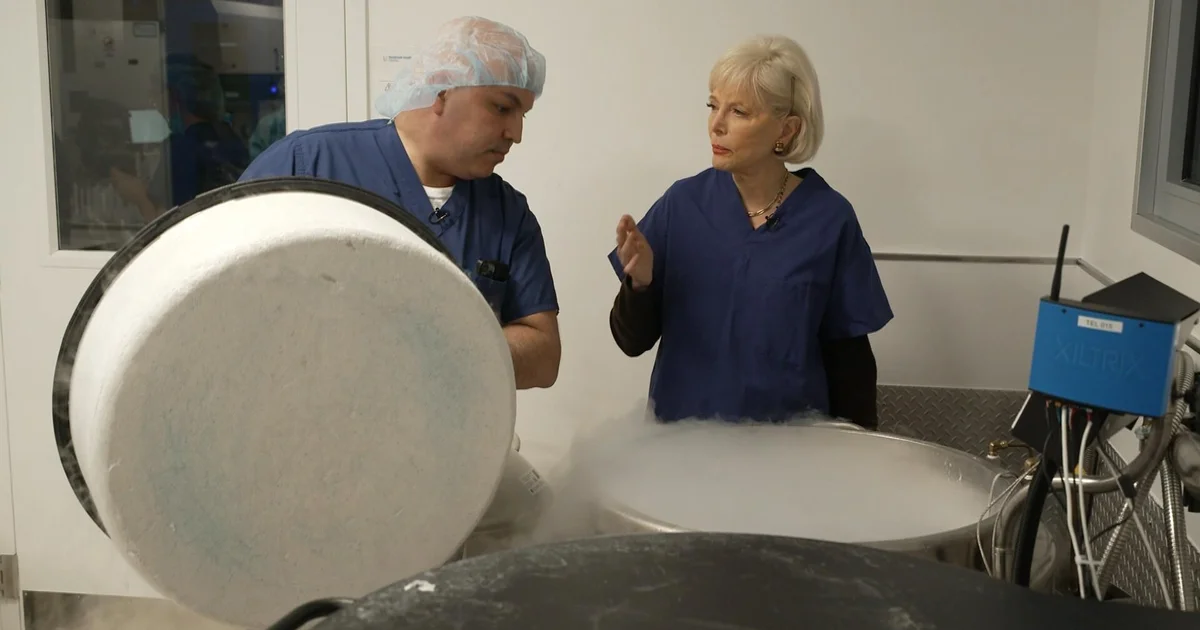
This is an updated version of a story first published on May 4, 2025. The original video can be viewed here. Fertility rates in the United States are near historic lows. One reason is a sharp decline over the last three decades in the number of American women having babies in their 20s. And yet there's been no change in women's biology, or the age at which fertility declines. unsolvable problem? Enter egg freezing.As we first reported last year, freezing embryos for in vitro fertilization, IVF, has been possible for decades, but freezing unfertilized eggs was a tougher scientific challenge, used initially for patients with cancer and other conditions that threatened fertility. Egg freezing for non-medical reasons became an accepted practice 13 years ago, and since then, demand has skyrocketed, with hundreds of thousands of eggs now frozen, raising big money, big hopes, and big questions. Could egg freezing offer women what previous generations only dreamed of? The chance to put that dreaded ticking of the biological clock, on ice.Early one rainy Tuesday, Kate Sonderegger came to a fertility clinic in Midtown Manhattan to undergo a minor surgical procedure to harvest and then freeze her eggs. The next morning –Lesley Stahl: Hi.Katherine Schneider: Hi. – at a different fertility center, we scrubbed up and met another egg freezing patient, Katherine Schneider.
Egg freezing popularity increasing among young women to preserve their fertility
Demand for egg freezing has skyrocketed as women put fertility on hold. The costly procedure has brought happy endings to some women, but it doesn't offer any guarantees.
4,076 words~19 min read