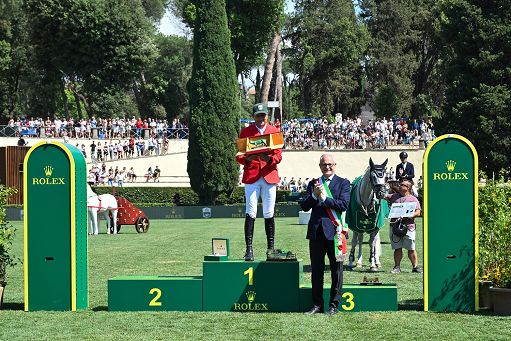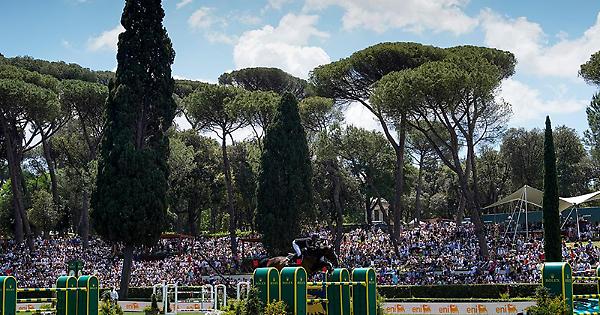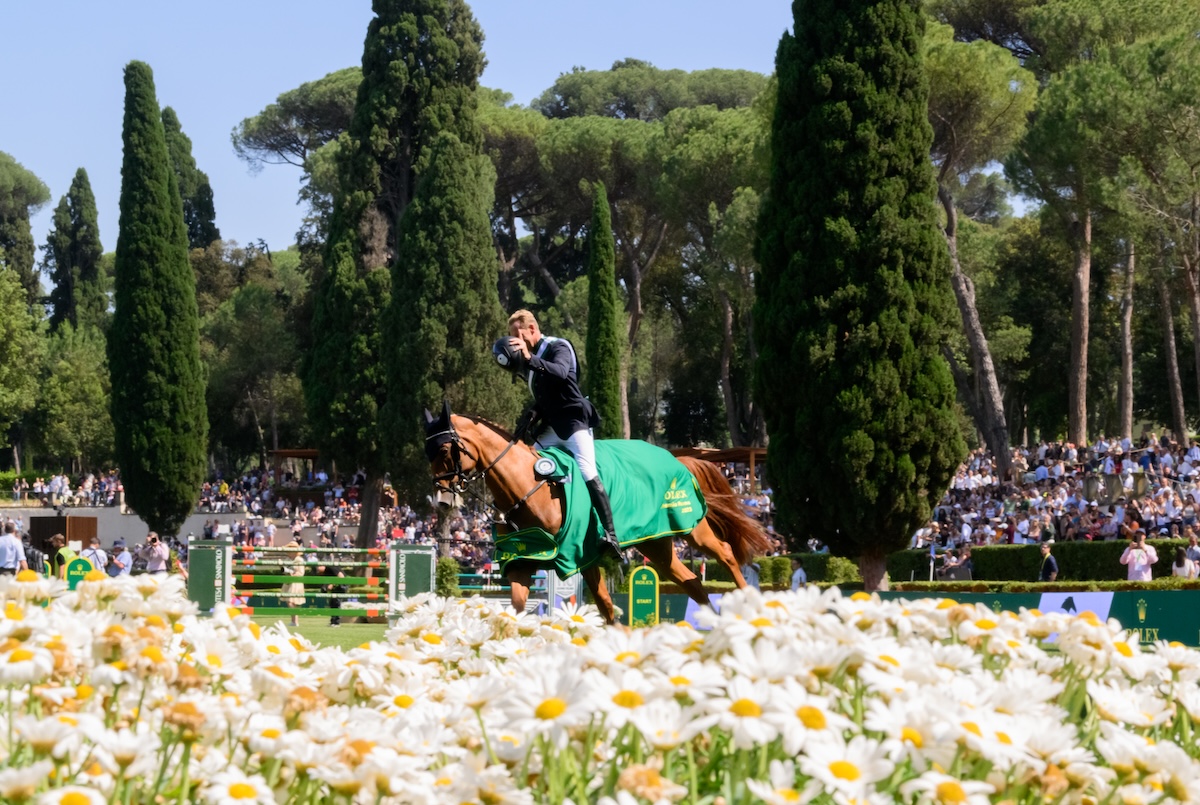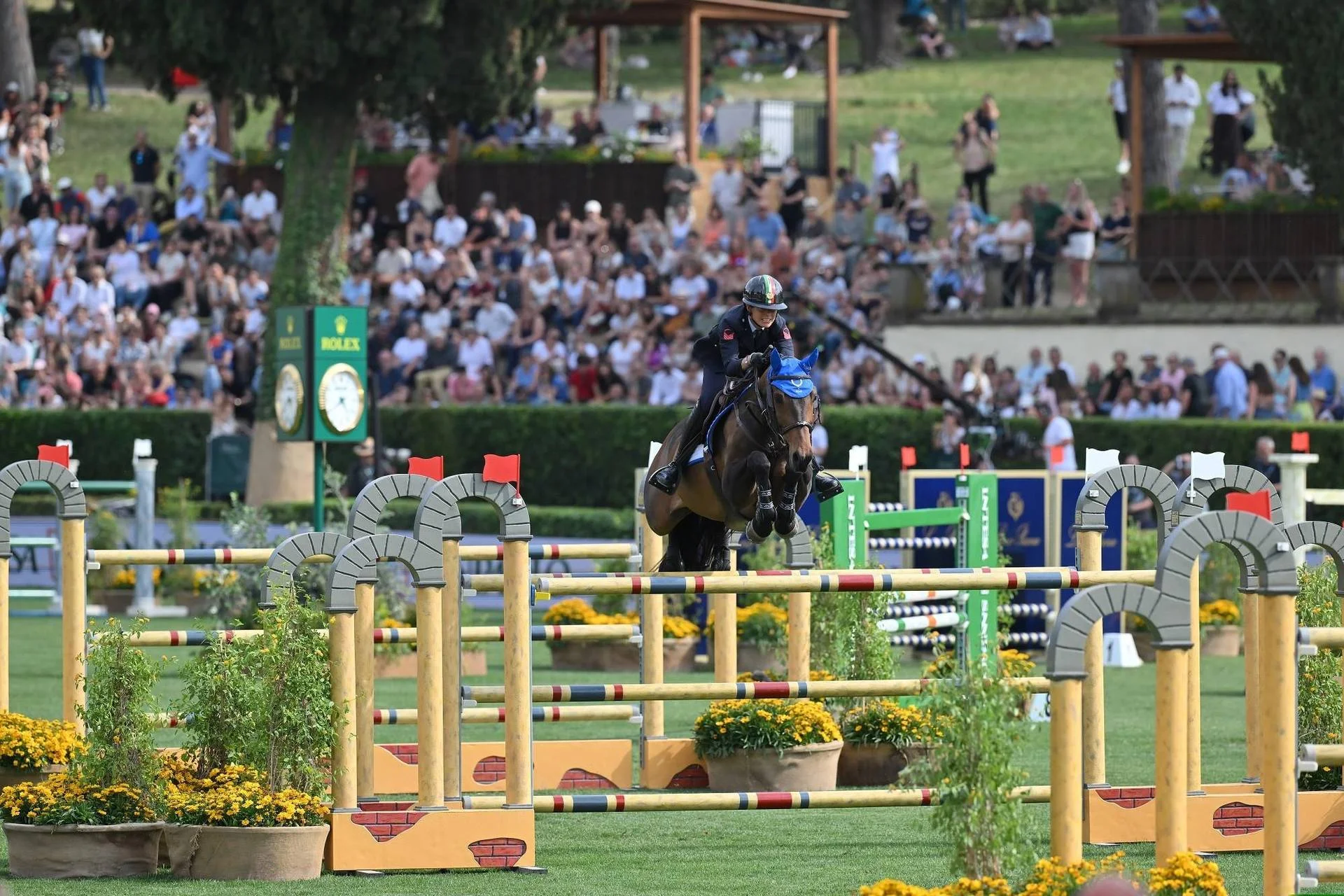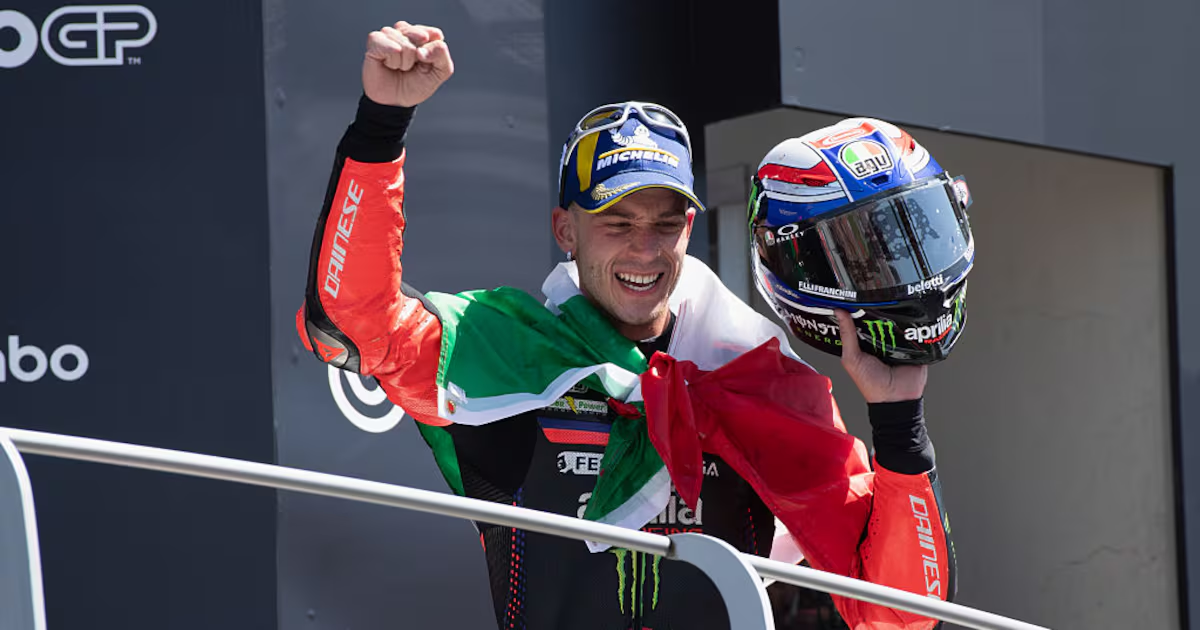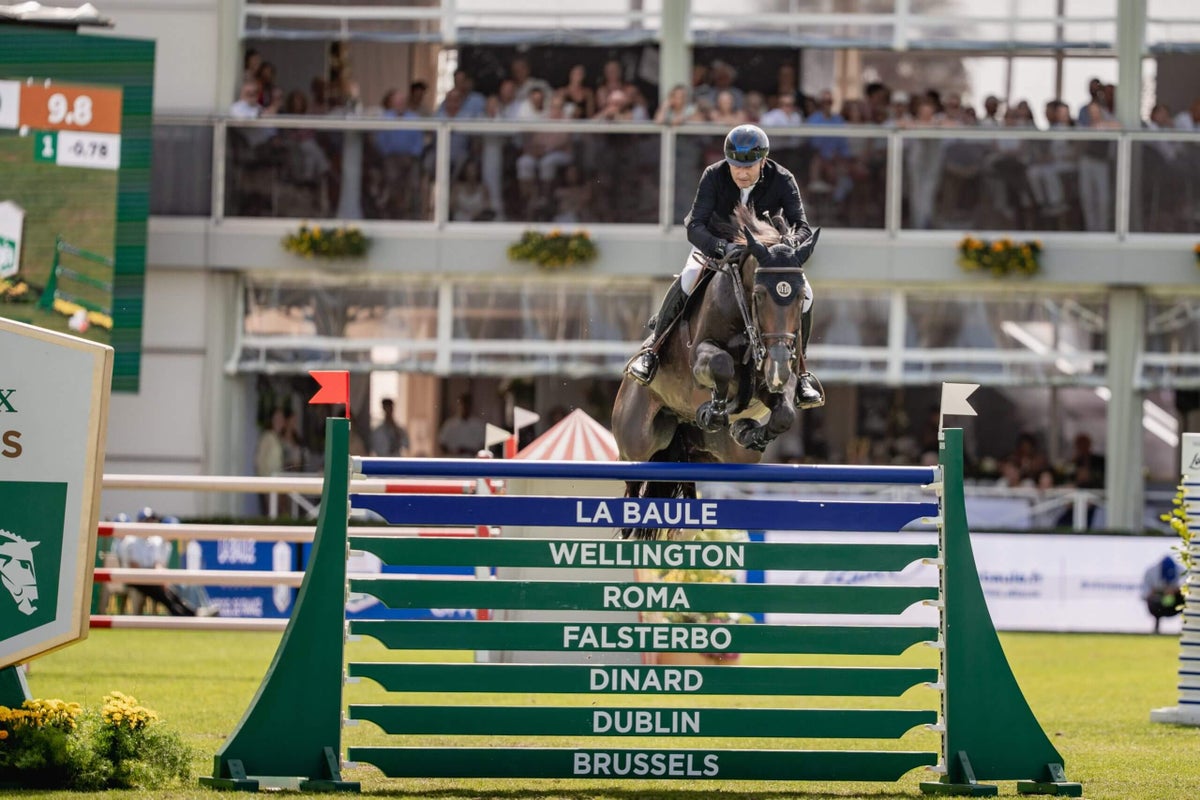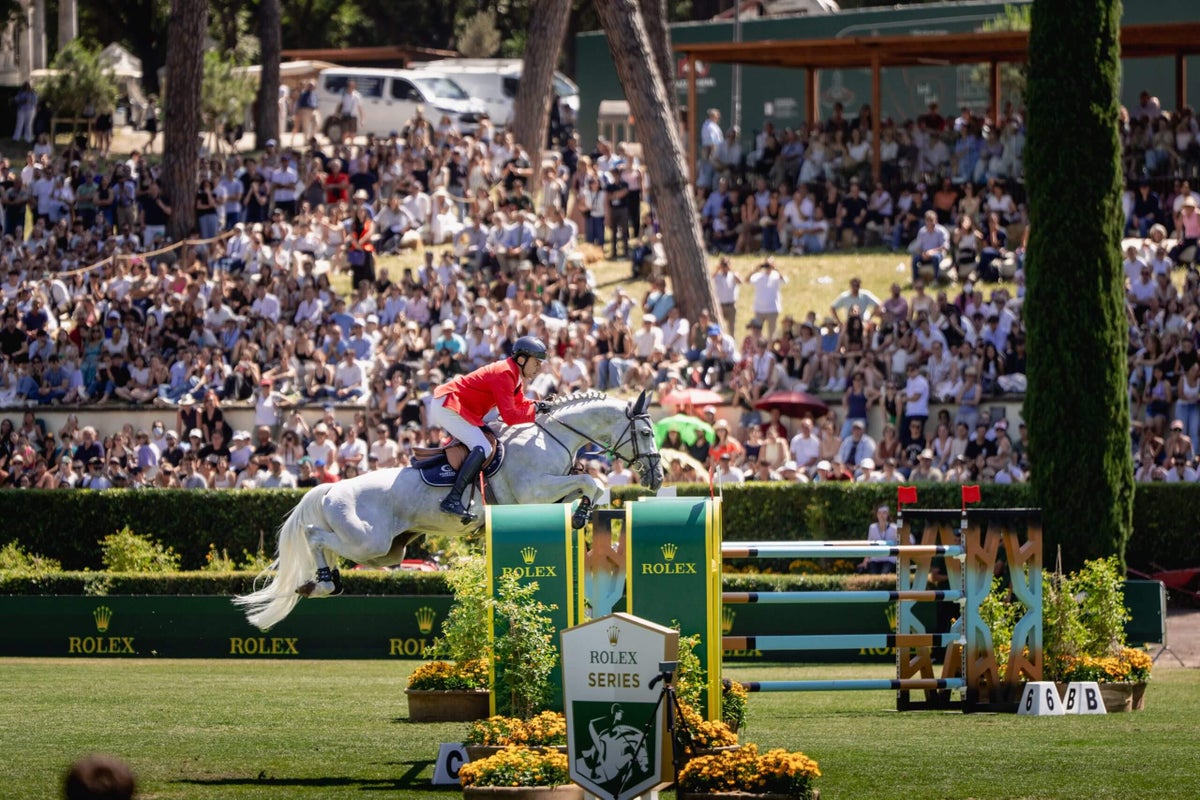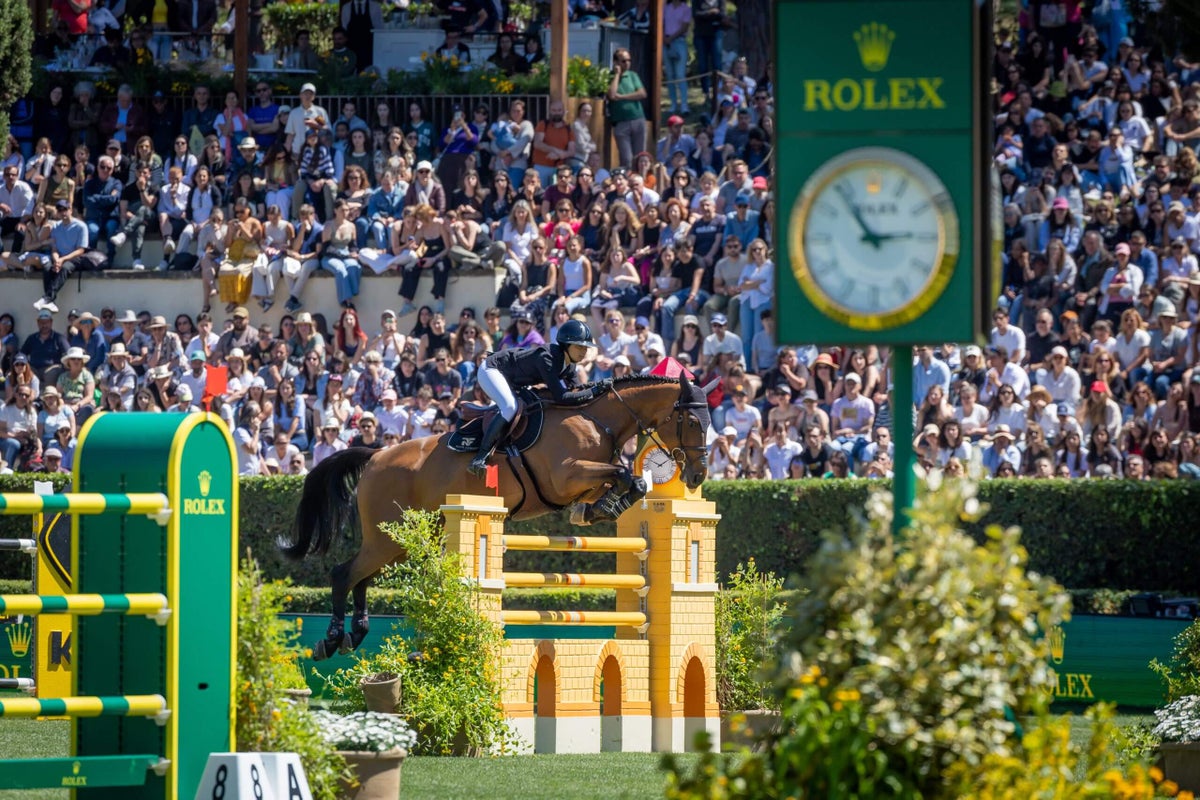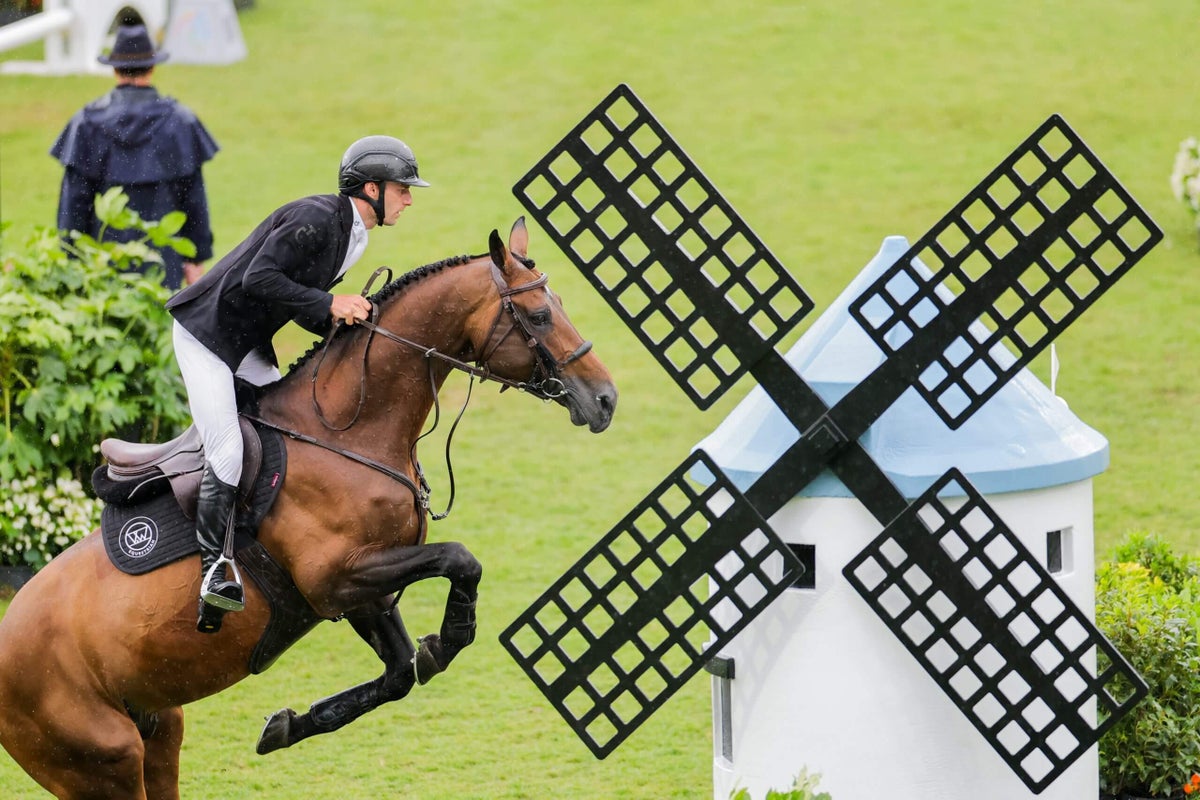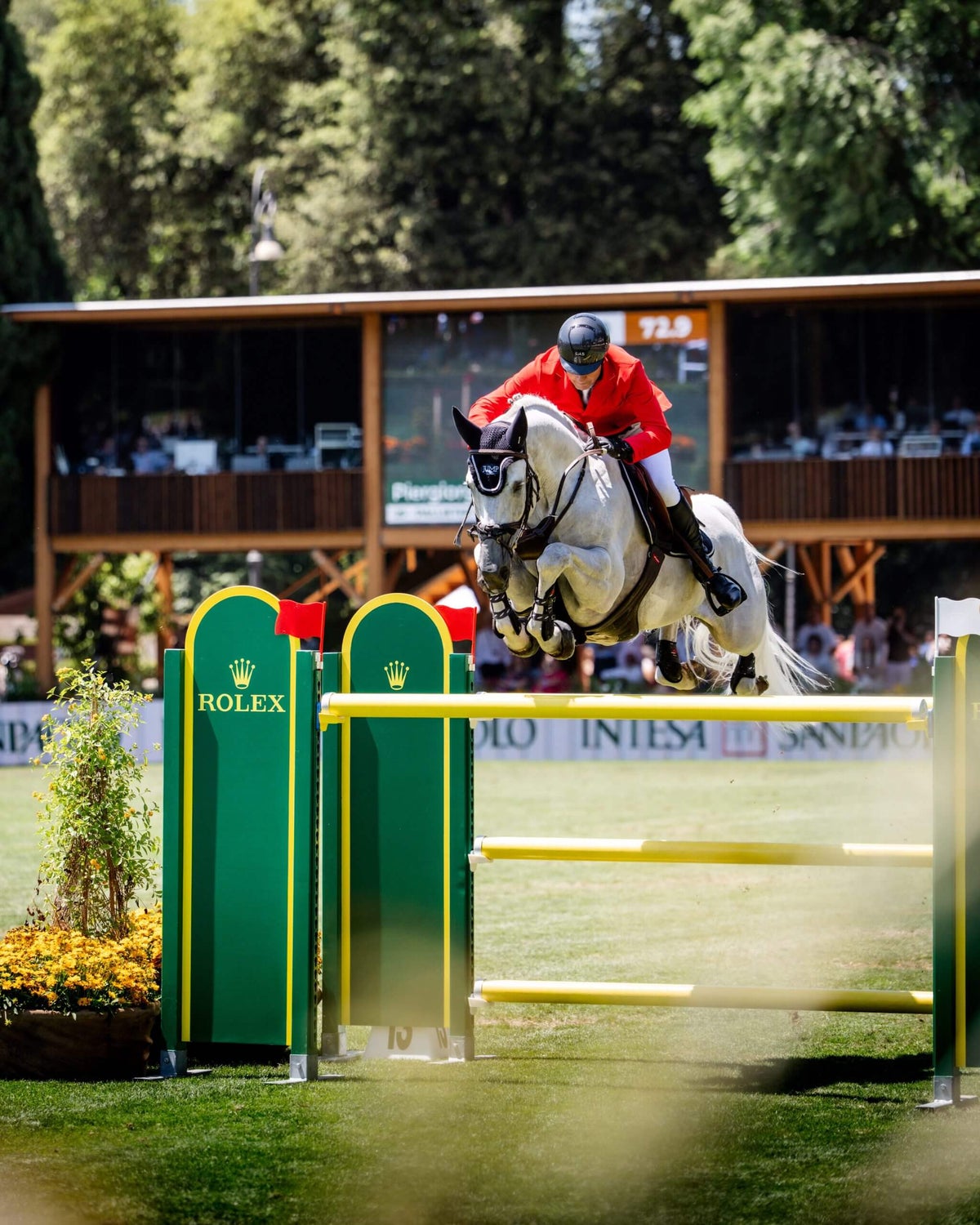
The German polymath Johann Wolfgang von Goethe once wrote that “only in Rome can one understand Rome”. In Sunday’s Rolex Grand Prix at the CSIO Piazza di Siena in Rome, it could have been argued that only a Roman, actually, can understand Rome – or at the very least, how to conquer its show jumping crown jewel.Hometown hero Piergiorgio Bucci didn’t come into this feature class, with its €500,000 (£433,221; $583,011) purse, as a total underdog. Of the cadre of Italian riders in the competition, he and his horse, Pallieter vd N.Ranch, were the best rated by equestrian statistics house EquiRatings. They returned home, too, in enviable form, winning the CSI5* Grand Prix of Mexico last month.But when held up against the pantheon of medal-winning talent on the 45-strong entry list, Bucci’s was unlikely to be the name a punter would put forward as the winner.What the statisticians and the spectators didn’t bank on, though, was the power of human choice: to take risks, to open or remove strides between fences, to go bold or play it safe. And it was through deploying extraordinary measuredness that Bucci took victory in Rome.“Well, we already knew (this win) was coming, because President Marco Di Paola and I had agreed on an Italian victory to mark the centenary of the CSIO and the FISE (Italian governing body, Federazione Italiana Sport Equestri),” quipped Bucci to reporters.“Joking aside, it really is a great coincidence and one more reason to be happy. This victory came in front of all the most important figures in equestrian and Italian sport. I must thank them for what they do for us. Sometimes, it’s nice to be able to give something back in some way.”Though a guaranteed 12 riders would make it through from the first round to the finale, held over a shortened, jump-off-style course, just seven did so with clear rounds.Such was the intensity of course designer Uliano Vezzani’s course, which maximised the capacious grass arena’s subtle but hugely influential terrain to create challenges that would be invisible to the eye but readily apparent when ridden. Almost minute gradations in the turf meant that the distances between jumps, which would be calculated by each rider to decide their horse’s stride pattern, actually rode as shorter or longer than they measured.Deploying shifts of balance in this way has long been a favoured trick in the hands of this maestro of grass arenas, and on Sunday Vezzani closed out the Piazza di Siena’s centennial year by pairing the skilful use of ground with the most fickle of fence designs. Featherweight curved planks, for example, which visually tricked horses into jumping too low; an airy upright fence, too, enormously tall at 1.60m and cleverly situated along the ringside, where innumerable distractions beckoned for highly attuned horses.Most riders who made it into the second round approached their jump-off ride as is traditional: they took bold risks, opened their horse’s stride into a gallop, and cut slicing angles across the jumps in pursuit of the fastest time of the day. But round after round, these riders would scupper their chances with a rail – not infrequently at the very last fence.Bucci said he had always dreamed of winning the Rome Grand Prix (Rolex Series)When Bucci’s turn came, in the first half of the second round, he made a different call. Rather than riding to be the fastest, he would ride to be the tidiest, and take the lesser hit of a couple of seconds on the clock over the potential of four expensive faults for a fallen pole.The strategy paid off, earning the 50-year-old the only clean scoresheet of the day — but his time of 42.01 seconds left the door wide open for somebody else.But those taking risks didn’t succeed, not even for last-to-go Sophie Hinners of Germany, a podium finisher in the Rolex Grand Prix of Aachen last week. After blazing her way around the first part of the track with Iron Dames Combella, she knocked a mid-round fence, handing the victory to Italy.“I have no words to explain it — even in Italian, I couldn’t find the words,” said an emotional Bucci moments after his win to commentator Steve Wilde on the Rolex Series website.“When I was a kid I was dreaming of winning this Grand Prix but (even then), it felt too big even to dream of it. Now I have this amazing horse, and an amazing team, and so it’s not only my victory — it’s a victory for my whole team. I’m so proud of the horse and of all the work.”Second place went to Germany’s Jörne Sprehe and Toys, who posted the fastest time of the second-round rides — a 39.01 that eclipsed their nearest rivals by nearly a second and a half — but tipped a rail to add four faults to their scorecard, which had already carried over four from the first round.Sprehe’s compatriot Richard Vogel was third with the athletic stallion Cloudio, with whom he finished in the same position in Saturday’s Loro Piana Trophy. His excellent results in both classes earned him the show’s Piero e Raimondo d’Inzeo trophy, awarded to the competitor who accumulates the most points over these two weekend showcases of sport, and given in honor of the d’Inzeo brothers – Italy’s late, great Olympians.Italy’s last victory in its greatest Grand Prix came eight years ago, when Lorenzo de Luca lifted the trophy. It is a spectacular birthday present for the show to see De Luca’s close friend Bucci in the same position, with the national anthem, Il Canto degli Italiani, echoing through the colossal arena.– Tilly Berendt
Italy’s Piergiorgio Bucci wins centennial Rolex Grand Prix of Rome: ‘I have no words’
In its centenary year, the CSIO Piazza di Siena celebrated a home winner for the first time in eight years in the Rolex Grand Prix.
939 words~4 min read