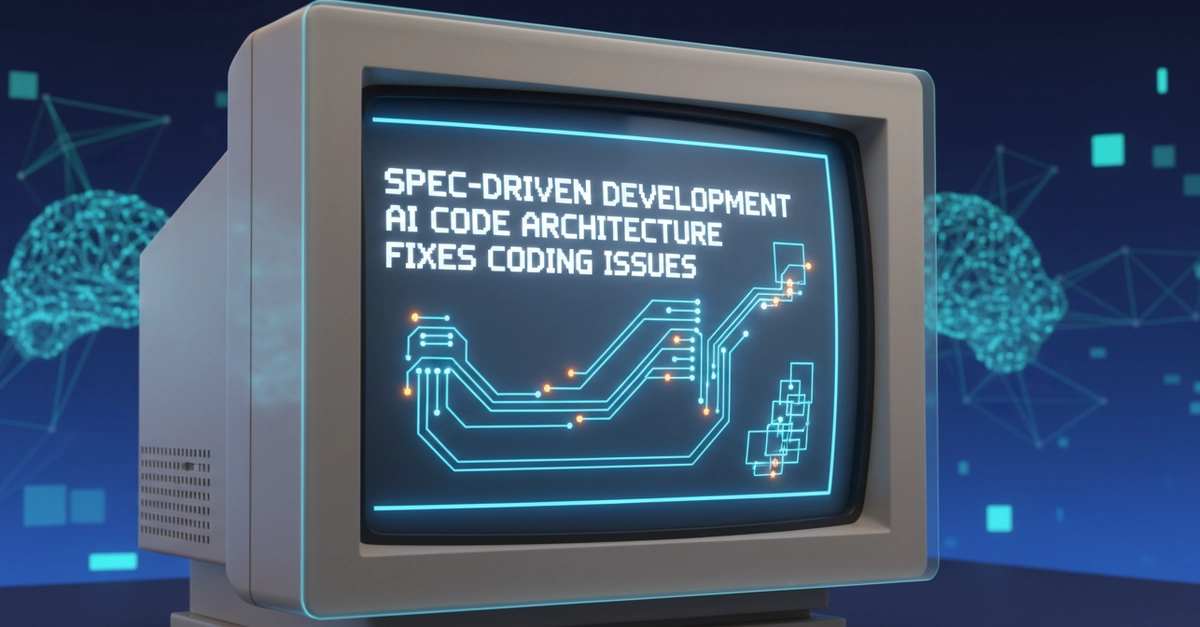
The API ecosystem had a coordination problem. Every API was described differently — prose documentation, custom schemas, tribal knowledge. Then a standard format emerged. One format. Every tool reads it. Code generators, documentation engines, test frameworks, mock servers, SDK builders — all consume the same specification. The ecosystem unified around one artifact.
The AI era has the same coordination problem — but for a different artifact. Not "how does this API behave?" but "what properties must this system preserve?" "What behavioral contracts must hold?" "Why was this boundary placed here?" "What invariants must every change respect?"
Seven foundational CS papers — Parnas, Naur, Brooks, Knuth, Dijkstra, Liskov, Lehman — converge on the same conclusion: the value of software isn't in the code. It's in the properties, contracts, boundaries, and rationale that make the code safe to modify. AI generates the code. Nothing standardizes the properties. The code is generated at scale. The properties are scattered across READMEs, ADRs, Slack threads, and people's heads.
The industry needs an Open Reasoning Spec — a machine-readable standard for properties, contracts, and rationale that AI agents consume, enforcement engines verify, and humans read.