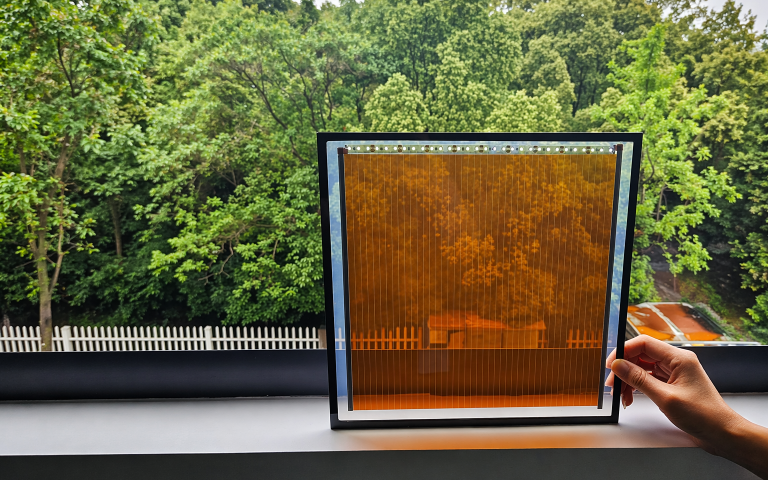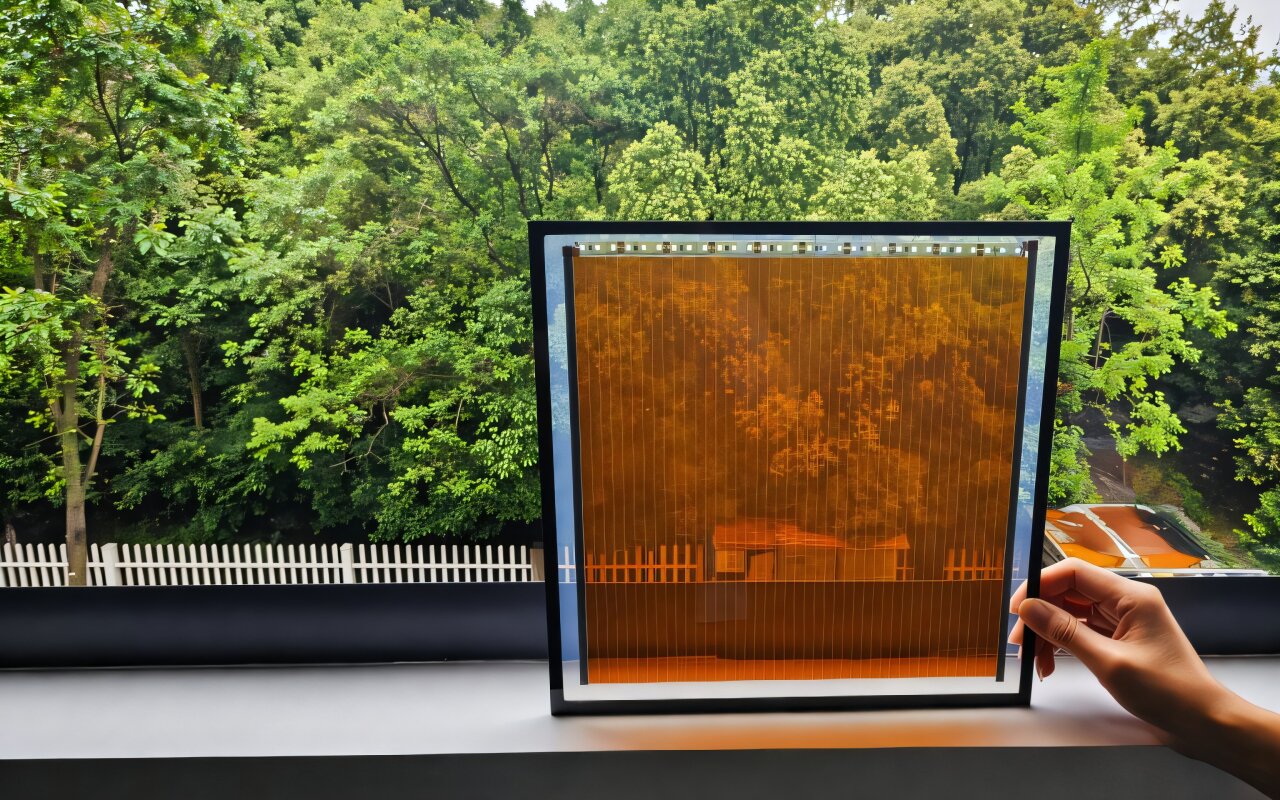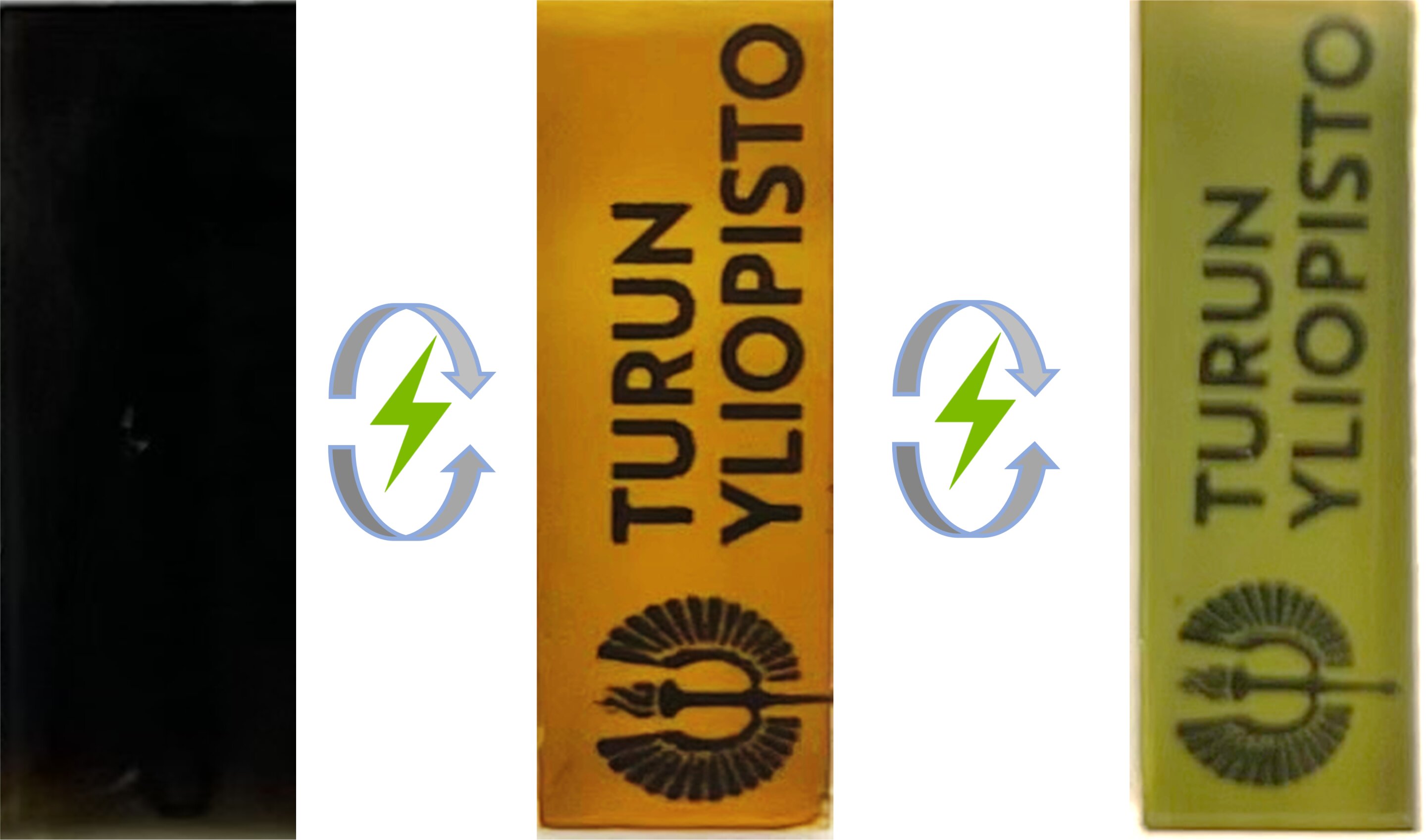
The nickel-based porphyrin film changes colour between black, orange and green. When electricity is applied to the film, the electronic structure of the material changes and the colour changes. Credit: University of Turku
The growing demand for sustainable and energy-efficient technologies has increased interest in smart materials that can perform more than one function at the same time. In his doctoral dissertation, MSc Sachin Kochrekar developed materials that can both change color and store electrical energy. In the future, this technology could be used, for example, in energy-storing, self-tinting smart windows.
This work developed thin polymer films based on porphyrins, molecules that occur widely in nature, for example, in chlorophyll and hemoglobin.
"For example, thanks to the porphyrin structure found in chlorophyll, the plant is able to recover energy from sunlight through photosynthesis. The ability of this natural molecule to transfer electrons and change its state in a controlled manner is also an interesting starting point for us materials scientists," says Doctoral Researcher Sachin Kochrekar from the University of Turku, Finland.
In the dissertation, novel membrane structures were constructed in two different ways: as a hybrid structure together with an electrically conductive material, and with a simpler method, in which porphyrins were joined together with the help of a bridge molecule to form a polymer membrane.