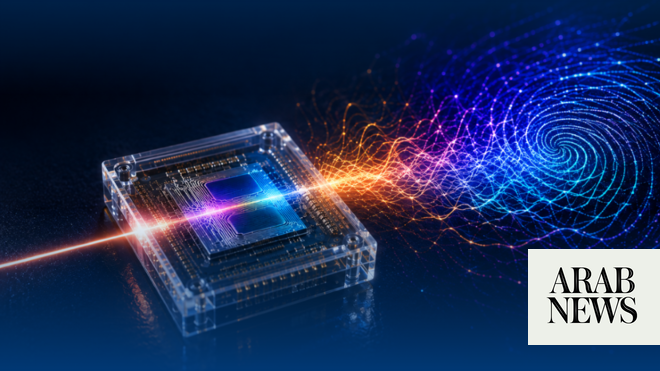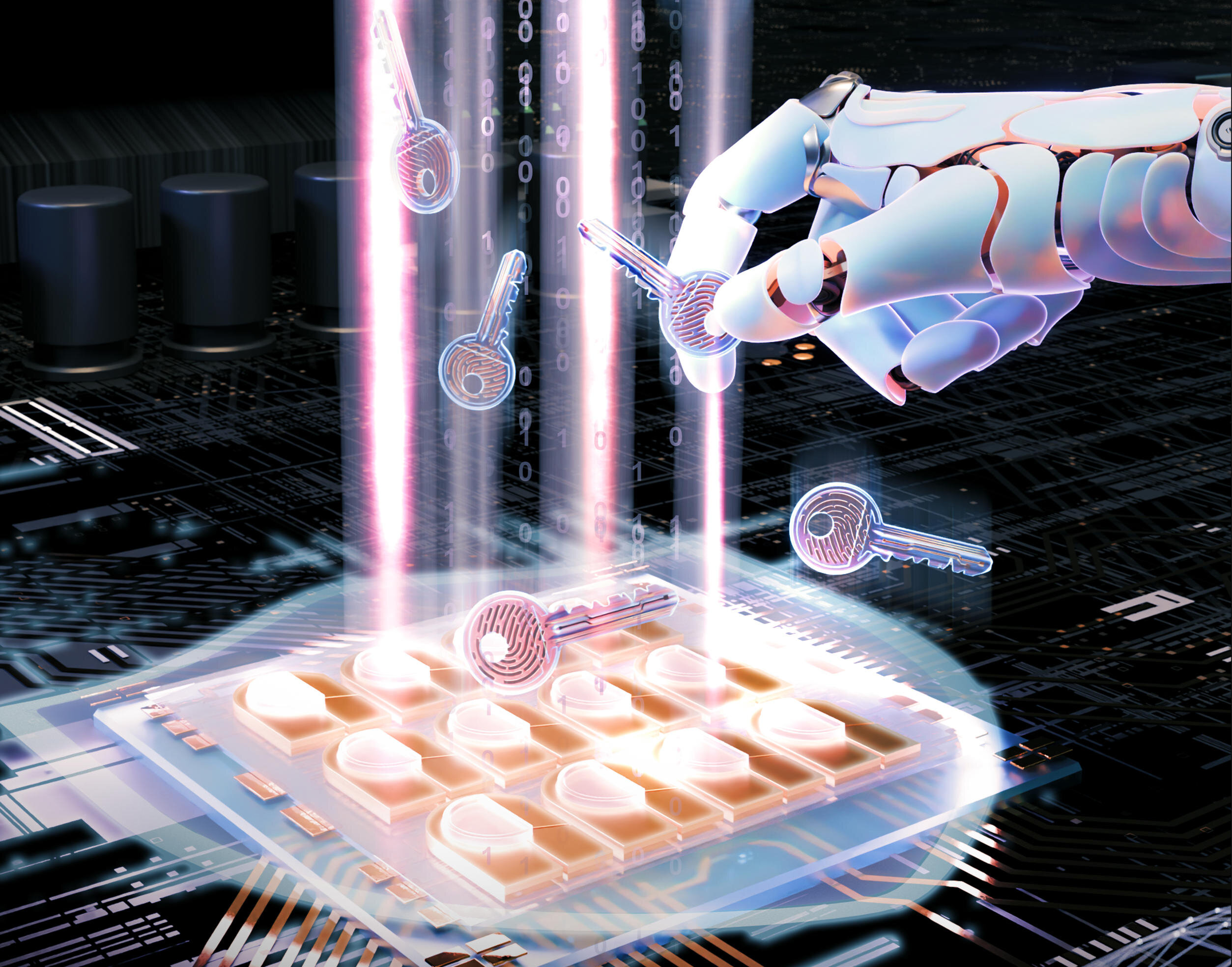
A third conceptual schematic prepared by KAUST team that gives a more general illustration of the working principle. Credit: KAUST
The security of modern communications heavily relies on systems that can rapidly and reliably verify users and the devices they are using. This process, known as authentication, essentially entails confirming that users or devices are legitimate (i.e., who or what they claim to be).
Conventional authentication systems rely on static cryptographic keys, fixed digital keys that allow encryption algorithms to scramble readable data into unreadable texts or vice versa. While these systems perform well in some contexts, they often struggle when networks include billions of devices that continuously connect and disconnect.
Researchers at King Abdullah University of Science and Technology (KAUST) recently developed a new system that could authenticate devices faster and more reliably in real time, even when they are connecting to large-scale networks, cloud services or virtual environments.
This system, introduced in a paper published in Nature Electronics, works by rapidly generating unique hardware fingerprints using lasers, which are then recognized by an artificial intelligence (AI) algorithm.