Amid possibilities of deficient monsoon this year, States may have to cough up more funds for crop insurance either in form of premium or compensation, whatever models they chose. However, to insulate farmers from entire risk, the States should transfer the claim responsibility to the insurance companies for timely payment, experts said.Karnataka is the only state which has returned to the normal scheme under PM Fasal Bima Yojana (PMFBY) whereas many states like Maharashtra, Jharkhand, Tamil Nadu, Madhya Pradesh, Uttar Pradesh, Andhra Pradesh and Rajasthan are yet to decide whether to do away with cup-and-cap model, in which insurers’ liability is limited.Insurance industry sources said that Maharashtra is considering to return to normal insurance where full liability stays with insurers and premiums are higher this year, Jharkhand has invited premium quotes under three formula - normal full liability, 80:110 and 60:130. Other states are yet to decide.Stressing that ideally premium quote should be invited before monsoon forecast is released, former agriculture secretary Siraj Hussain said it is too late now to return to normal PMFBY scheme as everything is known after the second stage forecast of India Meteorological Department (IMD), though its forecast has also gone wrong in some years like in 2014.Under the “Beed formula” or 80:110 plan under PMFBY, if the total claims are less than 80 per cent of the total collected premium, the insurance company will retain 20 per cent of the gross premium and the remaining amount is to be refunded to the State. Similarly, under the same formula, the insurer’s liability is limited to maximum of 110 per cent claims of the gross premium. It is the state government’s responsibility to pay extra claim beyond 110 per cent.“It is often seen that the States try not to pay claims or show as much low as possible when claims exceed 110 per cent of gross premium and in those cases farmers become the victims even as they contribute their own share which is fixed whereas the Sates’ and Centre’s share varies as per premium quoted for a particular year and it also varies in each crop.“India may not be staring at a drought year, but it is facing something more complex and potentially more expensive -- a highly volatile monsoon that exposes structural weaknesses in how agricultural risk is financed,” said a crop insurance expert.He said the seasonal rainfall shortfall of 8–10 per cent may appear moderate in aggregate terms, but India’s experience shows that such years are rarely benign. “Below-normal monsoon seasons are typically characterised less by uniform deficits than by delayed onset, prolonged dry spells between rainfall events and extreme spatial unevenness. IMD studies consistently show that these intra-seasonal disruptions depress yields disproportionately, even when all-India rainfall stays close to long-term averages,” he noted.Rainfed crops such as paddy, soybean, pulses, and oilseeds grown extensively across Maharashtra, Madhya Pradesh, Rajasthan, and Gujarat may be at risk, he observed after going through the statewise rainfall distribution map of IMD.He also said while the cup-and-cap model looks fiscally attractive in good seasons, it is embed contingent liabilities that surface abruptly when weather shocks are widespread rather than localised. When delayed state premium contributions cited as the major cause of late claim settlement, it is easy to imagine when the farmers would receive claims if those exceeded the threshold, he added.The IMD on May 29 scaled down its projection for the South-West Monsoon to 90 per cent of the long-period average (below-normal rainfall) of 87 cm, potentially to have India’s driest weather in 11 years. In 2015, it was 86 per cent of the LPA, while in 2014, monsoon was 88 per cent of the LPA.Published on May 31, 2026
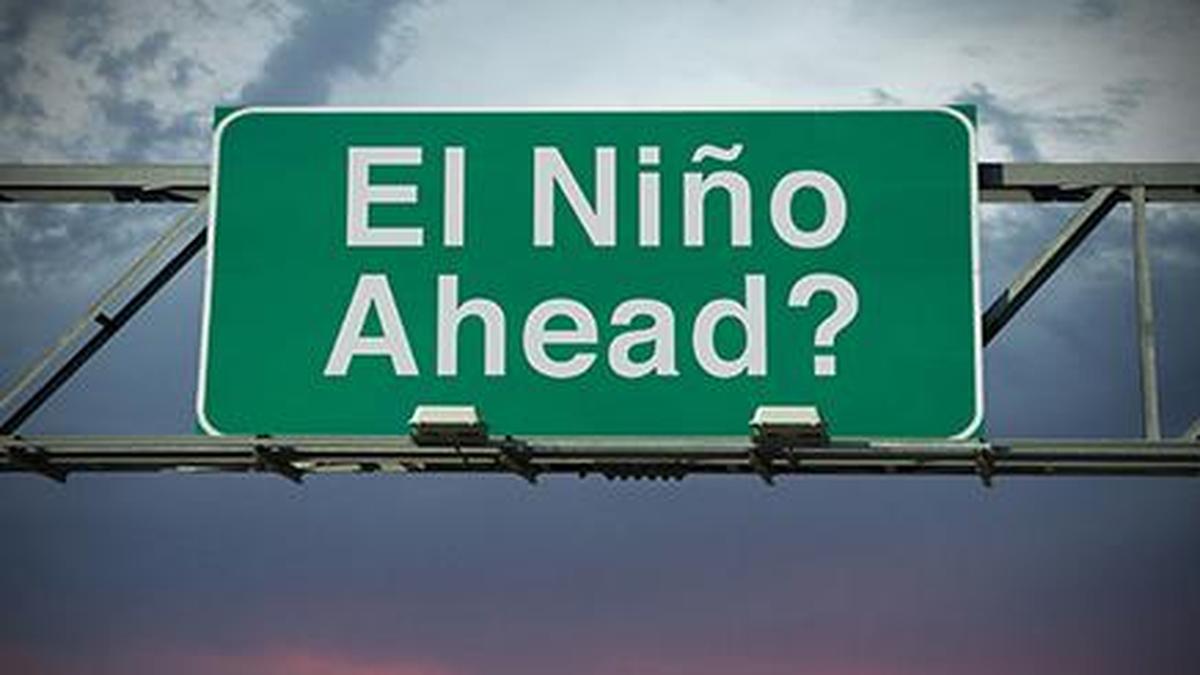
Amid super El Nino threat, which PMFBY crop insurance model suits farmers?
Under the “Beed formula” or under PMFBY, if the total claims are less than 80% of the total collected premium, the insurance company will retain 20% of the gross premium and the remaining amount is to be refunded to the State
TL;DRAI
India's IMD cut the 2026 monsoon forecast to 90% LPA — driest in 11 years — as states choose between full-liability PMFBY and the capped Beed 80:110 model. The cap hides contingent state liabilities that delay farmer payouts precisely when widespread drought hits hardest.
613 words~3 min read