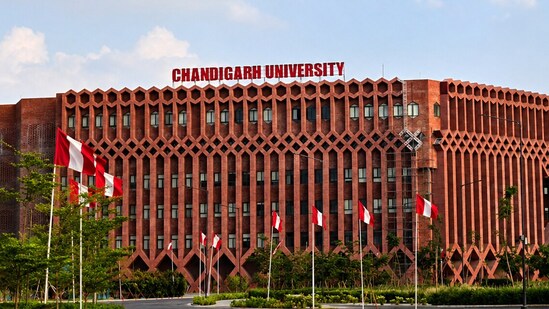
Chitkara University redefines computer science and engineering education, offering specialisations like cybersecurity and AI Hospitals are trying to catch disease earlier. Banks are defending against fraud in real time. Logistics companies are rerouting supply chains mid-crisis. Game studios are building worlds that millions of people inhabit. Every one of these industries runs on people who were trained to think in systems, build in code, and solve problems that did not exist when their parents were choosing careers. This is what a Computer Science and Engineering degree means in 2026, and it is very different from what most people picture when they hear the phrase. Chitkara University has been building its engineering programs around this reality for some time, and the distance between that and a conventional CSE degree is now wide enough to matter enormously.A CSE graduate today might be securing a bank's digital infrastructure as a cybersecurity analyst, designing the data pipelines that keep an e-commerce platform running, building mobile applications used by millions, or developing the cloud architecture that a hospital system depends on. (Photo: HTCS)One degree, 20 different directionsThere is a persistent misconception that choosing Computer Science and Engineering means choosing one kind of future: a software developer writing code in a glass-walled office somewhere. The actual landscape is considerably more interesting.A CSE graduate today might be securing a bank's digital infrastructure as a cybersecurity analyst, designing the data pipelines that keep an e-commerce platform running, building mobile applications used by millions, or developing the cloud architecture that a hospital system depends on. The World Economic Forum's Future of Jobs Report 2025* identifies technology roles, including AI specialists, data analysts, cybersecurity professionals, and software engineers, among the fastest-growing globally through 2030. What connects all of them is not a single skill set but a way of thinking, and a degree that taught you to apply that thinking to real problems in a specific domain.This is the case for specialisation, and it is a stronger case than it has ever been. Employers are not looking for generalists who can write code. They are looking for engineers who understand cloud infrastructure, mobile development, data systems, or security architecture well enough to contribute from day one.Chitkara University's B.E. in Computer Science and Engineering offers tracks in Full Stack Development, Cybersecurity, Data Science and Analytics, Cloud Computing with AWS, Game Design and Technology, and Mobile App Development, each built into the academic structure from the start rather than offered as late electives. (Photo: HTCS)The shift that changes everythingA decade ago, a Computer Science degree was largely self-contained. You learned algorithms, data structures, and programming paradigms, and the industry filled in the rest. That model no longer holds. The tools companies use now include cloud platforms, AI frameworks, security protocols, and development environments that require deliberate, sustained training. A graduate who has only encountered these in theory is at a significant disadvantage compared to one who has spent four years working with them directly.This is the gap that well-structured specialisations are designed to close. Chitkara University's B.E. in Computer Science and Engineering offers tracks in Full Stack Development, Cybersecurity, Data Science and Analytics, Cloud Computing with AWS, Game Design and Technology, and Mobile App Development, each built into the academic structure from the start rather than offered as late electives. The degree produces engineers with a core foundation and a domain they actually know.For students whose direction points toward Artificial Intelligence, two dedicated programs extend this further. The B.E. CSE developed in collaboration with Microsoft focuses on AI and Machine Learning, with students training on the actual platforms Microsoft uses to build and deploy intelligent systems. The B.E. CSE in AI and Future Technologies spans IoT, robotics, blockchain, and cybersecurity alongside core AI, reflecting the way these fields are converging in practice rather than remaining neatly separated on a syllabus.Where the learning actually happensThe classroom is only one part of what shapes an engineer. The more significant variable, and the one that is hardest to see from the outside when choosing a college, is the ecosystem around it: the labs, the industry partners, the culture of building things, and the people you work alongside.Chitkara University has invested in this dimension in ways that are specific and verifiable. Three Centres of Excellence on campus operate not as conventional academic labs but as professional environments built with industry partners. The iOS Development Centre, developed with Apple and Infosys, gives students a working space to build, test, and deploy iOS applications using the same tools used in production environments. The Jio Games Innovation Centre, established with JioGames in September 2025, is a facility designed for students working at the intersection of gaming, AI, and interactive technology. The Capgemini CodeXperience Centre mirrors an enterprise software development environment, giving students exposure to how large-scale software is built and delivered professionally.These are not cosmetic additions. They are the kind of infrastructure that changes what a student can actually do by the time they complete their degree.A number worth understandingIn the QS World University Rankings by Subject 2026, which evaluated 18,300 programs across more than 1,700 universities in 100 countries, Chitkara University ranked 22nd in India for Computer Science and Information Systems, placing in the global 451–500 band. The methodology accounts for academic reputation, employer reputation, research citation impact, and the H-index. These are not metrics that respond to marketing. They reflect what faculty publish, what employers think when they hire, and what the global academic community recognises. For students and families trying to assess institutions beyond brochures, that distinction is worth noting.The university also holds a NAAC A+ accreditation and features in the Times Higher Education World University Rankings, providing further external reference points for those who want them.What four years actually produceThe students who come out of well-structured engineering programs with something to show are not always the ones who scored highest. They are the ones who spent four years working on real problems, using real tools, in environments where experimentation was normal and mentorship was available.Chitkara University's engineering students work on live industry projects, participate in regular hackathons, and have access to an on-campus startup incubation centre. (Photo: HTCS)Chitkara University's engineering students work on live industry projects, participate in regular hackathons, and have access to an on-campus startup incubation centre. From the third year, there are options for semester exchanges with global partner universities and international internships. A recruiting network of over 700 active partners, including Amazon, Google, Microsoft, and Deloitte, is the downstream result of an ecosystem that companies have invested in because they trust what it produces. The highest package recorded stands at ₹1.11 crore, but the more meaningful metric is the consistency of outcomes across a graduating class, shaped far more by four years of environment than by the final months of placement preparation.The decision that shapes the next decadeFor a student standing at the point of choosing a Computer Science and Engineering program today, the most useful question is not which college has the most recognisable name. It is: which program will give you four years of genuine engagement with the tools, problems, and professional environments that define the industry you want to work in?The world does have a thousand problems. Climate, health, security, infrastructure, communication, finance—none of these sectors function without engineers who were trained to think at their intersection with technology. The CSE graduates getting the most interesting opportunities are the ones who spent their undergraduate years learning to solve problems that matter, in programs designed to make that possible.Chitkara University's engineering programs, across their full range of CSE specialisations and AI-focused tracks, are built around exactly that purpose. For students making this decision now, that alignment is worth understanding clearly before making a choice that will shape the decade that follows.*www.weforum.org/publications/the-future-of-jobs-report-2025/**(Partnered Content)
World has a thousand problems; computer science, engineering graduates are paid to solve them
Chitkara University redefines computer science and engineering education, offering specialisations like cybersecurity and AI
1,293 words~6 min read