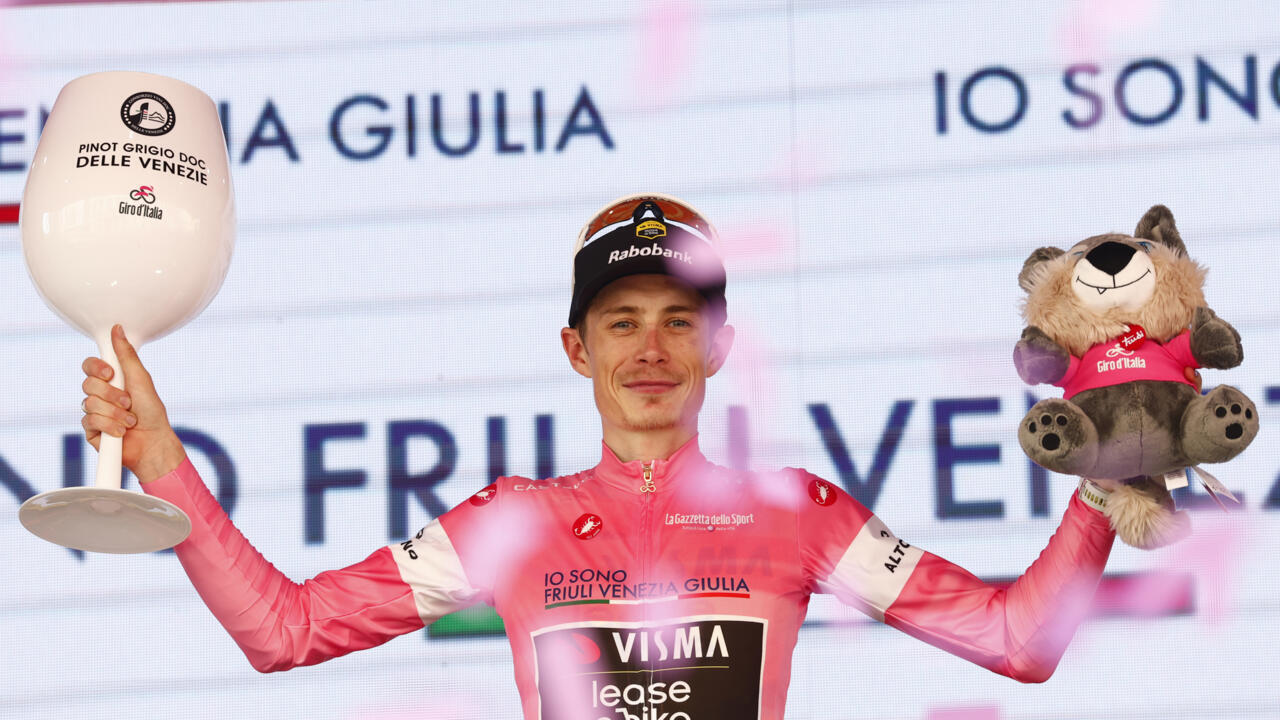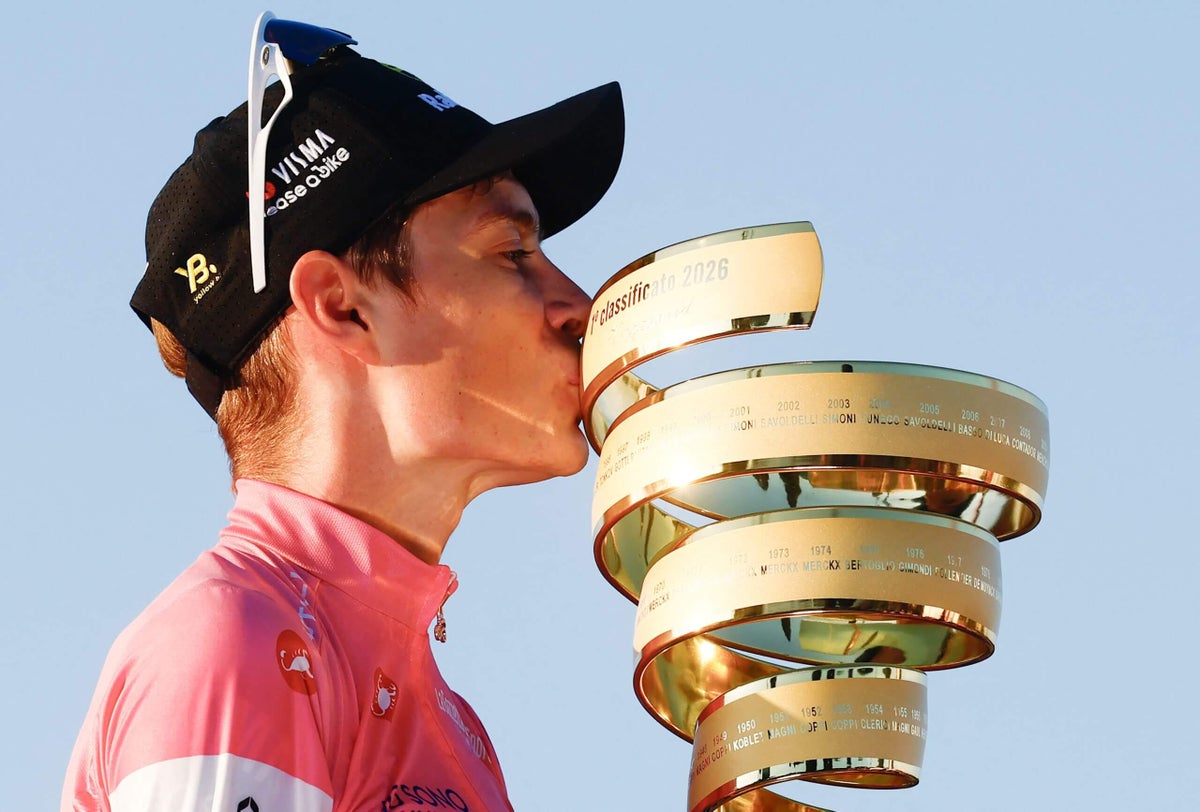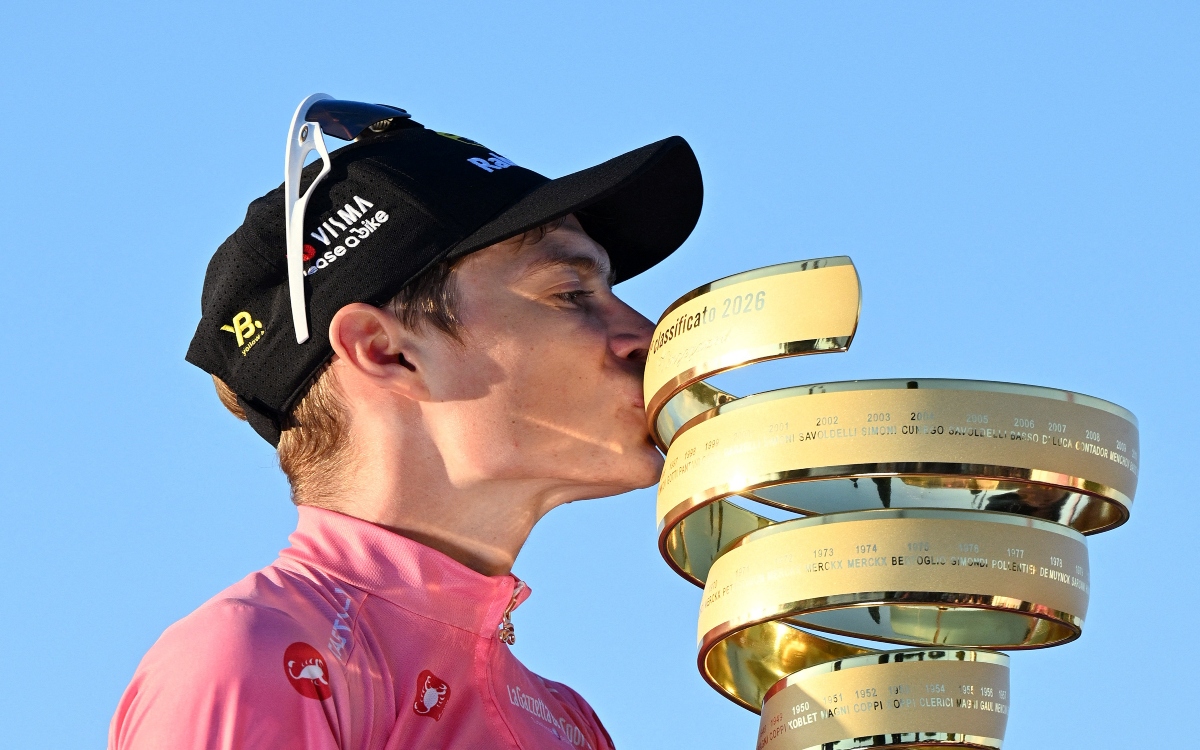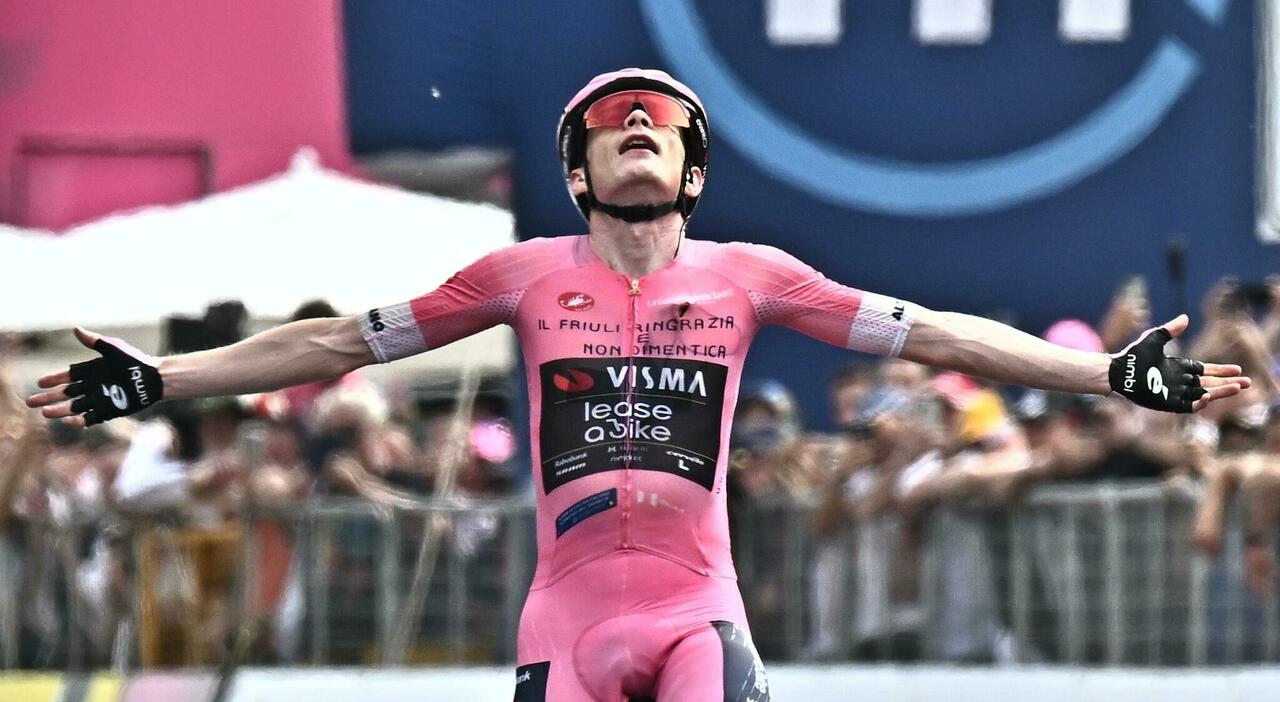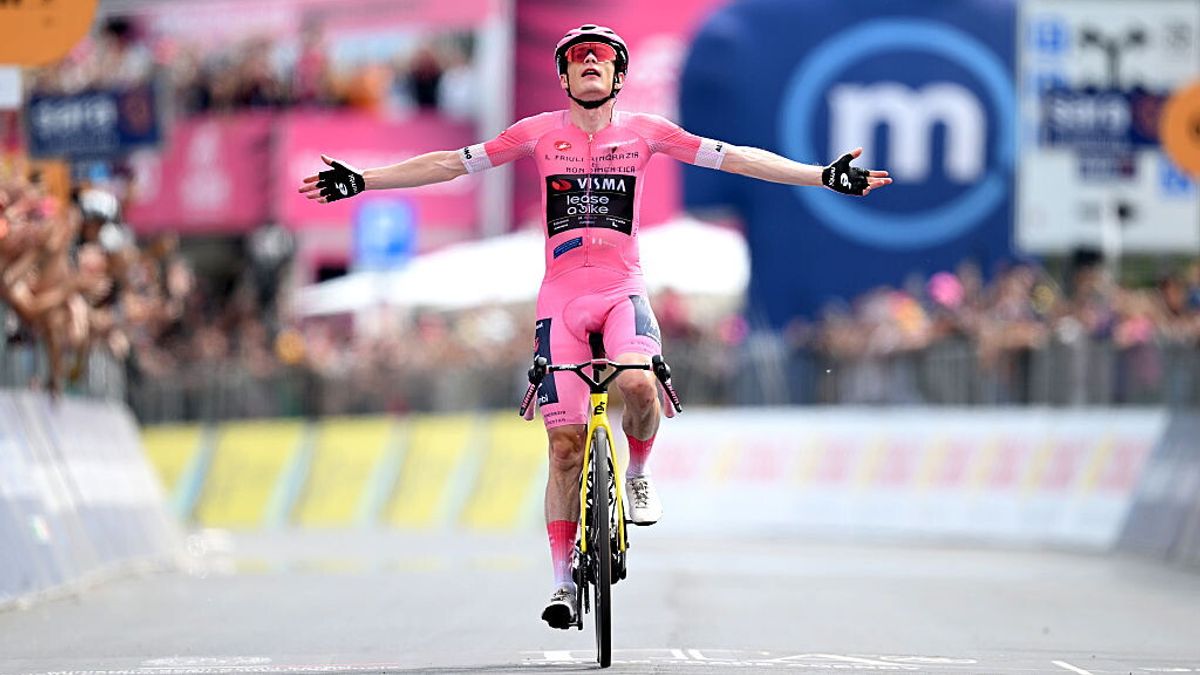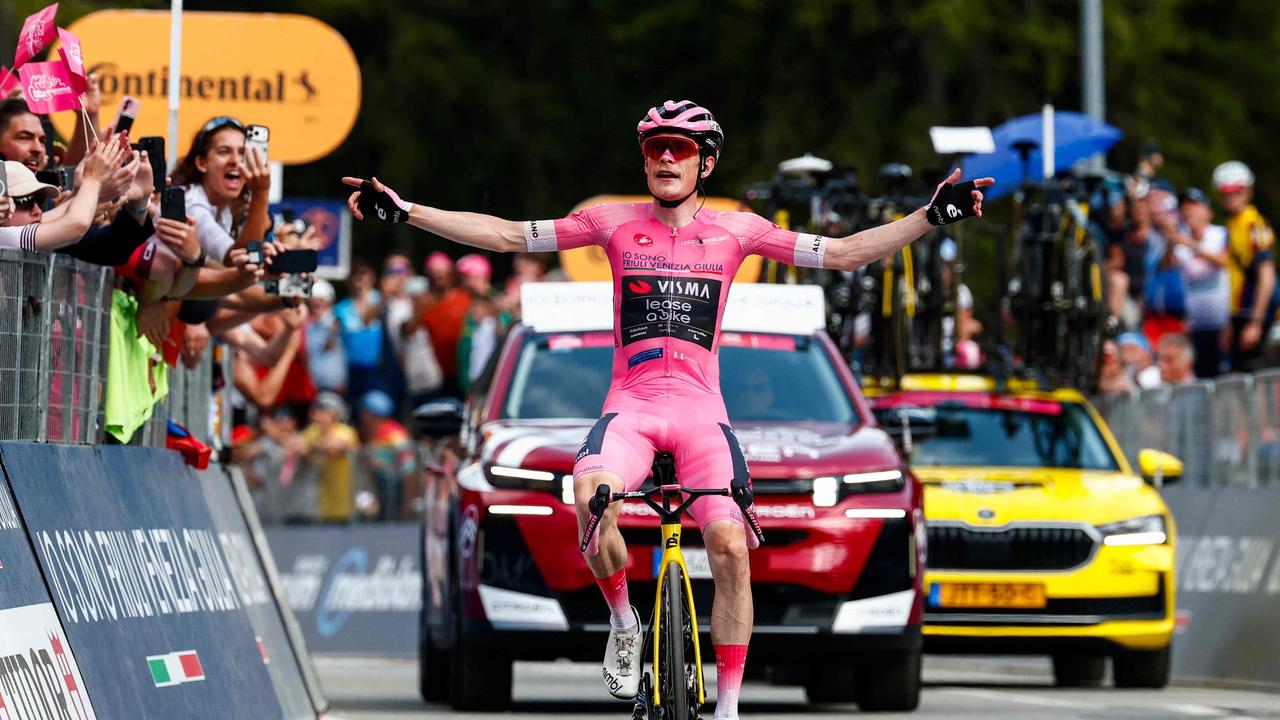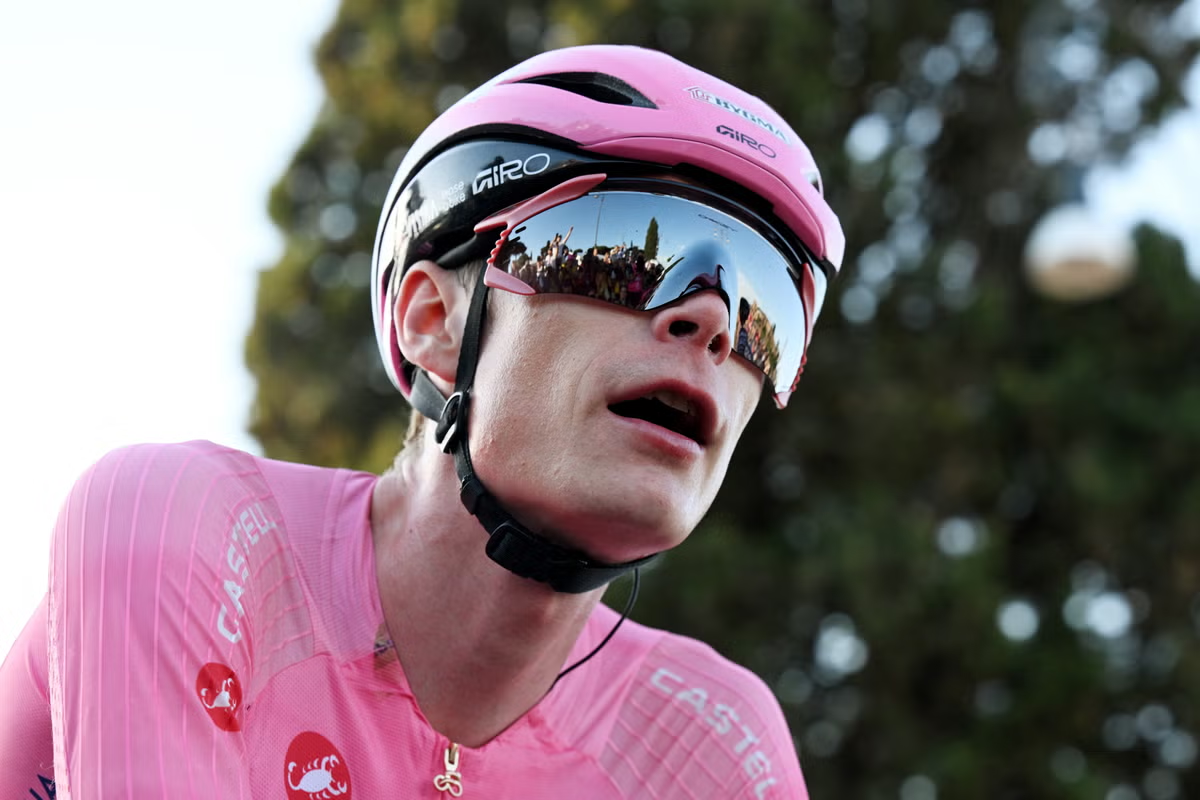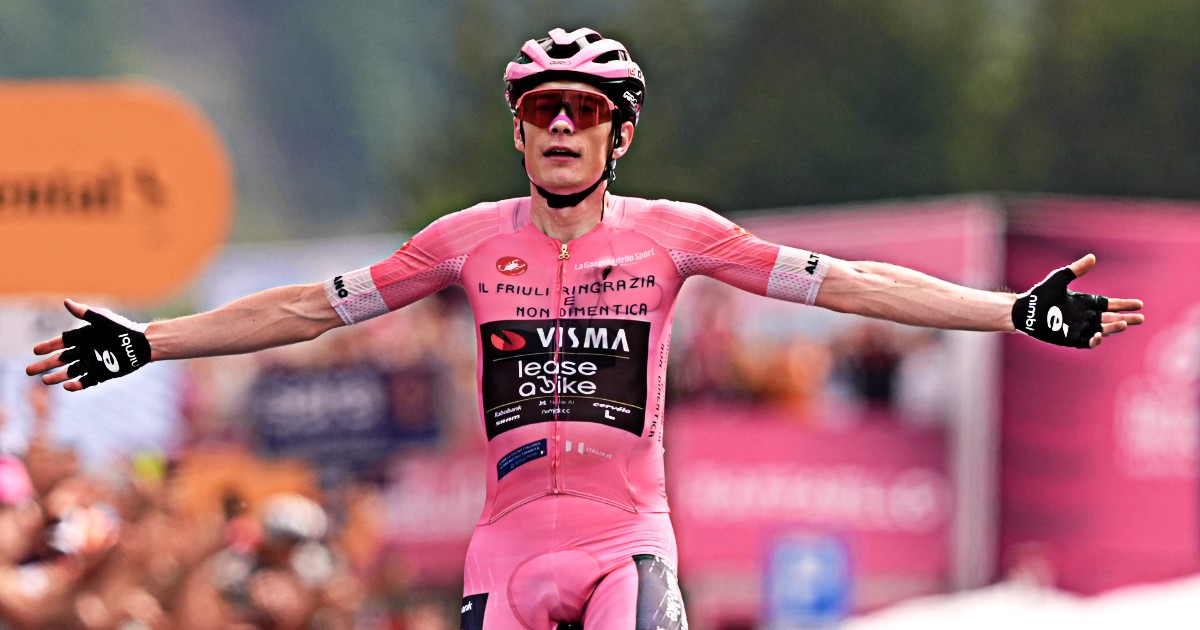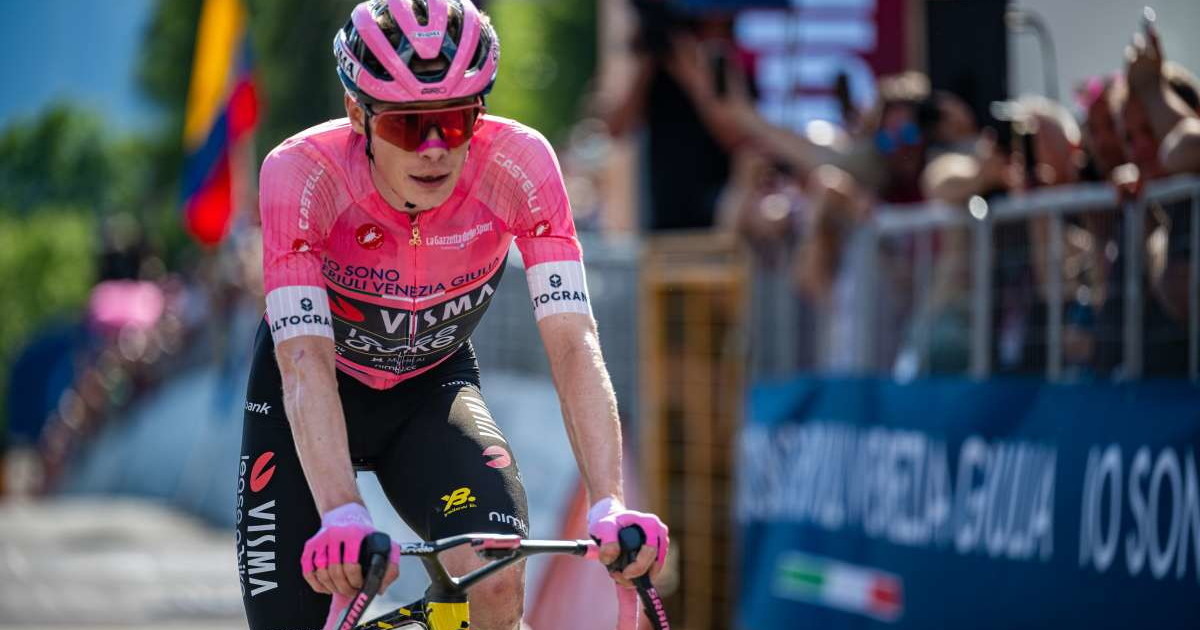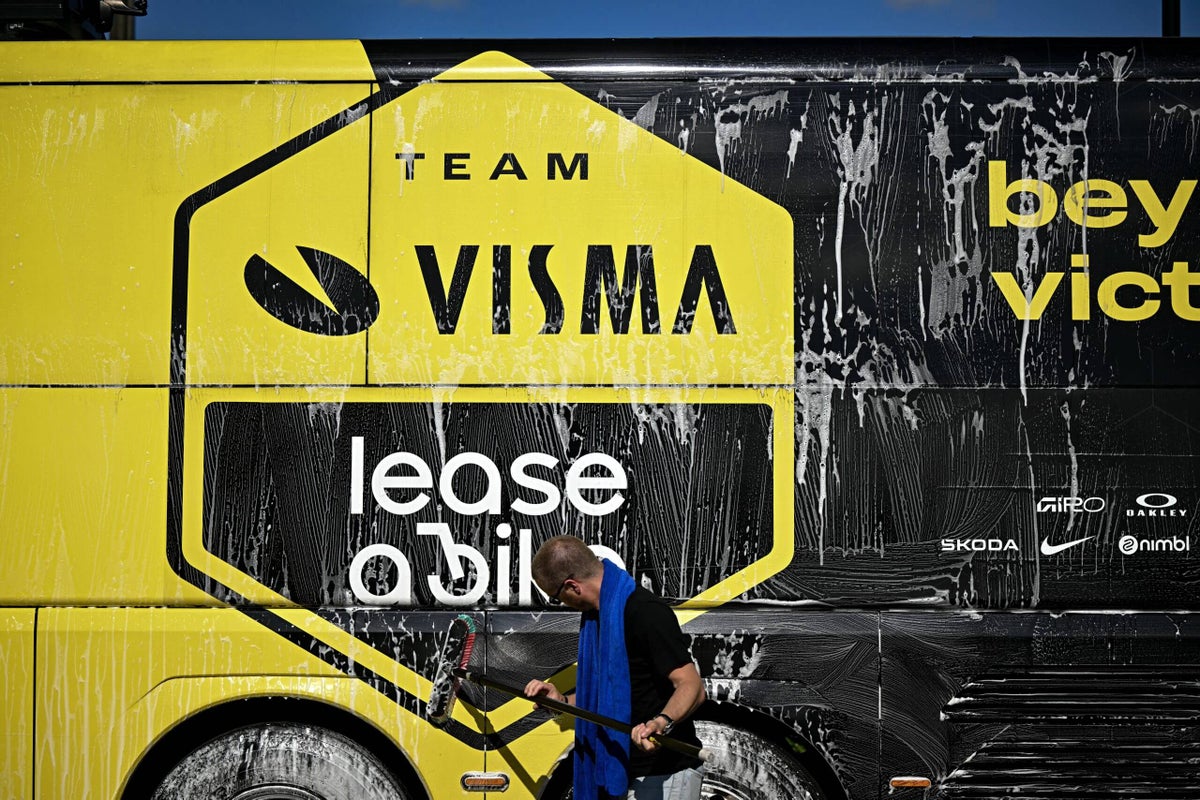
It’s a paradox of cycling that the team who is set to win the Giro d’Italia later today with Jonas Vingegaard — its third Grand Tour win out of the past four held — is currently without a main title sponsor for next season.In a sport like cycling where title sponsorship often provides at least 75 per cent of a team’s revenue, that looks like a major crisis. Yet executives at Visma-Lease a Bike are not worried.“Once we’re in talks with them, brands see that cycling is a really valuable proposition and they’re flabbergasted by our reach and what we can do compared to investments in other sports,” Visma-Lease a Bike’s chief business officer Jasper Saeijs tells The Athletic.Visma’s own experience is testament to that: since partnering with the team in 2019, the Norwegian software company’s revenues have more than doubled to almost €3billion. That’s a very strong return on investment (ROI). Having fulfilled its mission of global brand expansion, Visma now prefers to remain as a minor partner as annual team budgets creep towards and past €60m.The team’s confidence in securing new naming partners is bolstered by the arrival of major European brands such as Lidl, Red Bull and Decathlon into the sport. Just recently, Danish IT business Netcompany became the latest to be persuaded, agreeing to part with €100m over the next five years to take main naming rights of the British WorldTour team Ineos Grenadiers.More and more business leaders are becoming convinced that naming a Tour de France team after their company is the best form of marketing.INEOS recently added Netcompany as a title sponsor (Getty Images)With no spectator revenue, limited merchandising sales and few other ways to generate income, cycling teams need tens of millions of euros from sponsors just to survive.Even if race organisers did share their broadcast profits with teams, it wouldn’t make much of a difference to the lay of the land: WorldTour teams would still be reliant on their backers.The upshot is no company comes into cycling to make money directly from it. But the benefits of being heavily associated with and/or lending a company’s name to a major cycling team can be transformative for a business.“If you want to grow (as a business), sponsoring a cycling team is a great growth strategy,” says Saeijs, Visma’s CBO. “We have many business cases and examples of the companies we’ve helped. We can improve cycling’s business model, but the platform we have now is already really powerful.”As an illustration of that, Visma saw its annual turnover jump from €1.14m in 2018, the last year before it began sponsoring the cycling team, to €2.8m 2024. A massive 145 per cent jump.“I can’t only say it’s because of the cycling partnership, but it’s definitely helped them to grow fast,” Saeijs continues. “What’s unique about cycling is that as the first title sponsor you become the team. That’s totally different to any other sport, even Formula 1 as its (title sponsors are) automotive-orientated.“Our proposition is most valuable for brands that want to grow fast, especially in Europe, and also want a global presence at the same time.”Fans can attend nearly all cycling races for free, so teams rely on sponsorship for the vast majority of their funding (Luca Bettini / AFP via Getty Images)The Athletic has seen several documents from a number of WorldTour teams that support what Saeijs is saying. Annual data from analytics company Nielsen shows that a sponsor’s media value — calculated via logo visibility across all media platforms — almost always eclipses a team’s actual worth.According to International Cycling Union (UCI) figures seen by The Athletic, the median men’s WorldTour budget this season stands at €28m. Yet a mid-tier team performing to expectation can expect to deliver upwards of €70m in media value. That ratio rises to 5:1 for the best-performing teams.Riders are essentially highly-successful mobile billboards, but where the sponsor’s name and logo is placed on team livery is crucial: jersey and bib shorts together yield 85 per cent of total media media value. Bikes and support cars provide reasonable value, but nothing compared to appearing prominently on the athlete’s clothing.Unsurprisingly, audience figures highlight that the Tour de France (1.2 billion viewers in 2025) has an outsized influence, with three times as many viewers than during the Giro d’Italia (378 million) and Vuelta a España (346 million), cycling’s two other Grand Tours.One team reported that just over a half of its entire season’s media value was derived from the three weeks of racing at the Tour de France, and another team reported that online interest in its lead title sponsor spiked considerably during the Tour.“The Tour de France is the third-biggest event in the world, so we have a really great platform in cycling with a lot of reach,” Saeijs says.In every single case — and even more so for state-owned teams such as UAE Team Emirates-XRG or Bahrain-Victorious, whose governments are looking to enhance their global reputation through soft-power politics — what companies investing in cycling are most interested in is increased visibility and awareness, particularly among the business elite.“If you’re a business and you walk into a room and no one knows you, but then you say you’re the title partner of one of the biggest teams in cycling, there’s a difference in credibility and how people look at the brand,” Saeijs says.Exposure during the Tour de France, led by its director Christian Prudhomme, is the biggest lure for sponsors (ANNE-CHRISTINE POUJOULAT/AFP via Getty Images)Figures from the documents seen by The Athletic show that, despite cycling’s attempts to globalise, it remains very much a European sport, with brand exposure the highest in Belgium because of the amount of cycling coverage, and the highest media value in France and Italy. According to one team’s figures, 95 per cent of its media value came from the European market.That said, data from consumer insights company GWI reports that the rest of the world are almost as interested in cycle racing as people in Europe: 14.8 per cent of Europeans follow cycling, compared to 9.8 per cent of South Americans, 8.5 per cent of North Americans and 8.4 per cent of those in the Asia Pacific region.It’s for that reason that WorldTour teams are constantly searching the worldwide market for potential brands.“Cycling is a global sport so we’re definitely not focused on only the domestic market,” Saeijs says. “Most of the time we’re searching for brands that want to grow fast or are active in Europe or globally.“In Jumbo (the supermarket title sponsor of the Dutch team from 2015 to 2023), we had a company that only operates in Holland and Belgium, so they were paying for a position that is pan-European and global but only benefitting from it in two countries.”Cycling does have its problems, especially structurally. That’s why mining tycoon and Pinarello-Q36.5 owner Ivan Glasenberg — the latest billionaire after Sir Jim Ratcliffe, Sylvan Adams, Igor Makarov and Oleg Tinkov to invest in cycling — is leading the TeamCo reform project that aims to restructure cycling’s business model and improve teams’ financial sustainability. At the time of publication, progress is slow and discussions appear to have reached an impasse.Another issue is the increasing consensus that budgets are spiralling out of control — indeed, Visma-Lease a Bike is searching for a new title sponsor because its current budget isn’t deemed sufficient to continue competing at the top.As a result of increasing budgets, the playing field is less equal than at any point of the past decade, with UAE and Visma winning eight of the past nine Grand Tours. Many managers have voiced concerns that the lack of likely success is off-putting to many possible sponsors.The Athletic understands that the UCI is soon to restart a working group that aims to introduce a budget and/or salary cap in the coming years.Multiple sources, speaking anonymously to protect relationships, estimated that half of the 18 men’s WorldTour teams are currently seeking title sponsorship — one suggested 12 are — with sources telling The Athletic that Bahrain-Victorious hopes to present a new name to replace ‘Victorious’ and to go alongside Bahrain in time for this year’s Tour de France.Bahrain Victorious, pictured at the 2026 Paris-Roubaix presentation earlier this year (Laurent Hou / Hans Lucas / AFP via Getty Images)Even Netcompany-INEOS is looking for additional investment despite its very recent rebrand. The team’s chief commercial officer Tom Hill told the Leaders Worth Knowing podcast in May that the plan is for another company to replace INEOS in the team’s title; Ratcliffe and INEOS would still own the team.“Ultimately, if we can broaden the financial base by having other partners in to help put investment into the team, create that virtuous circle of more investment, better riders, win more races, more sponsors. That is the next step for us,” Hill said.But despite the crowded buyers market and the so-called ‘super-teams’ dominating, overall cycling is an increasingly appealing proposition, helped no doubt by the reduction in doping cases and scandals in the past decade.The motivation for Netcompany to sponsor INEOS was no different to any other incoming brand: to increase awareness. In Netcompany’s case, that means boosting recognition of its AI-driven platform, Pulse, which sits “at the heart of the partnership”, and to expand the company’s overall reach. “Partnering with the UK’s premier cycling team is a natural extension of the company’s long-term sovereign European tech growth strategy,” a press release stated.What works in the favour of cycling teams looking for new investors is that GWI figures show a large proportion (15 per cent in the USA and 9 per cent in Europe) of the cycling audience is a senior decision maker, making it much more likely that they’ll push to fund a project related to one of their passions.“Most often people think about return on investment as reaching a lot of people is good, but it’s also who you reach,” Saeijs says. “Sometimes reaching one specific person is more valuable than reaching 100,000 people.“We need someone in the business who believes in cycling, who is a visionary. Someone to say: the business has this goal, they want to be likeable, credible and known, and that they believe a cycling partnership can help them… and push their business forward.”Though those tasked with looking for new title sponsors on behalf of WorldTour teams are no doubt having sleepless nights, and in some cases are desperate for a breakthrough, they can take solace from the fact that bigger companies and the wider corporate world are more aware than ever before of the unique value that cycling teams have to offer.It’s not just throwing money at a passion project anymore; it’s an investment in growth that will almost certainly pay dividends.That’s why Saeijs is confident of finding and confirming a replacement for Visma in the coming months. “The title sponsor search is going really well,” he says. “We’re in talks with a lot of brands for the right budgets and the budgets are not the issue for them because we validate them in a really good way. That means the value and the platform is there, as is the infrastructure.“In Formula One brands are running towards them, and the truth is that in cycling we have to search for them. Companies stepping into cycling will look smart in a few years’ time because in my opinion Formula One is really overrated at the moment, and cycling is still a bit underrated.“Brands like Lidl, Red Bull and Decathlon have found cycling, have seen the potential, and teams like ours are the biggest opportunities companies like that can have. We see in the conversations we have right now that companies see that value.”
What return on investment can WorldTour cycling sponsors expect in 2026?
For many sponsors it's not just throwing money at a passion project anymore; it’s an investment in growth that will almost certainly pay off
1,948 words~9 min read