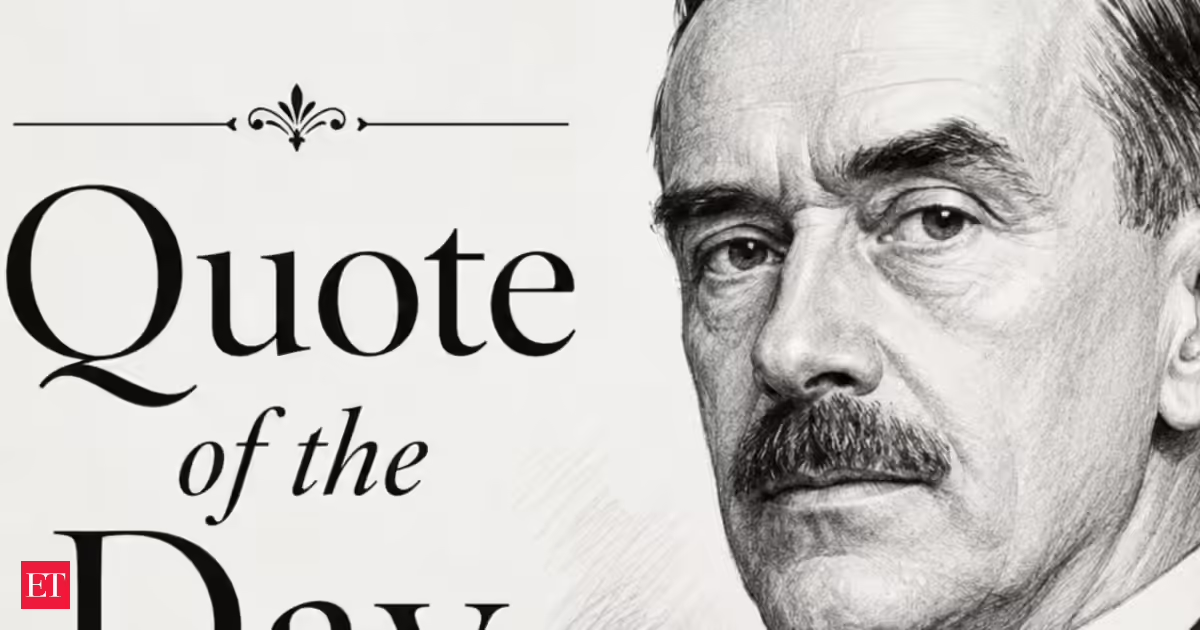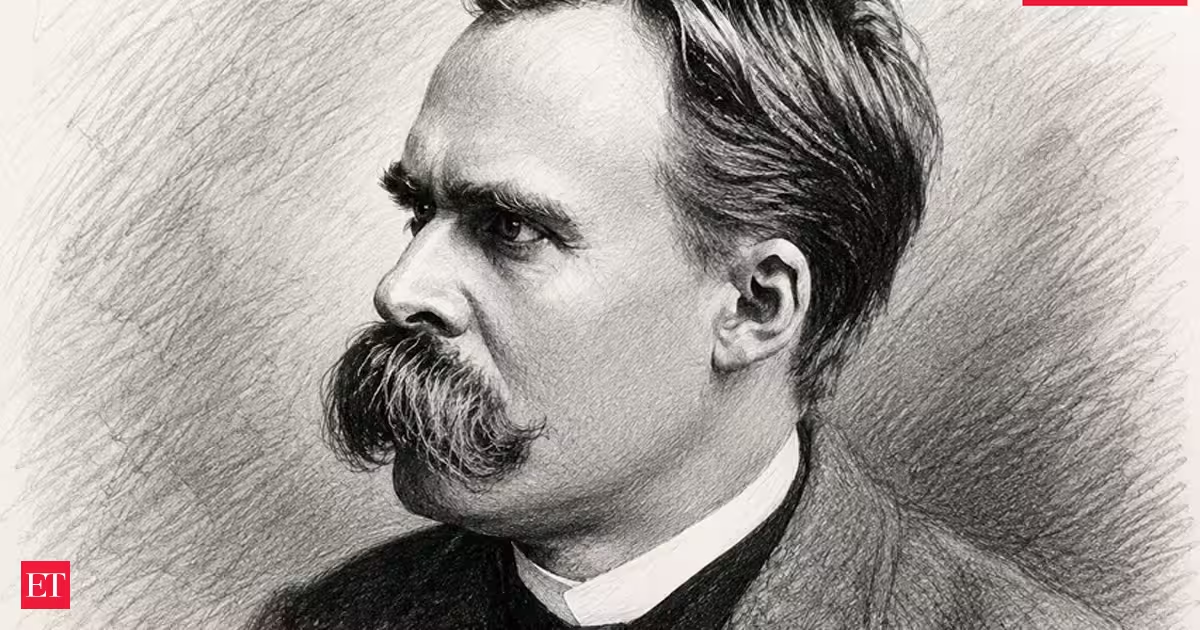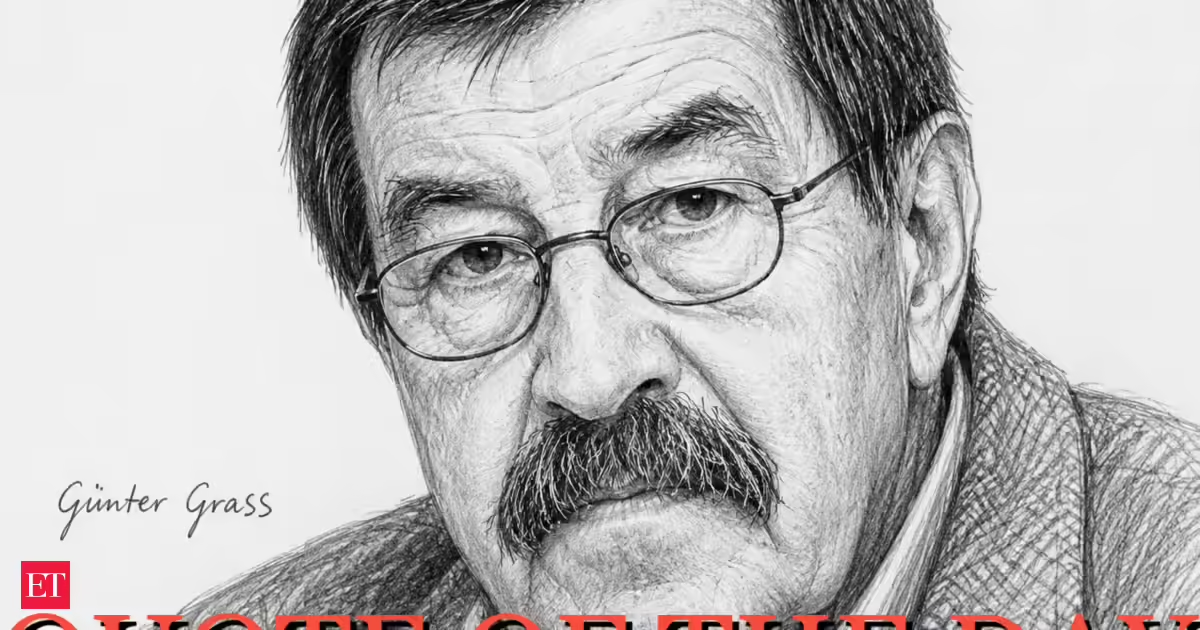
Quote of the Day: Günter Grass was a German novelist, poet, playwright, sculptor, printmaker, and artist whose influential works shaped post‑war literature. Born October 16, 1927, in Danzig (now Gdańsk, Poland), Günter Grass lived through the turbulence of World War II and became the literary spokesman for the German generation that grew up in the Nazi era and survived its aftermath. He passed away on April 13, 2015, in Lübeck, Germany.His extraordinary first novel, Die Blechtrommel (The Tin Drum, 1959), brought him international acclaim and established him as a leading voice in Germany’s cultural and political discourse, with his writing often confronting uncomfortable truths about history, identity, and morality. In recognition of his profound impact on literature, Grass was awarded the Nobel Prize in Literature in 1999.His career spanned decades, marked by bold explorations of human flaws, societal contradictions, and the complexities of truth. He was also politically active, using his voice to challenge authority and provoke reflection.Quote of the Day by Günter Grass: Among his many thought‑provoking reflections, Grass once said, “No idea stays pure. Even the flowering of art isn't pure. And the sun has spots. All geniuses menstruate. On sorrow floats laughter. In the heart of roaring lurks silence. In angles lean compasses. But the circle, the circle is pure” Günter Grass Quote: Context, meaning and interpretationThe quote reflects Grass’ worldview that perfection is elusive in human life, art, and thought. He recognized that contradictions, flaws, and paradoxes are inherent in existence. Yet, he pointed to the circle as a symbol of purity, an ideal form untouched by the imperfections that define everything else.Günter’s words suggest that purity is rare and perhaps unattainable in human endeavors. Ideas evolve, art carries imperfections, and even brilliance is marked by vulnerability. Grass juxtaposes sorrow and laughter, noise and silence, angles and compasses, to show that life is full of contradictions. The circle, however, stands as a metaphor for completeness and harmony, representing the unattainable ideal.His quote reminds us that imperfection is natural and should be embraced rather than denied. Dreams, art, and genius are all shaped by flaws, yet those flaws make them real and human. His reflection teaches us to accept contradictions, to find beauty in imperfection, and to strive for balance even when perfection is out of reach. The circle becomes a guiding symbol, an aspiration toward wholeness, even if life itself remains imperfect.
Quote of the Day by Nobel Prize-winning German novelist Günter Grass: ‘No idea stays pure, even the flowering of art isn't pure and the sun has…’
Nobel laureate Günter Grass, a pivotal post-war German writer, explored historical truths and human flaws in works like "The Tin Drum." His quote "But the circle, the circle is pure" symbolizes an elusive ideal of perfection amidst life's inherent contradictions and imperfections. Grass's legacy lies in confronting uncomfortable realities and embracing the human condition.
TL;DRAI
Nobel laureate Günter Grass held that no idea, artwork, or genius remains pure—only the abstract circle represents an unattainable ideal of wholeness. For tech leaders, a direct reminder that shipping imperfect iteration beats paralysis in pursuing the perfect architecture, model, or strategy.
396 words~2 min read