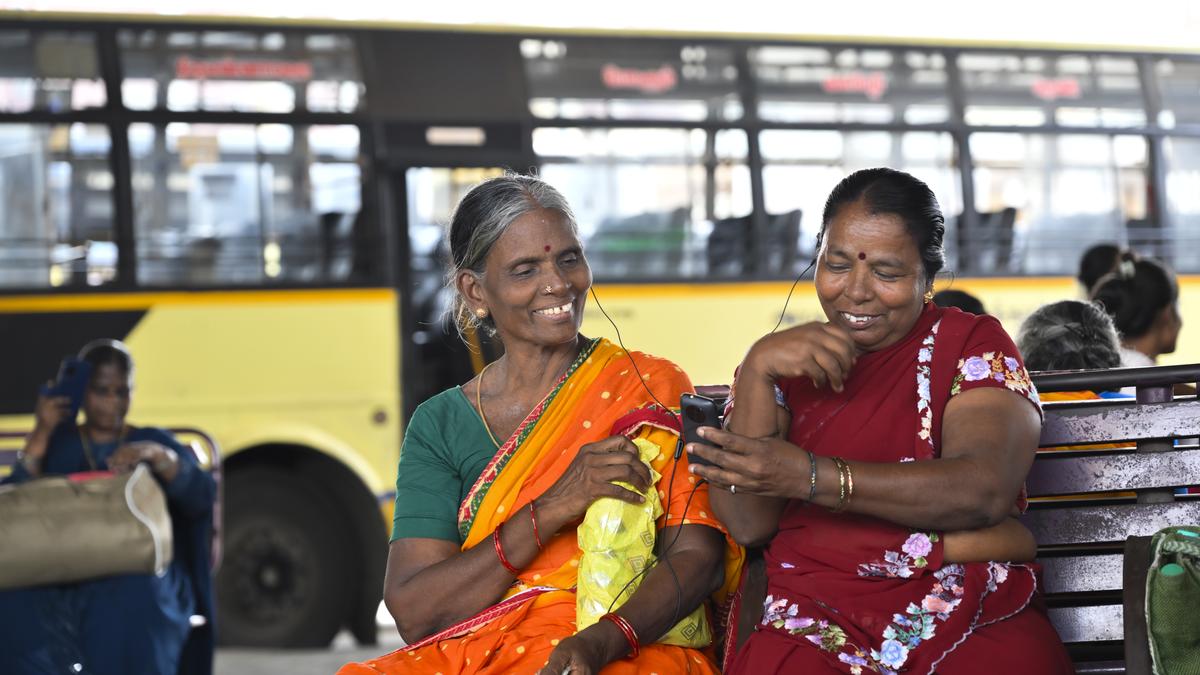
Earlier this week, a friend was talking about her young colleague being groomed by someone far senior to her at their corporate workplace. “Does she not have friends who could tell her that she is being manipulated?” asked a bunch of us, concerned. The answer, we quickly realised, was no.Amrita Mahale’s opinion piece in The Hindu helped all of us further contemplate my friend’s quandary of staging a potential intervention. In her article titled ‘The absolute necessity of female friendships’, Amrita states that female friendships can be an emotional, social, and political lifeline for women. “Our friends show us different ways of being in the world. They teach us how to take up space, how to challenge power and bargain with it,” she says. She adds that despite more access to smart phones today, there are gatekeepers who supervise and dictate a woman’s use of technology. This turns out to be much truer in women accessing friendships in rural areas and small towns. Take this statistic by the World Bank: it shows that rural women in Uttar Pradesh, Odisha, and Uttarakhand have only between one and three close social connections outside the family. She adds that by restricting a young wife’s ability to form friendships, and consult with peers, the family can ensure that the preferences of the husband and the in-laws prevail. This intense social isolation is bound to have an impact not just on joy, but also on other critical decisions on family planning, fertility, domestic work, paid work, and care giving. Another article in The Hindu speaks of how friendships critically inform the ideas of confidence and accessing support, especially as children.Despite this though, women continue to do what Amrita says — form meaningful friendships as an act of resistance. Last week, I met M. Meenakshi and M. Dhanalakshmi who were sharing a pair of earphones, listening to songs featuring former Chief Minister of Tamil Nadu, M. G. Ramachandran, and Tamil composer Ilaiyaraaja at Koyambedu bus terminus. “We are travelling to Vellore for a family friend’s event,” Dhanalakshmi said. They were excited about the aspect of going together in the bus with a gang and had purchased some cold Sprite to battle Chennai’s impossible heat, and some Fryums for snacks. While they did not wax eloquent about friendships, this bus ride, a break from their lives as domestic workers, was enough. It became even more pertinent to share it with their group. Without wasting words, this journey evidently became their act of resistance. I wish you many such small yet significant journeys on buses with friends and fryums, dear reader.WORDSWORTHTransgender Code of Practice Does The term Transgender Code of Practice primarily refers to the statutory guidance issued by the Equality and Human Rights Commission (EHRC) in the UK, which outlines how organizations can legally operate single-sex spaces and services based on biological sex while managing trans inclusion. The EHRC updated the code on May 21 this year. Now, transgender people can be excluded from single-sex spaces after court ruling.TOOLKITYou might want to click on this link by Quicksand Studio that tries to decode through simple photographs and statistics when women eat. Women, who are the primary caregivers of Indian households, occupy a central role in shaping household nutrition. However, despite taking on the mantle of shaping a family’s health, they often end up being the last to serve themselves a plate, invariably prioritising meat and vegetables for everyone else’s plate, and keeping just a small ladle for themselves. “These stories serve as a powerful reminder that nutrition happens in these kitchens, through the practical, and often difficult, choices women make every day,” the post says.NUMBERS TELL800 : Reporter Geetha Srimathi writes about how out of 800 pregnant women in Tamil Nadu who were followed between 2017 and 2022, a study by researchers from Sri Ramachandra Institute of Higher Education and Research found that nearly half were exposed to unsafe heat levels. This meant that after spending several hours in the dangerous heat of the city where temperatures soar to 41 degree Celcius during peak summer, women have little respite and return to homes that trap warmth and allow no recovery. Their bodies never get the chance to recuperate, she says. PEOPLE WE MEETNicky Chandam, a photographer from Manipur’s Imphal says that it has been a fair bit of a task to be an outspoken creator in the thick of an intense ethnic conflict in her State. The cost of her speaking up for a ceasefire has been intense attacks on her freedom and movement, especially because she is one of the only few women photographers in Manipur. “It has meant that I have not been able to mount a show in Manipur in two years,” she says, speaking to me in Chennai ahead of her exhibit titled ‘Manipur & Archives: A Visual Documentation of Live Art Over a Decade’. “Freelance photography, in itself, is a long uncertain journey. I have been on the journey because I am fascinated by visual language. But, I cannot imagine sustaining myself through photography in the Manipur ecosystem. I have not found any opportunities in the region that would allow me to create a sustainable career for myself in Manipur, nor do I foresee any in the future,” she says.
Gender agenda newsletter Want to hang out?
Gender agenda newsletter Want to hang out?
878 words~4 min read