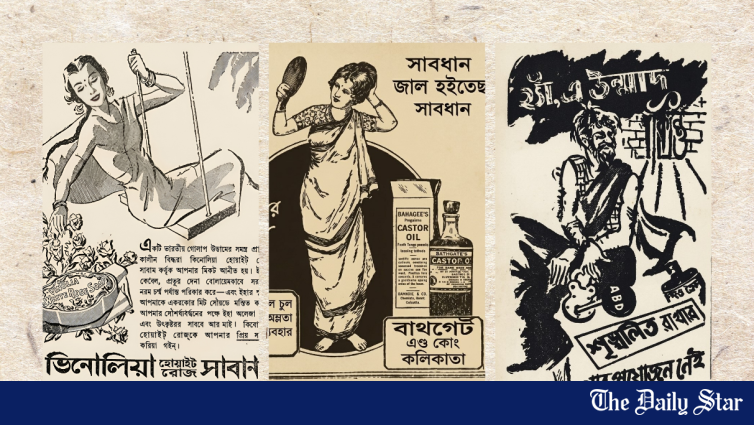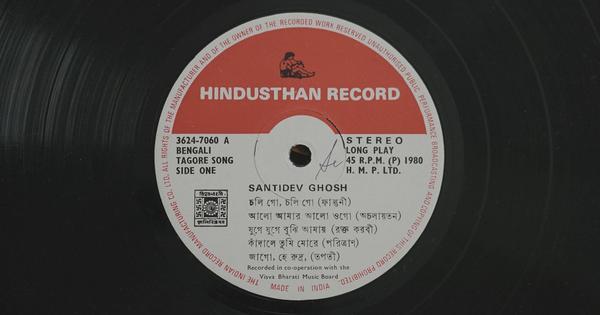
In the early years of the 20th century, strollers in Calcutta’s busy Dharamtola area would have found it difficult to miss the gleaming horns of gramophone players in the show window of ML Shaw & Company.Founded by businessman Motilal Saha, the store sold two kinds of mechanical devices imported from the West: bicycles and gramphones. Helping Saha establish the audio section of the emporium was the British firm Gramophone & Typewriter Limited, which aimed to turn these new “talking machines” into essential features of the drawing rooms of India’s affluent families.An old advertisement of ML Saha & Co.By then, the market for recorded sound was already fiercely competitive. Gramophone & Typewriter Limited had already made a bold move that put it ahead of its rivals. In 1902, on the invitation of the company’s head office in London, an American recording engineer named Frederick Gaisberg landed at Calcutta port.He frequented the city’s theatres and musical soirees to identify the most admired singers and their songs. He then invited them to his makeshift recording studio. By the end of the year, a corpus of 500 recordings on wax masters were sent off to the Gramophone & Typewriter Limited pressing factory in Hanover, Germany.The next year, 200 record titles were shipped back to India. They included songs by the vocalists Gauhar Jan and Lal Chand Boral. Connoisseurs could finally listen to music in the confines of their homes. But first, they had to buy gramophone players. Motilal Saha’s shop did brisk business.After Motilal Saha died in 1916, his son Chandi Charan Saha took over. By now the music industry had struck firm roots in India. Inward spiraling 78 rpm shellac discs had become the standard format for recorded music and Gramophone & Typewriter Limited was at the apex of the market.The company’s recording expeditions had produced songs in 12 Indian languages. It built its own record manufacturing factory in Sealdah. In a statement of where its priorities now lay, it dropped the word “typewriter” from its name.Having tasted the exciting world of innovation, Chandi Charan Saha also looked beyond the music industry and began to explore business options in the other media technologies that were capturing the imagination of affluent Indians. He acquired the dealership rights for the Zeiss Ikon cinema projector. In the next decade, he expanded the dealership of the Zeiss projector and lenses to South and South East Asia.Saha shifted the headquarters of the projector venture to Rangoon. He became the sole distributor of the Zeiss Ikon products from Aden to Singapore. Back home in Calcutta, ML Shaw & Company became a leader in the gramophone and disc market.Chandi Charan Saha realised that in the rapidly expanding market of recorded music, he could do much more than selling and distributing gramophones and discs. In 1931, he went to Europe. In Berlin he met the legendary engineer Georg Neumann, from whom he learnt the latest methods of sound recording. He began to think about starting his own recording company.That year, Rabindranath Tagore was on a lecture tour of Europe. Chandi Charan Saha met the poet in Heidelberg and told him that he wanted to start a swadeshi recording company.Carefully preserved fascimile of the first record released by Hindusthan Records.Tagore recalled recording sessions in which he had participated a quarter century before. In the wake of the Partition of Bengal in 1905, when Calcutta had taken to the streets to protest against Curzon’s decision and began to boycott foreign goods, Hemendra Mohan Bose had recorded patriotic songs sung by Tagore on indigenously-made wax cylinders. The songs were released under Bose’s Swadeshi Records label.But technology had progressed since then. The Gramophone Company’s shellac discs had made wax cylinders almost obsolete. And now, here was a young man who aimed to offer competition to the multinational Gramophone Company. Tagore gave the new venture his blessings and promised to participate in it.In 1932, Saha established Hindusthan Musical Products & Variety Syndicate Ltd – popularly known as Hindusthan Records. Tagore was one of the company’s first shareholders. The first record cut by the new company featured Tagore’s voice: the song Tobu Mone Rekho on one side and a recitation of Ami Jokhon Babar Moton Hobo on the other.
Hindusthan Records: How the shepherd boy playing a flute brought music into Indian homes
From Tagore’s voice and Rabindra Sangeet to SD Burman’s melodies, the record company reinvented has itself for the YouTube era.
1,811 words~8 min read