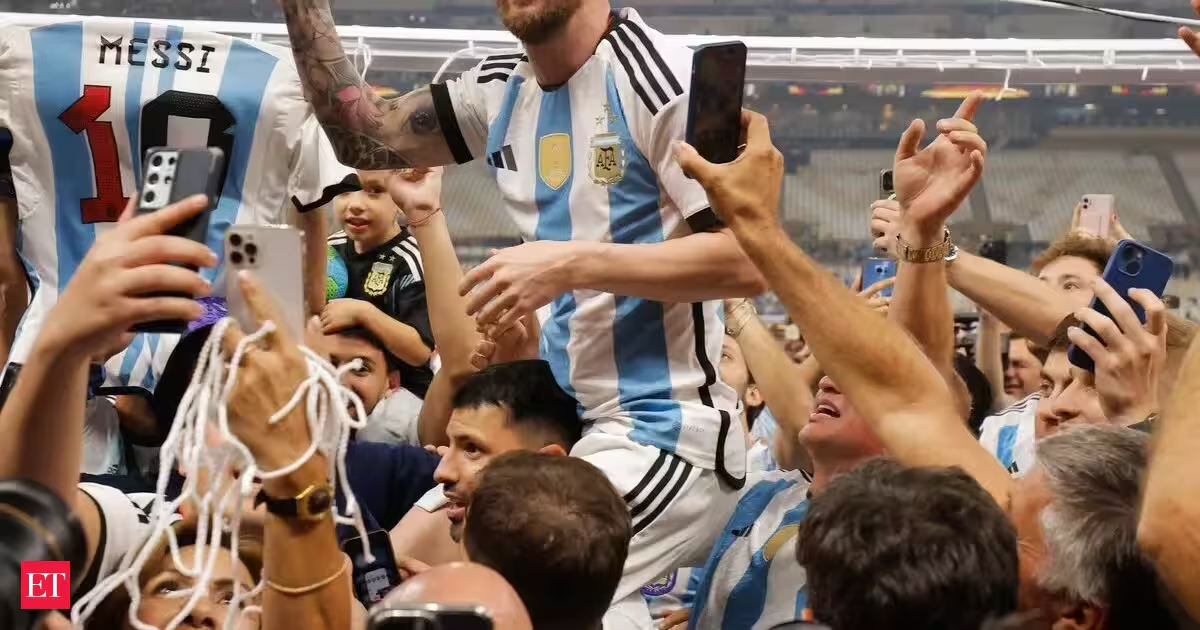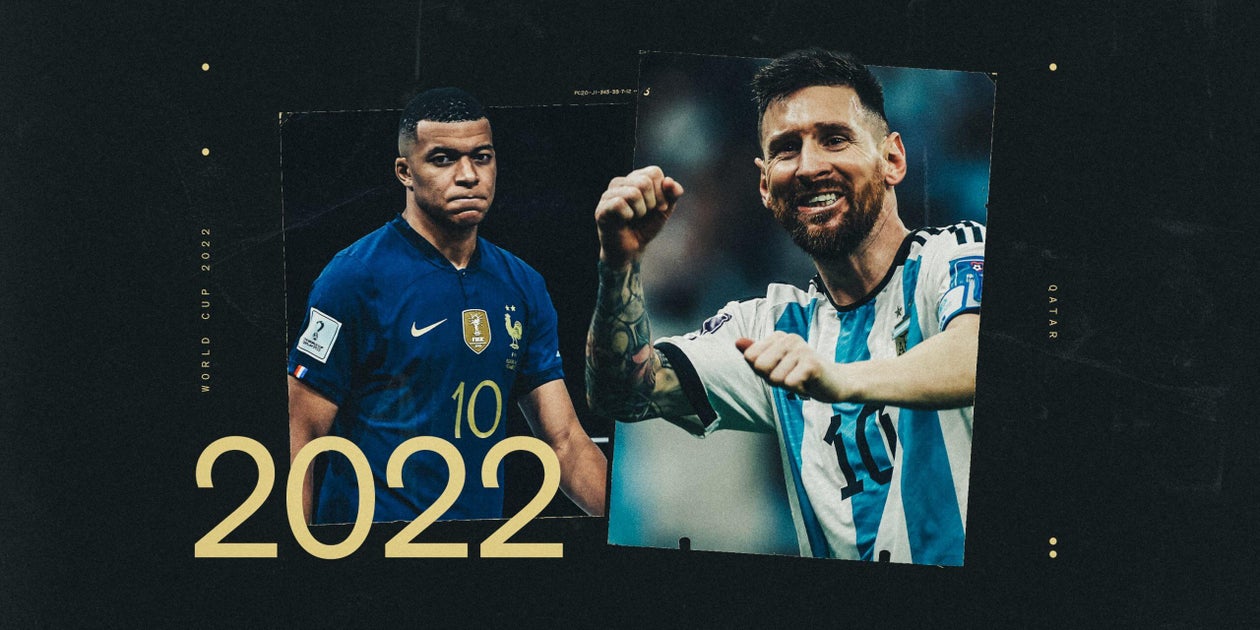
Here it it – the final instalment of our World Cup series. Previously, we’ve looked at Uruguay in 1930, Italy in 1934 and again in 1938, Uruguay in 1950 and West Germany in 1954, before a Brazilian double in 1958 and 1962.Next came an England success in 1966, another Brazil win in 1970, a second West Germany triumph in 1974, Argentina’s first in 1978, Italy’s third in 1982, Argentina’s second in 1986, West Germany’s third in 1990 and Brazil’s fourth World Cup in 1994, before France joined the party on home soil in 1998.In the 21st century, Brazil celebrated an unprecedented fifth title in 2002, Italy a fourth in 2006, Spain got involved in 2010, Germany won their fourth in 2014 and France won their second in 2018.Now, it’s time for Argentina’s third title.IntroductionIs it really already four years ago? Well, not quite — three and a half years, thanks to the tournament hosts Qatar needing to move the World Cup to the northern hemisphere winter.After a spell of European dominance — Italy, Spain, Germany and France had won the previous four tournaments — the favourites for this tournament were Brazil and Argentina. It was the latter who emerged victorious, largely by basing the side around the 35-year-old Lionel Messi.The managerLionel Scaloni made one World Cup appearance as a player, in Argentina’s memorable 2-1 second round victory over Mexico in 2006. A traditional right-back — solid and energetic rather than spectacularly creative — he spent the majority of his career in Europe, most notably with Deportivo La Coruna when they won La Liga in 1999-2000, and was a starter for West Ham United in the 2006 FA Cup final.This was his first managerial appointment. He’d worked as an assistant to Jorge Sampaoli at World Cup 2018. After Argentina’s disastrous tournament he was appointed as caretaker manager, then interim manager up until the end of a fairly underwhelming Copa America in 2019 when Argentina could only beat Venezuela and, erm, Qatar.But Scaloni was surprisingly asked to continue until the World Cup. And maybe that win over Qatar was some kind of omen. By the time they actually arrived in Qatar, they’d gone 36 games unbeaten — a run that promptly ended when they lost their opener 2-1 to Saudi Arabia.Lionel Scaloni, understandably, built his team around Lionel Messi (Alexander Hassenstein/Getty Images)TacticsAs often seems to happen, the side that started the tournament had little resemblance to the one that ended it. Scaloni opened with a rough 4-4-2 system, with Messi playing just off Lautaro Martinez. He then used 4-3-3, switched back to 4-4-2, moved to 5-3-2 midway through a nervy win over Australia and stuck with it for the penalty shootout win over Netherlands, then went back to 4-4-2 and finally ended up with the 4-3-3 again for the final.But it was as much about individuals as systems. Youngster Enzo Fernandez didn’t start the first two matches, but was brought on just before the hour mark of the must-win second match against Mexico in a holding midfield role — somewhat different from the attacking role he now plays for Chelsea — and Argentina suddenly had more balance. Alexis Mac Allister, another who didn’t start the opener, became a regular alongside him.Up front, Julian Alvarez came into the side in place of Martinez and was crucial, not merely for his goals — although he scored two in the 3-0 semi-final win over Croatia — but because he offered the running Messi could no longer provide.
How Argentina won the 2022 World Cup: Penalty shootouts, that Martinez save and Messi’s crowning glory
Michael Cox's series looking back at each World Cup winner concludes with a look at Argentina's victory in Qatar
1,448 words~7 min read