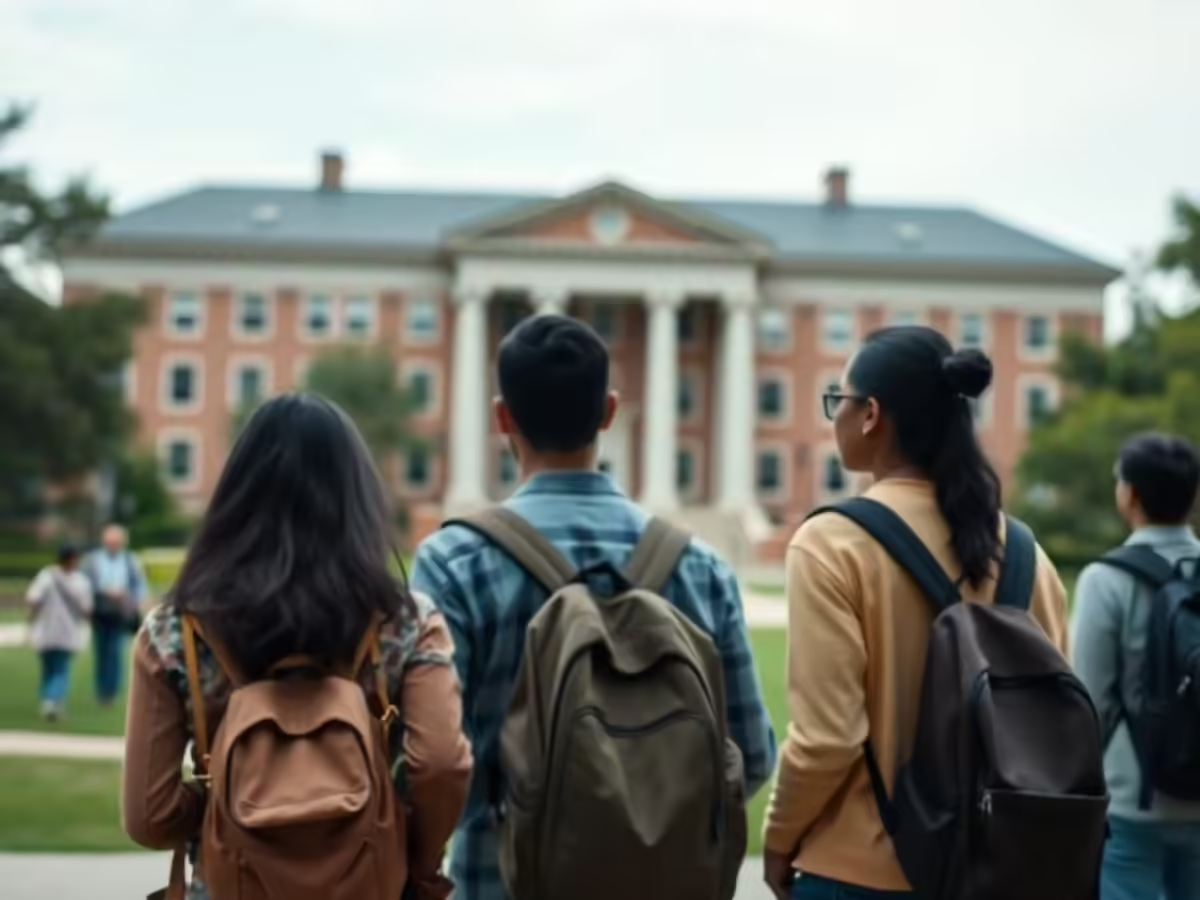
New Delhi: A final-year engineering student at a mid-tier university in the US thought he had landed the perfect job. The salary was competitive, the title legitimate and the Texas staffing company had sent a polished offer letter. However, something felt off.The student, who hailed from India, cross-checked the employer in the US Citizenship and Immigration Services (USCIS) Employer Data Hub, only to find that the company had no history of filing H-1B petitions in the public record. The offer, he later realised, was fraudulent."What was significant was not the fraud itself. What was significant was that a 23-year-old student had developed the instinct to verify before accepting," said Sanjay Laul, founder of MSM Unify. "That behavioural change is now standard practice within informed student networks."Graduating Indian students in the US are conducting comprehensive background checks on prospective employers, internship providers and staffing firms before accepting offers amid heightened scrutiny of the optional practical training (OPT) programme and growing concerns over immigration compliance, said study abroad consultants.Also read | The cheapest degree abroad may not be in English and Indian students are finally figuring that outThe circumspection comes in the wake of the US authorities busting a fraud network allegedly exploiting the OPT programme to arrange fake employment for more than 10,000 overseas students.Filters OnIndian students in particular had reason to exercise increased caution, as they comprised 48.8% of the OPT participants in the US in the academic year 2024-25, according to the 2025 Open Doors report. The figure marked a 47.3% surge from the previous year, signalling their growing dependence on post-study work pathways in America as well as increasing stakes in immigration compliance and employer legitimacy.
Wild West! Indian students wary of smoking guns in US jobs - The Economic Times
Indian students in the US are now rigorously vetting employers before accepting job offers. This caution stems from heightened scrutiny of the Optional Practical Training program and growing concerns about immigration compliance. Students are verifying company sponsorship history and seeking peer intelligence to ensure legitimacy.
569 words~3 min read