Multi-Model Chaining: A Practical Guide to Wiring AI Models Together Without Losing Your Mind
Last month I burned three days on a pipeline that looked genius on a whiteboard and fell apart in production at step two. The design was simple: Gemini 1.5 Pro reads a 200-page PDF, extracts structured data, passes it to Claude Opus for reasoning, then GPT-4o writes the final report. Clean. Modular. Completely broken. The structured data Gemini returned had inconsistent field names on 12% of documents, and Claude hallucinated corrections rather than failing loudly. The output looked great. It was wrong. Nobody caught it for two days. That experience rewired how I think about chaining models, and this post is the distillation of what I learned — not the theory, the actual mechanics.
Why You Chain Models in the First Place
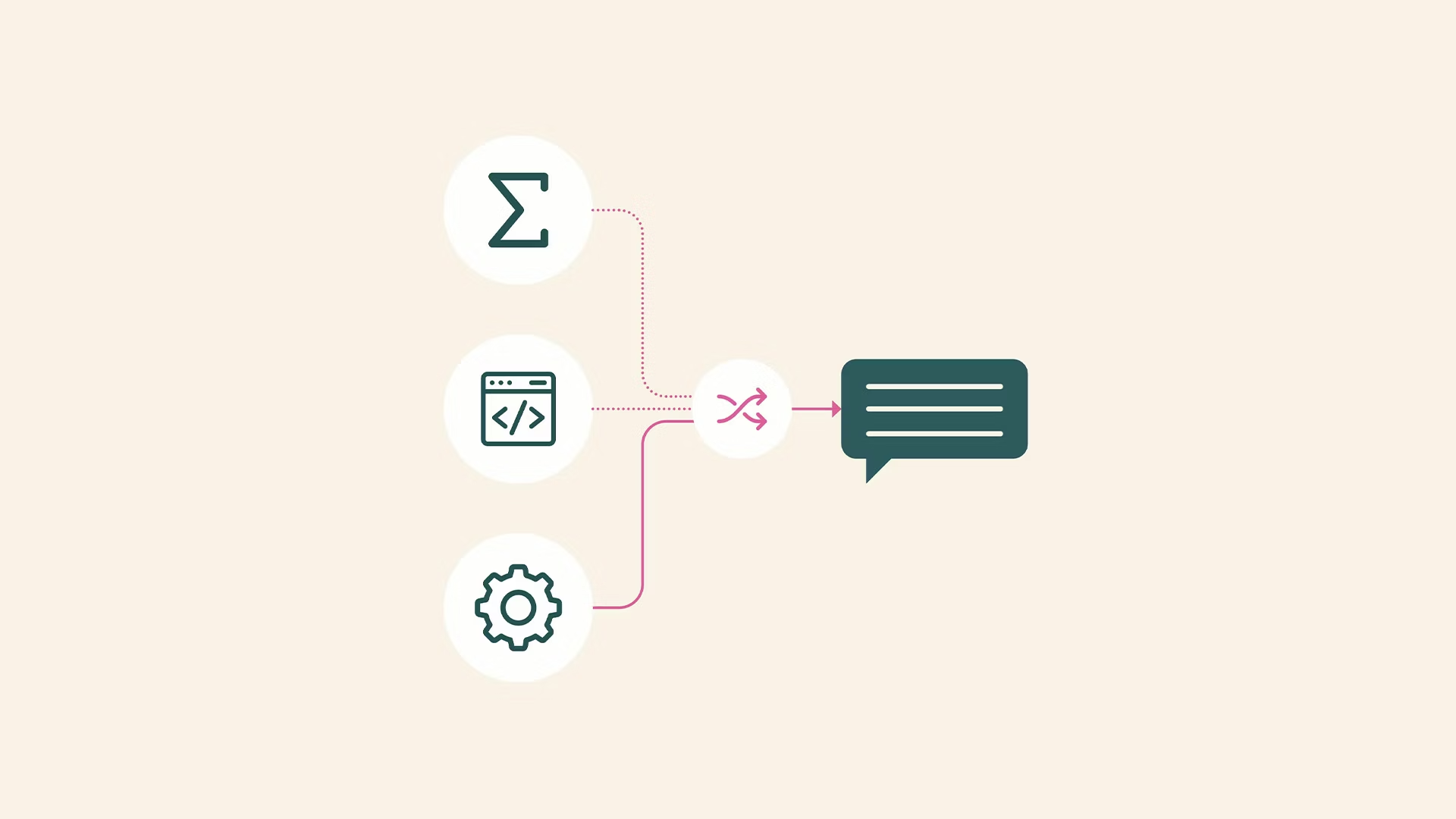
Single-model pipelines fail at the edges. You hit context limits when processing long documents. You overpay when a cheap model can handle 80% of your steps. You leave accuracy on the table by forcing one model to do tasks it is mediocre at. Routing between models is the solution to all three — but it introduces coordination overhead that will bite you if you treat the models as interchangeable black boxes.