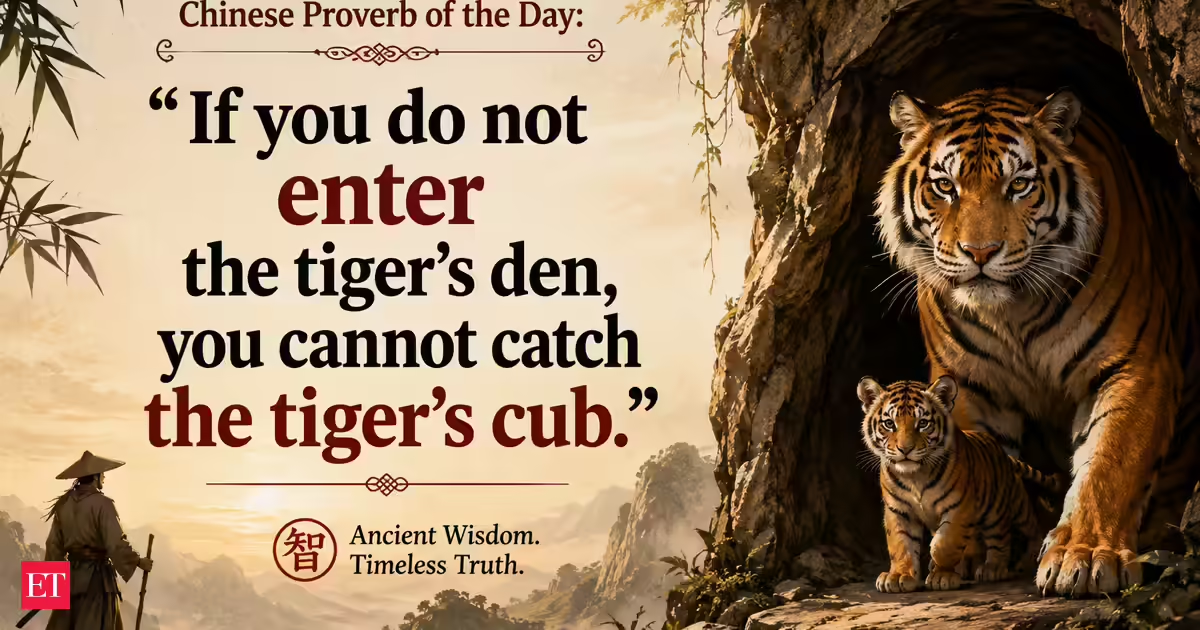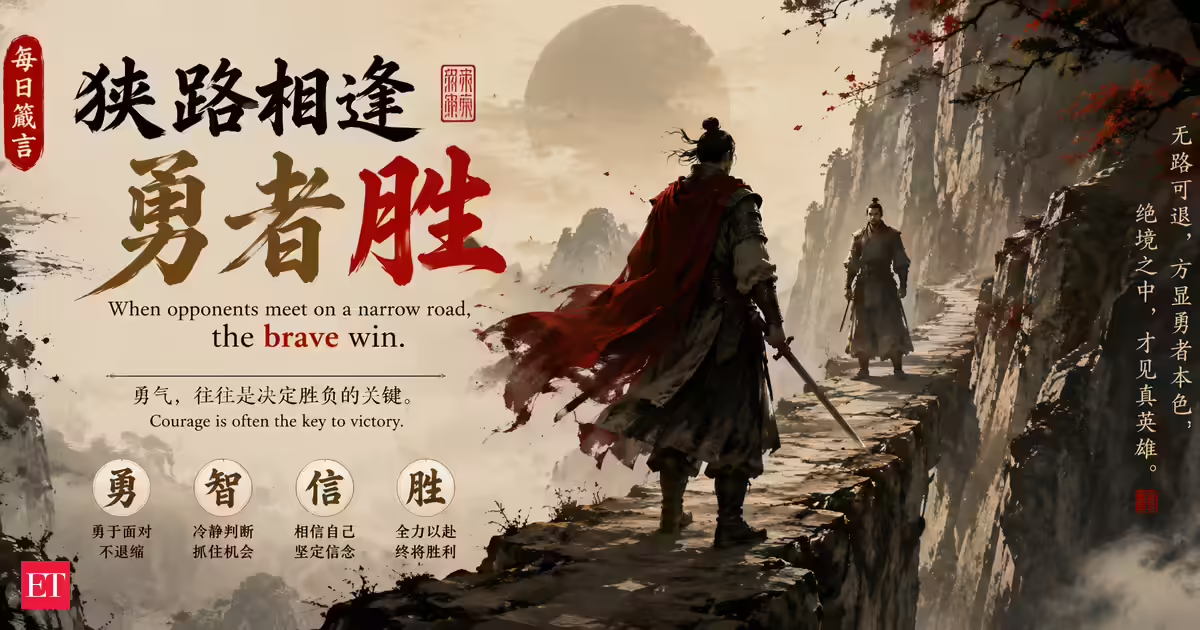
Chinese proverbs have long offered timeless insights into human nature, personal growth, and emotional wisdom. Rooted in centuries of philosophical traditions such as Confucianism, Taoism, and Buddhism, these sayings often address universal struggles that remain relevant today.“He who is afraid of suffering, is already suffering fear. Out of fear, true creativity is blocked.”This thought-provoking proverb highlights one of the greatest obstacles people face in life: fear itself. While suffering is often uncertain and may never arrive, fear creates immediate emotional distress. The proverb suggests that worrying about possible pain, failure, or hardship can become a form of suffering in its own right. More importantly, it warns that fear limits imagination, innovation, and personal potential.In a world where many people hesitate to pursue dreams because of uncertainty, this ancient wisdom offers a powerful reminder that fear can be more restrictive than the challenges we seek to avoid.You Might Also Like:The Meaning of the ProverbAt its core, the proverb teaches that fear creates its own burden. A person who constantly worries about failure, rejection, criticism, or disappointment often experiences emotional stress before anything has actually happened. The anticipated suffering becomes a source of real suffering.The second part of the proverb is equally important: “Out of fear, true creativity is blocked.” Creativity requires openness, curiosity, experimentation, and courage. Fear, however, encourages caution, self-doubt, and avoidance.When individuals become preoccupied with what could go wrong, they often stop exploring what could go right. The proverb reminds us that fear narrows possibilities, while courage expands them.You Might Also Like:Understanding the Psychological Truth Behind the SayingThe wisdom of this proverb aligns closely with modern psychology. Fear is a natural human emotion designed to protect us from danger. However, many fears today are not physical threats but mental and emotional concerns. People fear embarrassment, failure, rejection, uncertainty, and change.These fears can create anxiety that limits growth. Someone who fears making mistakes may never start a new project. A person afraid of rejection may avoid meaningful relationships. An entrepreneur may abandon a promising idea because of the possibility of failure.In each case, fear becomes a prison that exists largely within the mind. The proverb teaches that while challenges may be difficult, living under the constant weight of fear often causes even greater emotional suffering.You Might Also Like:How This Proverb Applies in Everyday LifeThe relevance of this proverb can be seen in many aspects of daily life.In education, students often avoid difficult subjects because they fear failure. Yet growth frequently comes through challenges rather than comfort.In careers, many people remain stuck in unfulfilling situations because they fear taking risks or pursuing new opportunities.The proverb also applies to relationships. Fear of vulnerability can prevent people from forming deep connections, expressing feelings, or rebuilding trust after disappointment.Artists, writers, musicians, and entrepreneurs experience this lesson regularly. Creativity thrives when people are willing to experiment, fail, learn, and try again. Fear of criticism often stops ideas before they have a chance to develop.Even personal growth depends on overcoming fear. Every major transformation requires stepping into uncertainty.The Deeper Meaning of the ProverbBeyond its practical message, the proverb carries profound philosophical significance. One deeper lesson is that fear often comes from attachment to certainty. Human beings naturally want guarantees, but life rarely provides them.The proverb encourages acceptance of uncertainty rather than resistance to it. Another important theme is the distinction between imagination and reality. Fear frequently focuses on events that have not occurred and may never occur. In many cases, people suffer more from imagined outcomes than actual experiences.The saying also emphasizes inner freedom. A person controlled by fear becomes limited by self-imposed boundaries. A person who accepts risk and uncertainty gains greater freedom to act, create, and grow.Most importantly, the proverb teaches that courage is not the absence of fear. Courage is the willingness to move forward despite it.Creativity and the Fear BarrierThe proverb's observation about creativity deserves special attention. Throughout history, innovation has required individuals to challenge assumptions, experiment with new ideas, and accept the possibility of failure.Fear often discourages exactly these behaviors. When people worry excessively about criticism, they become reluctant to express original thoughts. When they fear mistakes, they avoid experimentation. When they fear judgment, they suppress their authentic voices.Many great inventions, artistic achievements, scientific discoveries, and social movements emerged because individuals chose courage over fear.The proverb reminds us that creativity flourishes where fear loses its control. Whether someone is writing a book, starting a business, learning a skill, or solving a problem, imagination grows stronger when people allow themselves to take risks.Why This Proverb Is Especially Relevant TodayModern society presents countless opportunities, but it also creates new sources of fear. Social media exposes people to constant comparison and public scrutiny. Fear of judgment can discourage self-expression and innovation.Economic uncertainty often makes individuals hesitant to pursue ambitious goals. Fear of failure can become stronger than the desire for success.Many people also struggle with perfectionism. They postpone action while waiting for ideal conditions, fearing mistakes along the way.The proverb offers a valuable counterbalance to these pressures. It reminds us that growth rarely occurs within the boundaries of complete comfort and certainty.In a rapidly changing world, adaptability and creativity have become essential qualities. Both require the willingness to face uncertainty.The Underlying Theme: Courage Unlocks Human PotentialThe central theme of this Chinese proverb is courage. It teaches that fear, while natural, should not be allowed to control decisions or define possibilities.Another major theme is resilience. Difficulties are part of life, but anticipating them excessively can become more damaging than the difficulties themselves. The proverb also highlights personal freedom. People discover their capabilities when they act despite uncertainty rather than waiting for fear to disappear.Most importantly, it emphasizes creative potential. Human imagination, innovation, and growth flourish when individuals are willing to move beyond fear-based thinking.Lessons for Personal GrowthThis proverb offers valuable guidance for anyone pursuing self-improvement. It encourages people to focus on action rather than endless worry. Progress often begins when individuals take a small step despite feeling uncertain.The saying also reminds us that mistakes are part of learning. Fear of failure frequently prevents growth, while acceptance of imperfection creates opportunities for development.Another lesson involves self-confidence. Confidence does not come before action—it often develops because of action.The proverb encourages people to trust their ability to adapt and learn rather than seeking guarantees before moving forward. Growth begins when fear stops being the primary decision-maker.“He who is afraid of suffering, is already suffering fear. Out of fear, true creativity is blocked” is far more than a Chinese proverb. It is a timeless reflection on the relationship between fear, creativity, courage, and personal growth.The saying reminds us that fear often creates unnecessary suffering by trapping us in imagined futures and limiting our willingness to act.In a world filled with uncertainty, its wisdom remains deeply relevant. Whether pursuing dreams, building relationships, creating art, or navigating change, people unlock their greatest potential when they choose courage over fear. Life is not defined by the challenges we avoid, but by the possibilities we discover when we dare to move beyond them.
Chinese Proverb of the Day: 'He who is afraid of suffering, is already suffering...'-Life lessons on courage, creativity, resilience, and why fear often causes more suffering than failure itself
Ancient Chinese wisdom reveals fear is a self-inflicted suffering. This fear stifles true creativity and innovation. The proverb highlights how worrying about potential hardship causes immediate distress. It encourages embracing uncertainty and taking action. Courage allows individuals to overcome these mental barriers. This unlocks human potential and fosters personal growth.
1,170 words~5 min read