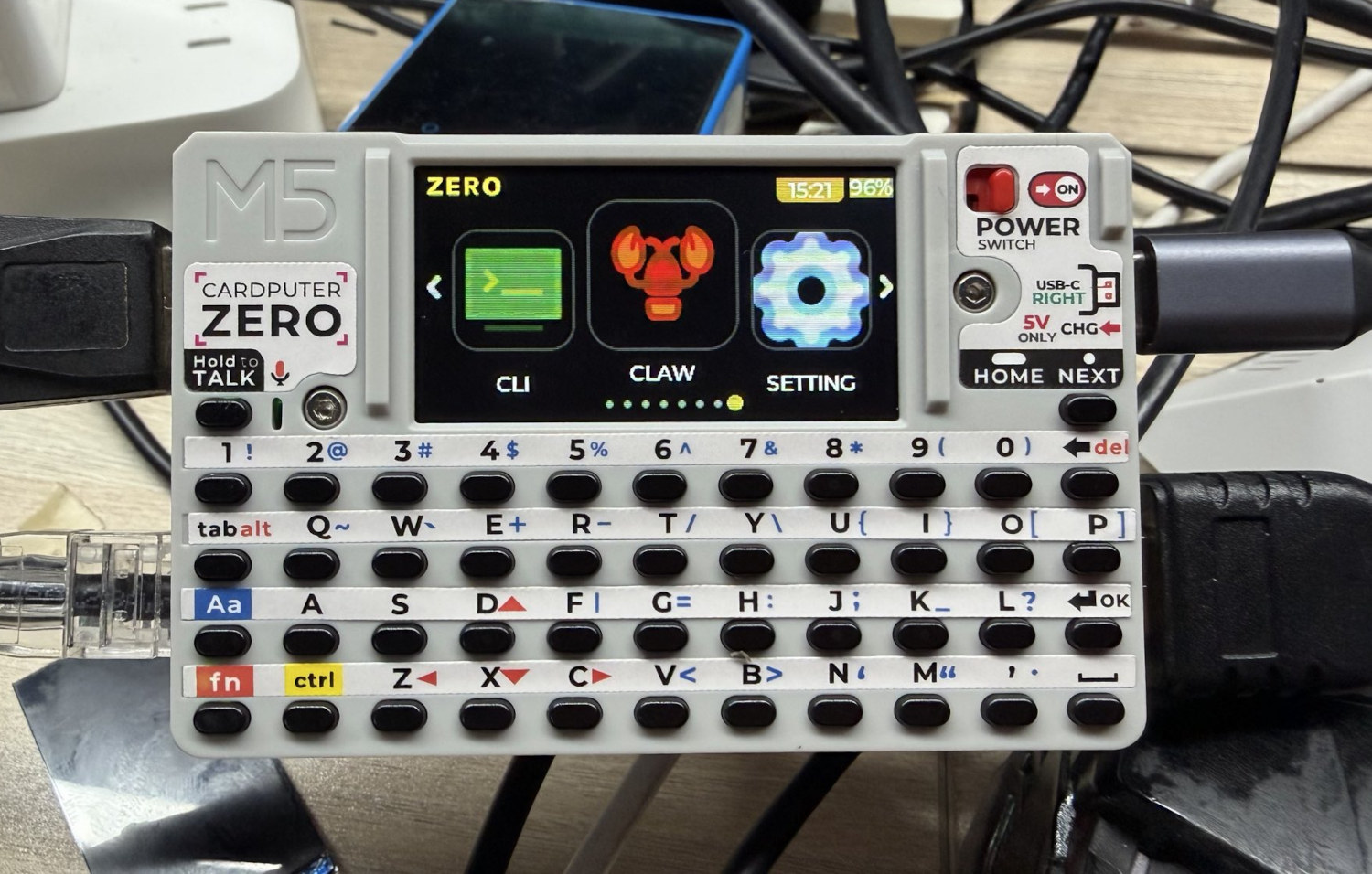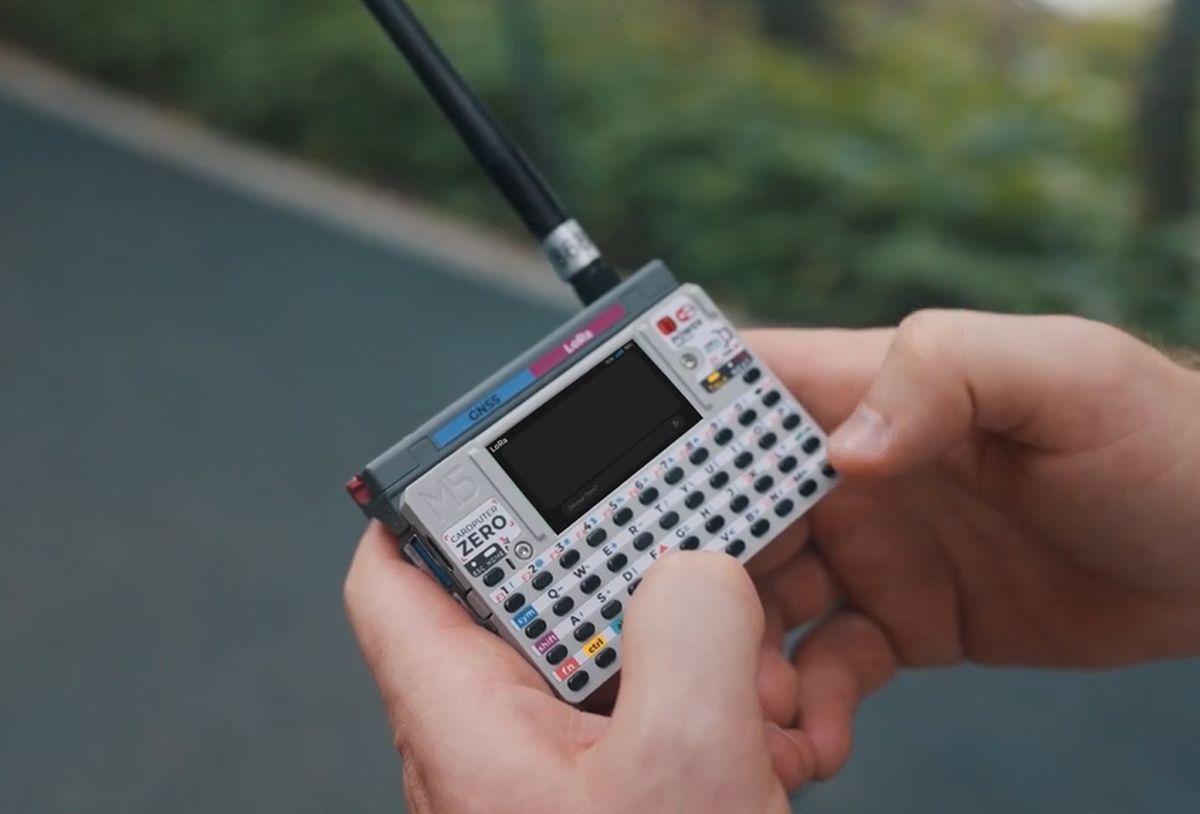
The M5Stack CardputerZero is a tiny, portable computer that’s about the size of a small stack of business cards. But despite its compact size, it’s a full-fledged PC with a display, keyboard, and support for Linux-based software.M5Stack has been selling similar devices under the Cardputer brand for a few years, but up until now they’ve featured ESP32 microprocessors and far too little memory to support Linux. But the CardputerZero is powered by a Raspberry Pi Compute Module 0, which means it’s got the same Broadcom BCM2710A1 quad-core Arm Cortex-A53 processor as a Raspberry Pi Zero 2W, along with 512MB of LPDDR2 and support for WiFi 4 and Bluetooth 4.2 LE.That does make the new model more expensive. M5Stack is running a Kickstarter crowdfunding campaign for the new CardputerZero, with pledge levels starting at $79. By comparison, the most recent ESP32 model is the M5Stack Cardputer Adv, which sells for $30.But the new model is a much more capable device. It has a 1.9 inch, 320 x 240 pixel, 262-thousand color display and higher-performance processor as well as improved I/O.M5Stack offers two versions of the little computer. The standard CardputerZero is going for $119 during crowdfunding, comes with a 32GB microSD card, and features an 8MP camera, a gyroscope and accelerometer. The $89 CardputerZero Lite, meanwhile, has no camera, no motion sensors, and ships without an SD card.Both models have an HDMI port for 1080p/30fps video output, two USB 2.0 Type-C ports and a USB Type-A port, a 10/100 Ethernet port, and a 3.5mm audio jack as well as a microSD card reader for removable storage as well as expansion ports with access to I2C, SPI, UART, USB, GPIO, and 5V power interfaces, making it possible to attach an optional LoRa module or other Grove or M5Stack add-ons.The CardPuter measures 85 x 54 x 23.1mm (3.35″ x 2.13″ x 0.91″) and has a 1500 mAh battery, a 1 watt speaker. There’s also an IR transmitter and receiver.While the 46-key “matrix keyboard” doesn’t look incredibly comfortable to type on, at least there is a keyboard, which is something that sets this pocket computer apart from a device like the work-in-progress Flipper One (although despite its weird design, the Flipper device has a much faster processor, faster wired and wireless network, faster USB ports, and even an M.2 slot for optional 4G or 5G radios).thanks Sword!
CardputerZero pocket computer combines the brains of a Raspberry Pi Zero 2W with a tiny display, keyboard, and battery - Liliputing
CardputerZero pocket computer combines the brains of a Raspberry Pi Zero 2W with a tiny display, keyboard, and battery
393 words~2 min read