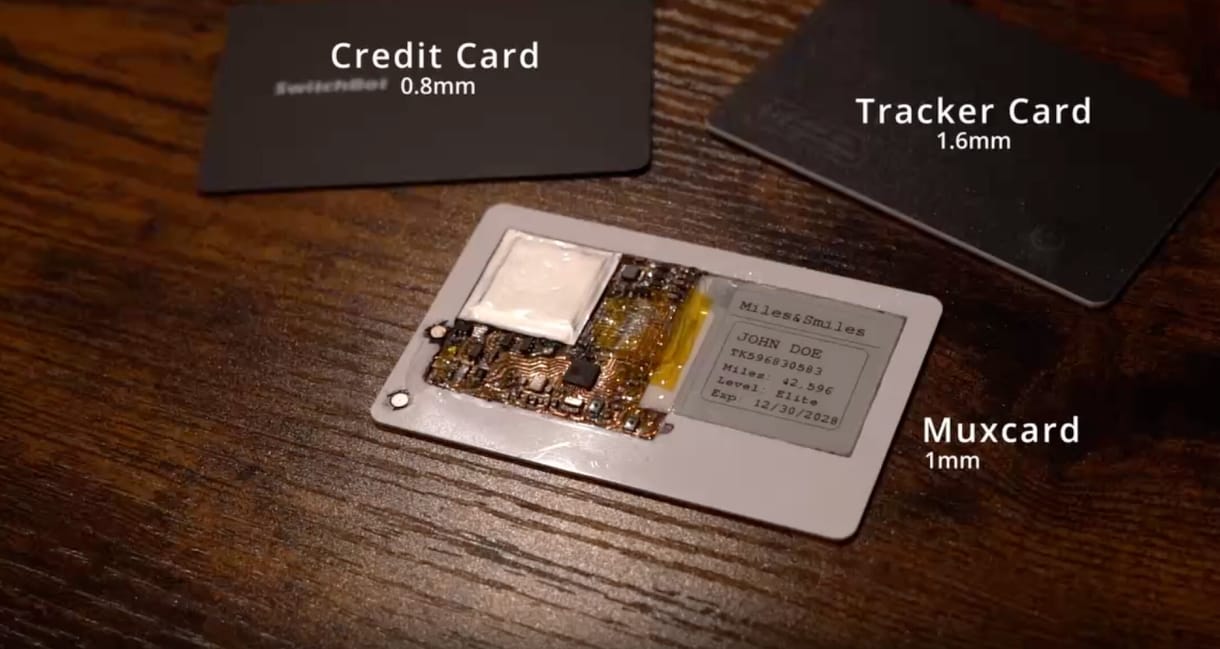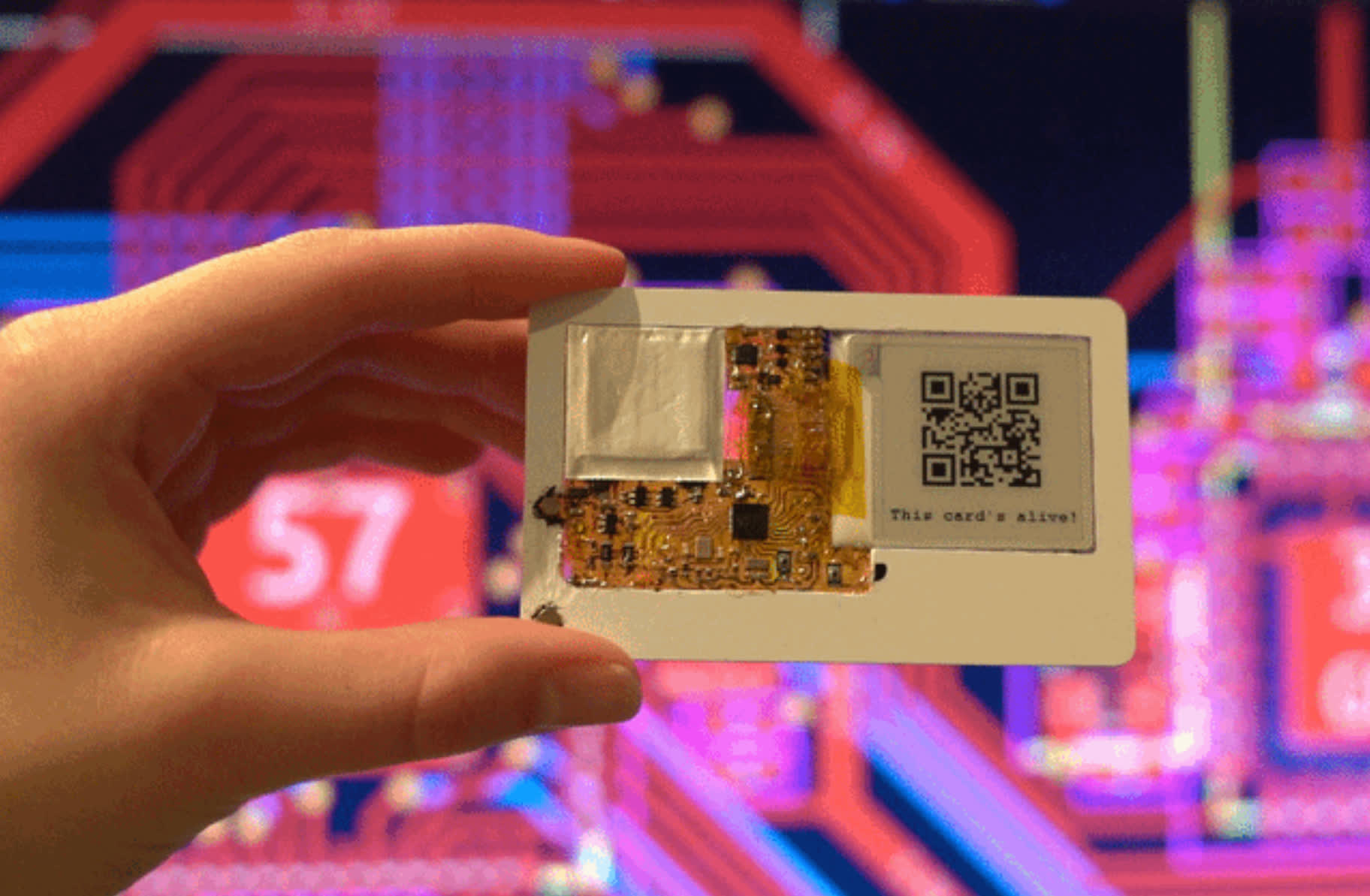
IN BRIEF: We've seen plenty of tiny computers described as being credit card-sized, but that usually means they have roughly the same footprint as a payment card – rather than actually fitting inside a wallet. One Redditor decided to tuen the phrase into a literal one, building a functioning, battery-powered computer that is around 1mm (0.039 inches) thick.
For years, Raspberry Pi boards and similar devices have been marketed as credit card-sized computers. But while that description is fair in terms of length and width, it's not so accurate when it comes to thickness, ports, headers, and the general likelihood of one sitting comfortably next to your Visa.
Reddit user krauseler wanted to find out what would it take to build a computer that really is the size of a credit card. The answer, unsurprisingly, was months of tinkering, a lot of compromises, and a ton of engineering headaches.
The resulting prototype is fragile, but it works. It's built around an ESP32-C3FH4 SoC with Wi-Fi and Bluetooth LE, and includes NFC read/write support, a 1.54-inch 200 x 200 e-paper display, an accelerometer, and an ultra-thin LiPo battery with charging circuitry and power path management.
The creator admits that calling it a computer "might be a little overstatement," though it technically fits the definition. It's not going to replace your laptop, your Raspberry Pi, or even most microcontroller boards, but that's hardly the point. The achievement is making all of this work inside a form factor where even a connector can become too bulky.