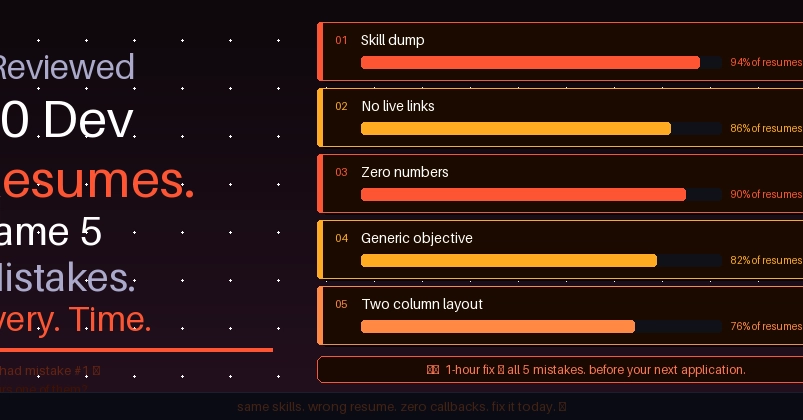
The gap between candidates who get callbacks and candidates who get silence has almost nothing to do with how much experience they have.
Short Answer: Your resume is not being read but being scanned for approximately 25 seconds by someone who is already behind on their real work and is looking for a reason to close the tab, not open a calendar invite. Most resumes that land in a recruiter or hiring manager’s queue fail not because the candidate is unqualified but because the document was written as a career biography instead of a targeted filtering instrument. A resume has exactly one job: to create enough credibility in a specific technical area that someone schedules 30 minutes to find out more. The candidates who get callbacks are almost never the ones with the most experience. They are the ones whose resumes are the most precise match, in vocabulary and in demonstrated impact, to the specific role they are applying for. Everything else is noise.
What actually happens when your resume lands
Most candidates imagine their resume landing in an inbox, getting opened, and receiving careful attention from a thoughtful human being who is genuinely trying to assess their potential. This is almost never what happens.