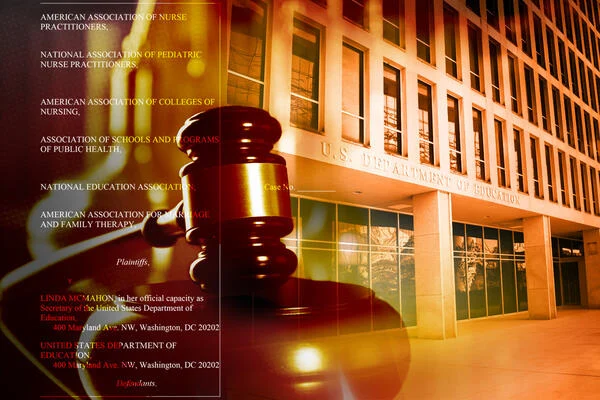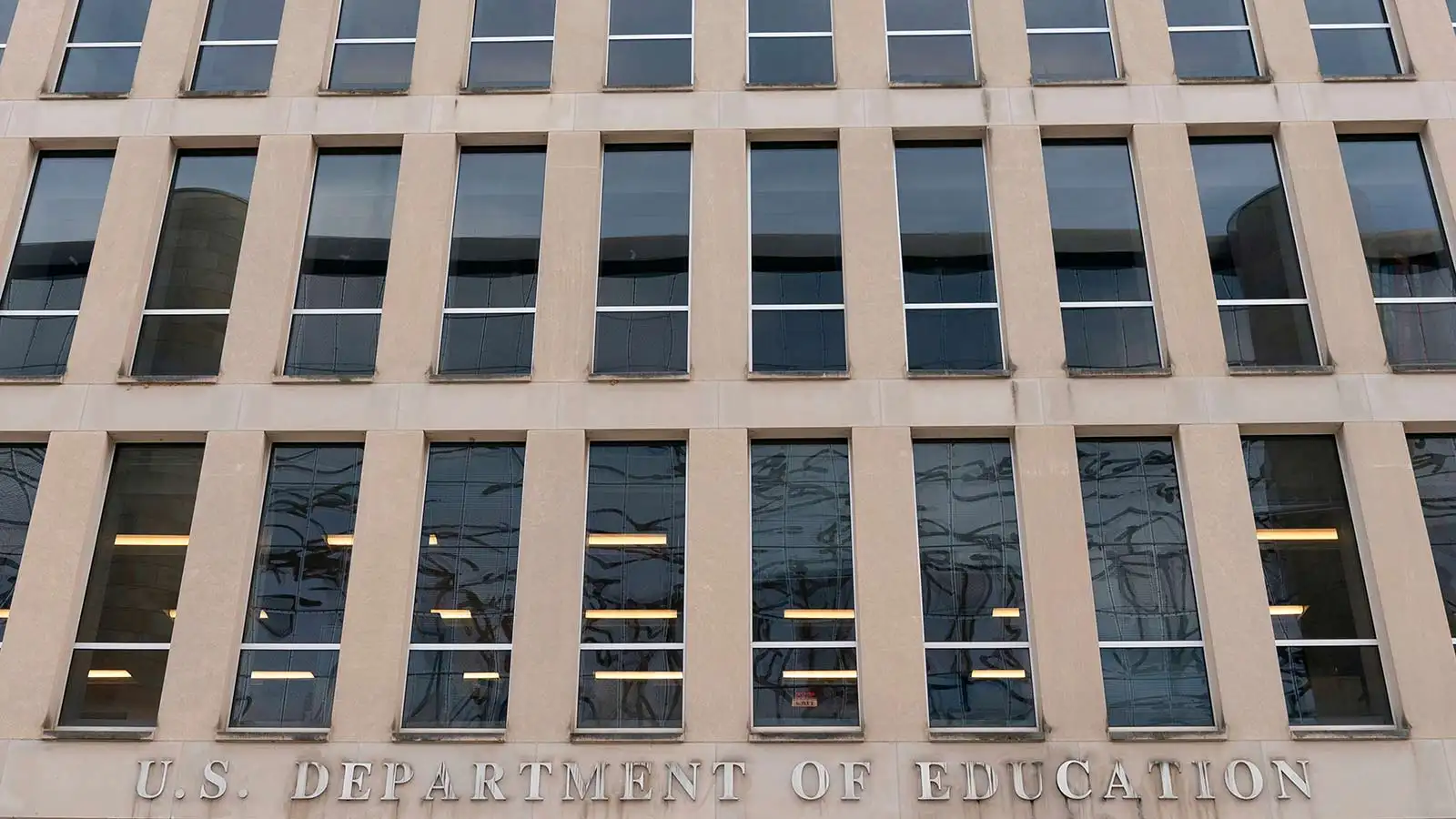
Ten national nursing associations have filed a federal lawsuit over the Trump administration's new rule excluding advanced nursing program from a list of professional degrees.gettyA coalition of 10 national nursing associations has filed a federal lawsuit in Massachusetts District Court against the U.S. Education Department’s final rule that excludes nursing from a designation of “professional degrees." The plaintiffs claim that the department’s rule is unlawful and will create obstacles for nurses seeking graduate degrees at the very time the nation faces healthcare workforce shortages and increasing demands for clinical care. It asks the judge to vacate the challenged portions of the final rule and enjoin the administration from enforcing or implementing the rule.The rule targeted by the lawsuit was issued April 30. It defines the terms “professional student” and “graduate student” to determine maximum federal student loan amounts after Congress enacted new borrowing limits for those categories in the One Big Beautiful Bill Act, passed last year. The limits are based on the type of program in which a student is enrolled. “Professional students” may borrow up to $50,000 in federal loans per year, with a $200,000 aggregate limit, while students in graduate programs are eligible for a maximum of only $20,500 in federal student loans per year, with a $100,000 aggregate limit. The changes are set to go into effect July 1.The department’s rule identifies “professional students” as individuals enrolled in one of these 11 degree programs: pharmacy, dentistry, veterinary medicine, chiropractic, law, medicine, optometry, osteopathic medicine, podiatry, theology and clinical psychology. It excluded post-baccalaureate nursing degrees along with several other allied health advance degrees.MORE FOR YOUThe plaintiffs include the American Nurses Association; the American Association of Nurse Anesthesiology; the Association of Women’s Health, Obstetric and Neonatal Nurses; the American College of Nurse Midwives; the American Holistic Nurses Association; the Association of Pediatric Hematology/Oncology Nurses; Chi Eta Phi Sorority, Inc.; the Health Ministries Association; the National Association of Clinical Nurse Specialists; and the National Association of Nurse Practitioners in Women’s Health.In their lawsuit, the plaintiffs claim that the new rule is unlawful because it imposes requirements that appear nowhere in the relevant statute. They allege that “the Final Rule is also arbitrary and capricious and not the product of reasoned decision-making," adding that "the Department relied on factors that Congress did not intend for it to consider, engaged in inconsistent and unsupported reasoning, and failed meaningfully to engage with public comments.”“The Department of Education ignored the voices of nurses and nurse allies who spoke out against this rule throughout their rulemaking process. Increasing barriers to post-baccalaureate nursing education doesn’t just limit opportunities and access to education, it limits patients’ access to timely care from trusted, highly trained practitioners,” said Jennifer Mensik Kennedy, president of the American Nurses Association, in a news release. “We are exercising our due process rights to ensure this is corrected.”This is the second federal lawsuit filed against the new rule in recent weeks. Earlier, 25 states and the District of Columbia sued the Department of Education in a Maryland federal court, claiming that the agency’s final rule violated the Administrative Procedure Act, commonly known as the APA, by illegally narrowing the definition of professional degrees. Those plaintiffs also insisted that the rule would harm the health care workforce. “These shortages will predictably drive up costs for the States as employers,” they wrote. “For example, by reducing the supply of nurses, PAs [physician assistants], and other health professionals, the Final Rule will likely force States to pay higher salaries to avoid losing their employees to competitors. That will likely increase personnel costs for State-funded hospitals, clinics, and correctional systems.” The Department has defended its rule, claiming that the loan caps provide a much-needed check on soaring tuition costs that have made graduate school unaffordable for many students. But the plaintiffs disagree. “The AANA is deeply concerned by the Department of Education’s decision to limit federal student loan access for advanced practice nursing degrees,” said Jeff Molter, president of the American Association of Nurse Anesthesiology. “This policy will constrict the anesthesia workforce pipeline at a time when patient demand is growing nationwide, ultimately reducing access to essential procedures like surgery, childbirth, and cancer screenings — especially in rural and underserved communities where Certified Registered Nurse Anesthetists (CRNAs) are often the primary anesthesia providers."
Nursing Associations Sue Trump Administration Over Student Loan Limit Rule
A coalition of 11 nursing associations has filed a federal lawsuit against the Education Department's rule that excludes nursing from a list of “professional degrees."
716 words~3 min read