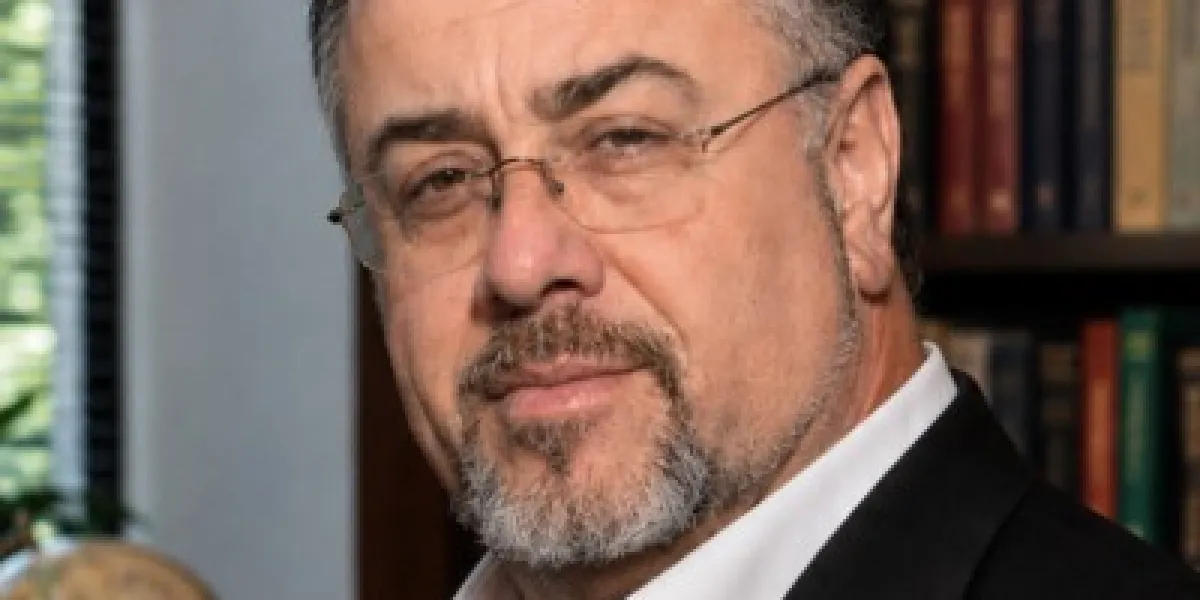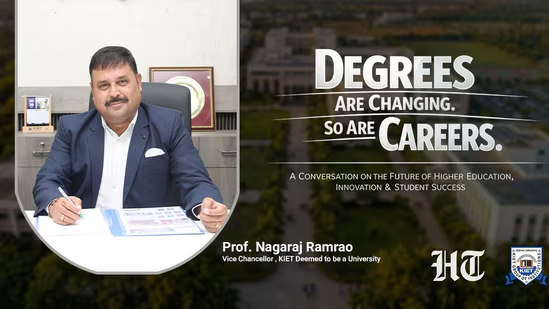
Higher education is undergoing one of the biggest transformations in its history. Across the world, Artificial Intelligence is reshaping industries, new technologies are emerging at unprecedented speed, and careers are becoming more dynamic than ever before.Prof. Nagaraj Ramrao, Vice Chancellor, KIET Deemed to be University, shares insights on how higher education must evolve to prepare students for an AI-driven future.For students entering college today, the future no longer follows a single predictable path — and that, increasingly, is becoming an opportunity rather than a limitation.Universities today are not just preparing students for jobs. They are preparing them for adaptability, innovation, entrepreneurship and lifelong growth.At KIET Deemed to be University, that changing reality is shaping the university’s approach toward education, student development and industry readiness.In a recent conversation with Mint, Professor Nagaraj Ramrao, Vice Chancellor of KIET Deemed to be University, spoke about the future of higher education, the growing importance of interdisciplinary learning, startup culture, emotional resilience and why universities today must focus on building not only skilled professionals, but confident and future-ready individuals.Education is no longer just about degreesFor decades, students largely followed a familiar roadmap: earn a degree, secure a stable job and build a long-term career.But according to Prof Ramrao, the world that the students are entering today is far more dynamic, global and innovation-driven.“Technologies are changing very dynamically,” he said during the interaction, while explaining how rapidly evolving industries are redefining employability and career readiness.Rather than seeing this as a challenge alone, he believes, it presents a powerful opportunity for universities to rethink learning itself. The focus, he says, must now move beyond textbook-driven education, toward building students who can think critically, solve problems creatively and adapt continuously to change.At KIET, this shift is visible through a stronger emphasis on experiential learning, interdisciplinary exposure, communication skills and innovation-led education.The larger objective is not simply to help students secure their first job, but to help them build careers that remain sustainable and meaningful over time.Why strong fundamentals still matterEven as institutions race to introduce emerging technologies into classrooms, Prof. Ramrao believes the foundation of future-readiness still lies in mastering core concepts.“Mathematics and scientific fundamentals must be made as strong as possible,” he said.His belief is simple: technologies will continue to evolve, but strong analytical thinking and conceptual clarity will always remain relevant.He emphasised that students today must learn how to approach problems from multiple perspectives, think independently and innovate rather than merely replicate existing solutions. “Industry always wants solutions that are innovative, efficient and different,” he noted. That mindset, increasingly, is becoming central to how modern universities evaluate success.AI is a tool — human creativity remains centralArtificial Intelligence has understandably become one of the most talked-about subjects among students today.While AI is opening extraordinary new opportunities, it is also creating uncertainty about careers, employability and the future of work.Prof Ramrao, however, views AI as an enabler rather than a replacement for human capability. According to him, AI systems are only as powerful as the data and solutions human beings create and feed into them. This implies that innovation, creativity, imagination and original thinking will continue to remain the core strengths of human beings.“AI can give solutions from what is already available,” he explained. “But humans will continue to create newer solutions.”This philosophy reflects a broader educational shift now visible globally: the future workforce will not simply be defined by technical proficiency, but by the ability to combine technology with creativity, empathy and innovation.Building industry-ready graduatesOne of the strongest themes throughout the conversation was the growing importance of industry integration within higher education.Today’s employers are increasingly looking for graduates who can adapt across technologies, collaborate effectively and contribute from day one.“Industries are not satisfied with one single expertise anymore,” Prof Ramrao observed.At KIET, this has led to a more industry-aligned approach toward learning through internships, certifications, elective pathways, practical exposure and live project-based learning.The university has also focused on creating multidisciplinary career pathways that allow students to explore diverse technologies and skill sets beyond their primary disciplines.Communication skills, collaboration and leadership development are equally emphasised alongside technical training — an acknowledgement that professional success today requires far more than academic excellence alone.The rise of innovation and entrepreneurial thinkingStudent aspirations, too, are evolving rapidly. Today’s generation is increasingly looking beyond conventional career paths toward entrepreneurship, innovation and purpose-driven work.“Students today want to become job creators rather than only job seekers,” Prof Ramrao said.To support this mindset, KIET has invested significantly in building its innovation ecosystem.The university has established multiple Centres of Excellence across emerging domains, including Artificial Intelligence, Semiconductor Technology, Supercomputing, Electric Vehicles and Renewable Energy.What makes these centres particularly distinctive is their multidisciplinary accessibility.Students from any branch are encouraged to explore, experiment and collaborate within these innovation spaces — helping create a culture where learning extends beyond classrooms into hands-on discovery and problem-solving.Alongside, KIET’s Technology Business Incubator provides students with mentorship, infrastructure, working spaces and access to funding support for startup ideas.The broader goal is clear: encouraging students to think independently, innovate confidently and contribute meaningfully to India’s growing startup and technology ecosystem.Why emotional well-being is becoming central to campus lifeIn addition to academic and professional preparedness, universities are also increasingly recognising the importance of emotional well-being.Students today are navigating academic pressure, career uncertainty, social comparison and rapidly changing expectations — often all at once.According to Prof Ramrao, universities must therefore support students not only intellectually, but emotionally as well.“We need to make graduates emotionally strong enough to handle academic, societal and professional pressures,” he said.Interestingly, he views this generation as highly aware, and emotionally expressive rather than simply vulnerable.“They are very mature,” he said, referring to the information-rich environment modern students grow up in today.This awareness, he believes, makes it even more important for universities to create supportive, empathetic and inclusive campus environments where students can grow with confidence.Preparing students for a world of opportunityUltimately, one of the biggest shifts in higher education today is that careers are no longer linear.A student entering university today may eventually work across multiple industries, technologies and job roles over the course of a lifetime.And according to Prof Ramrao, that is exactly why adaptability, resilience and continuous learning are becoming the defining skills of the future.“Our systems should prepare students for long-term evolution, not only immediate outcomes,” he said.At universities like KIET, that preparation increasingly extends beyond degrees and placements toward something far more holistic: building confident, capable individuals who are prepared to navigate change, embrace innovation and contribute meaningfully to the future.Because the future of education today is no longer just about earning qualifications.It is about building the mindset, skills and resilience needed to thrive in a world full of possibilities.Watch the full conversation with Prof. Nagaraj Ramrao, Vice Chancellor of KIET Deemed to be University, as he shares his perspectives on AI, innovation, entrepreneurship and the future of higher education. Note to the Reader: This article has been produced on behalf of the brand by HT Brand Studio and does not involve any journalistic/editorial involvement by Hindustan Times. The content is for information and awareness purposes and does not constitute any financial advice.
Beyond degrees: Rethinking higher education for the age of AI and uncertainty
As AI reshapes the future of work, KIET is redefining higher education through innovation, adaptability, entrepreneurship and interdisciplinary learning.
1,184 words~5 min read